


Quick Summary:
- Roof strikes are often excluded from LDW, especially where clearance signs exist.
- Confirm roof, underbody and overhead damage cover in writing before signing.
- Check vehicle height, roof racks, and car park clearance before entry.
- Photograph the roof at pick-up and report any incident immediately.
Low-clearance car parks are a common cause of rental car damage in California, particularly in cities with older structures, tight ramps and prominent height bars. If you are arranging car hire and you add LDW, meaning Loss Damage Waiver, it is reasonable to ask whether it will cover a roof scrape, torn aerial, dented tailgate top edge or damage from a height bar. The answer is often, “it depends on the contract”, because LDW is not universal insurance and the exclusions matter.
This guide explains how LDW typically treats roof strikes, why overhead damage is frequently excluded, and what to confirm before signing your rental agreement in California.
What LDW usually does, and why roof damage is different
LDW is commonly sold as a waiver that reduces or removes your financial responsibility if the rental vehicle is damaged or stolen. In many California car hire agreements, LDW mainly addresses “collision” style damage to body panels, bumpers and glass, subject to conditions. However, roof damage can be treated differently because it is often linked to driver error in a restricted area, for example entering a car park marked too low for the vehicle.
Because of that, many suppliers specify that LDW does not cover the roof, underbody or overhead damage, or that it only covers them if there was no breach of the agreement. This is why it is essential to check the “Exclusions” and “Prohibited uses” sections, not just the price of the waiver.
If you are comparing options for California, you can review location pages such as car hire at Los Angeles LAX and car hire in San Diego.
Does LDW cover roof damage from low-clearance car parks?
In many cases, LDW will not cover roof damage caused by hitting a height restriction bar or entering a low-clearance structure. Even when LDW is in place, roof strikes may be excluded as “overhead damage”, “top damage” or “damage caused by driving where the vehicle was not permitted”. Some agreements treat a height-bar impact as negligence if clearance signage was present.
That said, there are situations where LDW may apply, for example if the contract does not exclude roof damage, or if the impact occurred in a way that does not violate the agreement. The only reliable method is to confirm the wording for the specific supplier and package you are taking. Do not assume that “full cover” language automatically includes the roof.
Also note the difference between LDW and any separate excess reimbursement products you may have from a third party. Some third-party products reimburse eligible costs after you pay the rental company first, but many still exclude roof and underbody damage.
Common LDW exclusions that can affect roof strikes
When roof damage is not covered, the reason is usually tied to a listed exclusion rather than the fact the incident happened in a car park. Typical exclusions you should look for include:
Overhead damage exclusions. Wording may exclude the roof, upper body panels, roof rails, sunroof glass, tailgate upper edge, aerials and accessories mounted above the beltline.
Underbody exclusions that overlap with ramps. Steep ramps in multi-storey car parks can scrape the underbody, side sills or exhaust. Even if your main concern is the roof, a single incident can create both roof and underbody claims.
Misuse or prohibited area clauses. Some agreements define certain structures, service roads, loading bays or restricted access as prohibited. If you entered a delivery entrance to avoid a height bar, that can create a contract breach.
Negligence or failure to follow signage. If there was a clearly posted clearance height and you proceeded anyway, the supplier may treat the damage as excluded even with LDW.
Unauthorised equipment or loads. Roof boxes, surfboards, bikes and poorly fitted roof racks can increase the chance of a strike. If a vehicle is supplied with roof rails, that does not automatically mean all roof loads are authorised.
If you are considering a larger vehicle for luggage or group travel, taller models can be more vulnerable in car parks, which is relevant when comparing van hire in San Francisco versus a standard saloon or compact SUV.
What to confirm before signing in California
Before you initial anything, get clarity on the details that actually decide whether a roof strike is covered.
1) Ask one direct question about roof and overhead damage. Use plain language such as, “Does this LDW cover roof damage and height-bar impacts?” If the answer is verbal, ask the agent to point you to the exact clause in the agreement or the included coverage summary.
2) Confirm what “damage” includes. A roof strike may crack a roof aerial, dent the roof skin, crease the top of the tailgate, damage roof rails, or scrape paint along the upper side panel. Make sure those are not separately excluded as “accessories” or “upper body”.
3) Clarify deductibles and maximum liability. Some packages still leave you with an excess, and roof claims can reach that figure quickly. Ask what you would pay if coverage does not apply.
4) Check who decides fault, and how claims are processed. You want to know whether the supplier charges immediately, whether they require a police report, and how they calculate loss of use and admin fees if you are responsible.
5) Understand the impact of vehicle class and add-ons. SUVs and some premium vehicles can be taller, especially with roof rails. If you are collecting near Orange County, reviewing SUV hire at Santa Ana SNA can help you compare vehicle types and think ahead about parking options.
Practical steps to avoid a roof strike during car hire
Even the best coverage is easier than a claim, but prevention is usually simplest in low-clearance environments.
Know your height. If the vehicle height is not obvious, check the model online before you drive into a structure, or ask at the counter. Remember roof racks can add height.
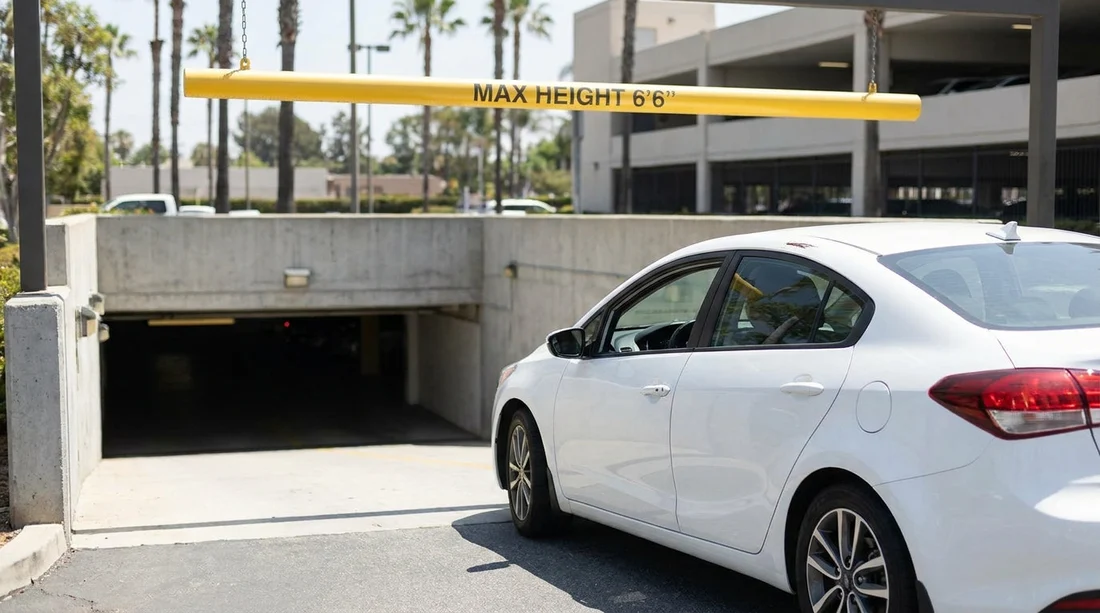
Take clearance signs literally. If a car park states 6 ft 6 in, do not assume you will “just fit”. Clearance bars are often placed at the lowest point, and ramps can raise part of the vehicle relative to the bar.
Avoid uncertain entrances. If you cannot clearly verify the clearance, find street parking or an open lot.
Use a spotter when possible. If a passenger can step out and watch the top clearance at a tight entry, that can prevent an expensive mistake.
Do a roof photo check at pick-up. Roof damage is easy to miss on inspection, and it is harder to prove later. This is especially useful after collecting at busy hubs such as LAX, where rapid handovers can happen.
FAQ
Is LDW the same as car insurance for a rental car in California? No. LDW is typically a contractual waiver that can reduce what you owe for damage or theft, but it can include exclusions and conditions that differ from insurance.
Are height-bar impacts usually considered “overhead damage”? Yes. Many suppliers classify hitting a height restriction bar or low ceiling as overhead or roof damage, which is commonly excluded from LDW coverage.
What parts are included in “roof damage” on a rental car? It can include the roof panel, roof rails, antenna, sunroof glass, upper tailgate edge, and sometimes upper side panels near the roofline.
If the clearance sign was missing, will LDW cover the roof? It depends on the contract and the facts. Missing signage may help your argument, but coverage still relies on whether roof damage is excluded and whether any misuse clause applies.
How can I reduce the chance of a dispute when returning the car? Take clear pick-up photos of the roof, keep incident documentation, report damage promptly, and ask the supplier to confirm in writing how LDW applies to overhead damage.





























































































