


Quick Summary:
- Slow down smoothly, increase following distance, and use dipped headlights.
- Avoid standing water, steer gently, and ease off if hydroplaning starts.
- Pull off only at safe exits, service plazas, or well-lit car parks.
- If visibility drops to near zero, stop completely off-road and wait.
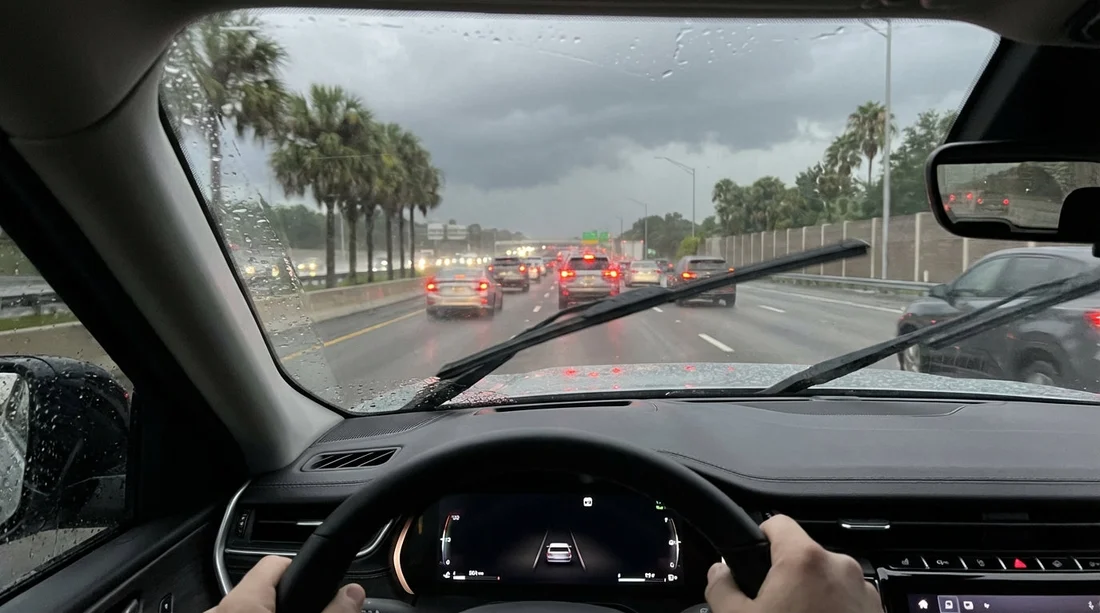
Orlando storms can switch on fast, especially in summer, turning I-4 and SR-528 (the Beachline) into low-visibility, high-spray corridors within minutes. If you are in a car hire vehicle, the priorities are the same as in your own car, keep control, keep space, and avoid decisions that strand you in standing water. The difference is that you may be less familiar with local road layouts, drainage patterns, and where safe pull-offs actually are.
This guide focuses on practical, in-the-moment actions: how to manage visibility, reduce hydroplaning risk, choose safe places to wait, and deal with standing water without stalling. If you picked up your vehicle at the airport, it helps to know what your rental includes and who to contact. For general Orlando pickup information, see Orlando MCO car rental, and if you are travelling from the UK, the terminology and inclusions on car hire Orlando MCO can be useful context.
First 10 seconds: stabilise the situation
When rain suddenly intensifies, do not react with sharp steering or hard braking. Instead, ease off the accelerator and let your speed fall gradually. A sudden lift in speed is not the goal, your goal is traction and time to react.
Turn on dipped headlights, not just daytime running lights. In heavy spray, other drivers need to see your rear lights too. Avoid hazard lights while moving, they can confuse drivers who expect hazards to mean a stopped vehicle. Use wipers early, and if the wipers cannot clear the screen fast enough, treat that as a signal to slow further and plan to get off the main lanes.
Move smoothly to the lane with the best visibility and drainage. Often that is not the outermost lane, because water and debris can collect near the shoulder. On I-4 and SR-528, standing water can form in depressions and at merges, so stay alert when approaching ramps and bridges.
Visibility: drive for what you can actually see
In a Florida thunderstorm, visibility can drop abruptly as wind-driven rain and spray create a white curtain. Your rule should be simple: you must be able to stop safely within the distance you can see. If you cannot see lane markings clearly, it is time to reduce speed further and increase your following distance.
Use road reflectors and the edge line as reference points, but do not fixate on them. Keep scanning for brake lights, pooled water, and vehicles changing lanes. If a large vehicle is throwing spray, do not sit alongside it, either drop back or pass decisively when safe. Never tailgate to “follow” another car, if they brake suddenly for debris or a stopped vehicle, you will not have room to respond.
Air conditioning helps de-fogging. If the windscreen starts misting, turn the A/C on and direct airflow to the windscreen. Cracking a window slightly can help equalise humidity, but do not let water blow into the cabin and distract you.
Hydroplaning risk: why it happens and how to prevent it
Hydroplaning occurs when your tyres ride on a thin layer of water rather than gripping the road. It becomes more likely with higher speed, worn tread, and deeper water. The first 10 to 20 minutes of rain can be especially slick because oil and debris lift to the surface before being washed away.
To reduce risk, slow down before you reach visible water, not while you are in it. Keep steering inputs gentle and avoid sudden lane changes. Increase following distance to give yourself time to brake gradually rather than abruptly. If you have cruise control on, turn it off in wet conditions, maintaining steady speed manually helps you respond instantly to changes in traction.
If you start to hydroplane, you may feel the steering go light and the engine revs rise without an increase in speed. The correct response is to stay calm, ease off the accelerator, keep the steering wheel pointed where you want to go, and avoid braking hard. As the tyres regain contact, you will feel control return. Then continue at a lower speed.
Braking and following distance in heavy rain
Wet roads increase stopping distance, and spray reduces how soon you notice hazards. A practical approach is to double your normal gap and expand it further when visibility is poor. On multi-lane roads like I-4, many collisions happen when drivers brake late and change lanes at the same time. Commit to one safe lane position, brake in a straight line, and only change lanes when you have clear space and a clear view.
If your car hire vehicle has ABS, you will feel pulsing through the brake pedal during hard braking. Keep firm, steady pressure and let the system work. If you do not need emergency braking, avoid it, gradual braking keeps the tyres in a better grip state in standing water.
Standing water: how to handle it without getting stranded
Standing water is the moment where a quick decision matters most. The safest choice is to avoid it entirely. If you see a section of road where the water looks deep, or you cannot see lane markings through it, change your plan. Take an exit, choose another route, or wait it out somewhere safe.
If you cannot avoid shallow water, do not accelerate into it. Maintain a low, steady speed and keep steering straight. Do not stop in water, and do not follow another car so closely that you have to brake mid-puddle. If the water is moving across the road, treat it as deeper than it looks. A few inches can affect steering and braking, and deeper water can flood the engine intake or damage electronics.
Do not drive around barricades or through clearly flooded underpasses. Orlando has low-lying spots, and underpasses can fill quickly. If you end up in water unexpectedly and the car begins to bog down, do not keep revving to push through, that can pull water into the engine. If it is safe to do so, steer to higher ground and stop completely out of traffic.
Where to pull off safely on I-4 or SR-528
The shoulder is not a safe waiting area in a downpour unless you have an emergency. Drivers can drift, visibility is reduced, and standing water may be deeper near the edge. If you need to stop, aim for an exit ramp and a well-lit, open area such as a service plaza, fuel station, or a larger car park that is away from obvious drainage dips.
If you must use the shoulder due to near-zero visibility or a mechanical issue, take steps to be seen. Pull as far right as possible, keep your seatbelt on, and turn on hazard lights only after you are fully stopped. If conditions allow, remain in the vehicle. Exiting onto a wet, high-speed shoulder is dangerous.
SR-528 has long stretches between exits compared with surface roads. If you can still see, it is often safer to continue slowly to the next exit rather than stopping on the shoulder. On I-4, congestion can build quickly, so scan far ahead for brake lights and be ready for sudden slowdowns.
After the heaviest rain: re-check the basics
Thunderstorms often pass within 20 to 40 minutes, but the road surface can remain slick and water can linger in ruts. When the rain eases, resist the urge to immediately speed back up. Keep an eye out for debris, branches, or small objects blown into lanes. Watch for vehicles re-entering from shoulders or exits.
If your car hire vehicle feels different afterwards, for example vibrations, pulling to one side, or warning lights, it may have hit debris or gone through deeper water than expected. Find a safe place to stop off the motorway and inspect cautiously. Avoid touching anything hot, and do not kneel in pooled water where you cannot see hazards.
Preparation tips that matter in a rental vehicle
Before you drive away from Orlando, take 60 seconds to set yourself up for a storm. Adjust mirrors, learn where the hazard light button is, and confirm how to operate wipers and demisters. Check tyre condition visually, most car hire vehicles are maintained well, but it is still worth a glance for obvious low tread or damage.
If you are planning to carry several passengers or luggage, consider vehicle choice. A higher-riding vehicle can help with visibility and may feel more stable in spray, though it does not make you immune to hydroplaning. You can review options like SUV rental near Disney Orlando MCO if you want extra space and a more elevated driving position.
It also helps to know your provider details ahead of time. If you arranged a branded supplier through Hola, these pages can help you locate information you may have already seen during planning, such as Budget car rental Orlando MCO and Dollar car rental Disney Orlando MCO. Keep your rental agreement accessible, and save the assistance number to your phone before you set off.
What not to do in an Orlando thunderstorm
A few common mistakes cause most storm-related incidents. Do not brake hard while turning, it is a recipe for sliding. Do not change lanes repeatedly searching for the “best” lane, it increases risk when visibility is already poor. Do not drive with parking lights only, you need full dipped headlights. Do not assume your vehicle behind you can see you, give yourself extra space and avoid sudden manoeuvres.
Most importantly, do not enter water you are unsure about. Getting through once does not mean the next puddle is the same depth. In Florida, water depth can vary sharply across a lane, and drainage can be overwhelmed quickly.
FAQ
Should I pull onto the shoulder if the rain is blinding? Only if you cannot safely continue to an exit. The shoulder is hazardous in heavy spray. If you must stop, pull fully off the lane, use hazards once stopped, and stay belted.
What is the safest speed on I-4 or SR-528 during a thunderstorm? There is no single safe speed. Drive slowly enough to stop within what you can see, avoid standing water, and keep a large gap. If wipers cannot keep up, plan to exit and wait.
What should I do if my car starts hydroplaning? Ease off the accelerator, keep steering steady, and avoid hard braking. Let the tyres regain grip, then continue at a reduced speed and increase following distance.
Can I drive through a puddle if other cars are doing it? You still may not know the depth, especially in ruts or near underpasses. If you cannot see lane markings or the water looks deep, do not enter, take an exit and reroute.
What if my car hire vehicle stalls after going through water? Move to a safe spot if possible and do not attempt repeated restarts, it can worsen damage. Put hazards on, stay safe, and contact roadside assistance using your rental paperwork.





























































































