


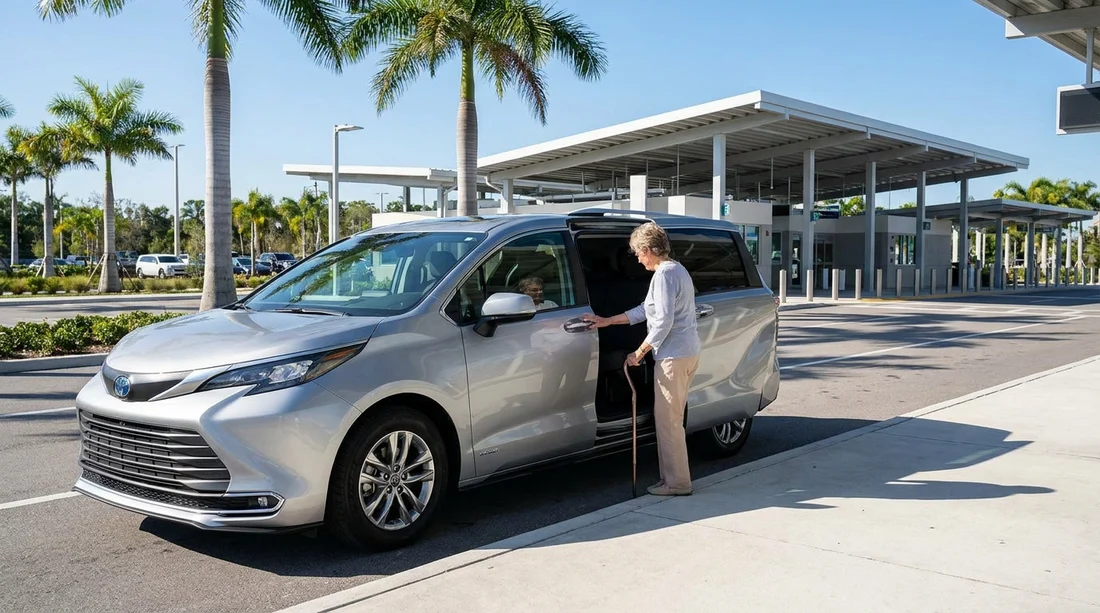
Quick Summary:
- Choose higher ride height, wide doors, and supportive seats for easier transfers.
- Prioritise automatic transmission, light steering, and driver-assist features where available.
- Look for large controls, push-button start, and simple infotainment to reduce strain.
- Confirm parking access, boot lip height, and space for mobility aids.
Driving in Florida can be wonderfully straightforward, with wide roads, plenty of parking, and predictable routes between airports, beaches, and theme parks. If you have limited mobility but do not use hand controls, the right rental car features can make the difference between a tiring day and a comfortable one. This guide focuses on practical comfort and access points to check when arranging car hire in Florida, while being clear that hand-control vehicles are not available through standard fleets.
To keep planning simple, start with where you will collect the vehicle. Airport locations are often the easiest for accessible kerbs, shuttles, and clearer signage, such as car hire at Miami Airport or car hire at Fort Lauderdale Airport. If you are staying central, an in-city collection point can reduce walking distances on travel day, for example National Car Rental in Brickell.
What to know first: no hand controls, so focus on transfer-friendly design
If you drive without hand controls, the key is reducing physical effort during the three hardest moments: getting in, getting out, and managing stop-start driving. Many accessibility gains come from basic vehicle design, seat adjustability, and convenience technology rather than specialist adaptations. When you compare vehicle categories, think less about brand names and more about height, door opening, seat shape, and control layout.
In general, small cars sit low and may require a deeper bend at the hips and knees. SUVs and minivans tend to have a higher hip point, which can make transfers easier. If you are travelling with family, a minivan can be worth considering for space and door access, such as minivan hire in Tampa.
Checklist: entry and exit features that reduce strain
1) Seat height and hip point. Aim for a seat that is roughly chair height, so you can slide across rather than lift up from a low position. A compact SUV often provides a good middle ground between step-up height and stable footing.
2) Wide-opening doors. Doors that open wider create more room for knees and mobility aids. While you cannot usually choose exact models, you can choose a vehicle class that typically has larger door apertures.
3) Grab handles and stable sills. Many vehicles have an A-pillar handle or roof grab handle. These can help with leverage during transfer. When you inspect the car at pickup, check that the handle feels solid and within easy reach.
4) Seat materials. Cloth can provide more grip, while smooth leather can be easier to slide onto. If sliding is difficult, a grippier surface can help you stay stable. If swivelling your hips is difficult, a smoother surface can reduce friction. Choose what suits your movement pattern.
5) Boot lip height. If you carry a foldable walking frame or other mobility aid, a lower boot lip reduces lifting. Hatchbacks often have lower lift-over height than some SUVs, but minivans may offer the most convenient loading.
Driving comfort and fatigue reducers for Florida routes
Florida driving frequently involves multi-lane roads, long straight sections, and periodic stop-start traffic near beaches, shopping areas, and theme parks. These features can reduce fatigue and leg strain.
Automatic transmission. This is the single most helpful standard feature for many drivers with limited mobility, especially if repetitive clutch use causes discomfort. Most Florida rental fleets heavily favour automatics, but it is still worth confirming.
Light steering and a smaller turning circle. Power steering is standard, but some vehicles feel noticeably lighter at parking speeds. A smaller turning circle reduces awkward low-speed manoeuvres that can require repeated brake applications.
Adaptive cruise control and lane support. Where available, these can reduce workload on longer drives by helping maintain distance and lane position. Availability varies by vehicle class and supply, so treat these as desirable extras rather than guarantees.
Parking sensors and rear camera. These reduce the amount of torso twisting needed when reversing. A clear camera display with guidelines is especially useful when you want to minimise neck rotation.
Auto hold and electronic parking brake. Auto hold can keep the car stationary without constant brake pressure in traffic. An electronic parking brake replaces a lever with a button, which can be easier if gripping strength is limited.
Cabin layout: controls that are easier to reach and operate
Small ergonomic differences add up, especially on holiday days with frequent stops. When choosing a car class, prioritise cabins known for simpler, larger controls.
Power seat adjustment. Look for multi-way adjustment, including seat height, lumbar support, and tilt. The goal is to set a position that reduces knee bend and supports the lower back. Manual seats can still work well, but they may offer fewer fine adjustments.
Tilt and telescopic steering wheel. Being able to bring the wheel closer can reduce shoulder strain, while maintaining safe airbag distance.
Push-button start and keyless entry. These can reduce fiddly movements. Keyless entry is also convenient when your hands are occupied with mobility aids or bags.
Large, clear climate controls. Florida heat and humidity can increase fatigue. Easy-to-use air conditioning controls help you stay comfortable without diverting attention from the road.
Apple CarPlay or Android Auto. Hands-free navigation and calling can reduce distractions and the need to reach for your phone. If you rely on voice guidance, check that the car has a working USB port and stable Bluetooth connection.
Choosing the right vehicle category for mobility needs
Compact or midsize saloon. Often easy to drive and park, with predictable handling. However, lower seats can make transfers harder, and door openings can be smaller than SUVs.
Small to midsize SUV. Commonly a strong choice for limited mobility without hand controls because of a higher seat height, decent boot access, and good visibility. Parking can be slightly more demanding than a compact car, but cameras and sensors help.
Minivan. Best when you need space for mobility aids, companions, or frequent transfers. Sliding doors can be helpful in tight parking bays.
Budget-focused options. If cost is a deciding factor, focus on a vehicle class rather than the cheapest model. You can compare options via Budget car rental in Florida, but keep the comfort and access checklist in mind so the saving does not come with unwanted strain.
Pickup and inspection tips at Florida locations
Whatever vehicle class you choose, take a moment at pickup to set yourself up for the week. Adjusting the cabin before you leave the car park can prevent pain later.
Check seat movement range. Confirm the seat can raise enough, and that you can slide forward and back smoothly. Set lumbar support early, then fine-tune after a short drive.
Test the door swing. Open the door fully where safe, and see if you can position your feet comfortably. If the bay is tight, ask if you can move to a more open area before final checks.
Confirm visibility aids. Engage reverse to verify the camera works and the display is bright. If sensors are present, confirm you can hear them clearly.
Plan parking breaks. Florida trips often involve large car parks. Build in extra time so you are not rushing transfers. If you use accessible parking permits, confirm rules for your specific permit and carry documentation with you.
For airport arrivals, it can help to start with a known pickup point and straightforward exit routes, such as Florida car rental in Miami. Shorter, simpler first drives reduce fatigue while you get used to the vehicle.
FAQ
Are hand-control rental cars available through Hola Car Rentals in Florida? Hand-control vehicles are not available through standard Hola Car Rentals supply. This article focuses on comfort and access features that can still make driving easier without adaptations.
What is the best rental car type for limited mobility without hand controls? Many drivers find a small or midsize SUV easiest due to a higher seat height and wider openings. If you carry larger mobility aids or need more room for transfers, a minivan can be more comfortable.
Which specific features should I prioritise if knee or hip movement is limited? Start with seat height, wide-opening doors, power seat adjustment, and a rear camera to reduce twisting. Automatic transmission and supportive lumbar adjustment also help reduce fatigue over long days.
How can I make pickup day easier at Miami or Fort Lauderdale airports? Choose an airport pickup for clearer access and facilities, allow extra time, and adjust seating before leaving. Check the reverse camera, door opening space, and boot height so transfers and loading feel manageable.
Can I guarantee advanced driver-assist features like adaptive cruise control? These features depend on the exact vehicle supplied, so they cannot be guaranteed in every class. If they matter to you, select a higher vehicle category where they are more common and verify at pickup.































































































