


Quick Summary:
- Confirm your policy covers collision damage to rental cars in Texas.
- Ensure theft cover includes vehicle value, towing, and recovery costs.
- Check for loss of use, admin fees, and diminished value.
- Verify excess, exclusions, and documentation needed to validate a claim.
Declining LDW (Loss Damage Waiver) at the counter can reduce the cost of car hire, but only if your alternative cover genuinely matches what the waiver would have handled. In Texas, the financial exposure after an incident can include repair costs, the full value of the vehicle if it is written off or stolen, plus additional charges a rental company may apply. The key is understanding what LDW typically bundles, then ensuring your separate cover deals with the same risks, with as few gaps as possible.
This guide breaks down the essential elements your alternative cover should include if you plan to refuse LDW on US car hire in Texas, and the common surprise charges that catch travellers out.
What LDW usually covers on a Texas rental
LDW is not technically “insurance” in many US rental agreements, it is a contractual waiver where the rental company agrees to waive (or limit) what you owe them for damage to, or theft of, the rental vehicle. In practice, it often acts like comprehensive cover for the rental car itself. If you decline LDW, you are usually responsible for the vehicle unless another policy pays.
LDW commonly addresses:
Damage to the rental car after a collision, impact, or vandalism, subject to contract exclusions.
Theft of the rental car or attempted theft damage.
Related costs such as towing, storage, and sometimes administrative fees, although this varies.
It typically does not replace third party liability (injury and damage you cause to others). Liability is a separate issue you must also think about, especially for driving in Texas highways and city traffic.
The alternative cover you need if you decline LDW
To feel “still protected” after refusing the waiver, your alternative cover should be designed for rental cars and should clearly list what it pays for. Whether you rely on a standalone rental car policy, travel insurance add on, or a credit card benefit, the wording matters more than the brand name. Look for these must haves.
1) Collision and accidental damage to the rental vehicle
Your policy should cover physical damage to the rental vehicle up to the full replacement value, not just repairs. In a total loss scenario, you can be billed for the actual cash value of the vehicle, plus other items. Confirm:
Worldwide or USA coverage explicitly includes the United States.
Vehicle class limits, many policies exclude large SUVs, pickup trucks, luxury vehicles, or vans. If your trip involves a bigger vehicle, compare terms before you choose a car. For Texas airport collections, you can review typical options on pages like car rental at Houston IAH or car rental at San Antonio SAT.
Excess or deductible amounts you would still pay. If the excess is high, the savings from declining LDW may not be worth the risk.
Excluded causes such as driving on unpaved roads, off roading, or ignoring warning lights. Some policies exclude “single vehicle incidents” or damage to the roof.
Also check whether your cover is primary or secondary. Secondary cover means you may have to claim through another policy first, or pay upfront then seek reimbursement. In US rentals, the rental company will still look to you for payment.
3) Rental company add ons: loss of use, admin fees, and diminished value
This is where many alternative policies fall short. Rental companies often charge more than just the repair invoice. Your alternative cover should explicitly include, or at least not exclude:
Loss of use, the rental company may charge for the days the vehicle is out of service, even if they have other cars available. Some insurers require the rental company to prove lost revenue with fleet utilisation records, and some rental firms do not provide that. If your cover only pays when strict proof is supplied, you could be left paying the gap.
Administrative fees, sometimes described as “claims admin” or “processing” fees. These can be added automatically to damage claims.
Diminished value, the claimed reduction in resale value after a vehicle has been repaired. Many travel policies do not pay this, but it can appear on US rental invoices.
Towing and road service after an accident, even if damage is minor. Confirm the policy pays towing from the scene.
If your goal is to decline LDW and still be protected, the best alternative cover is the one that names these charges clearly, rather than leaving them in a grey area.
5) Liability cover: the separate question you cannot ignore
LDW addresses the rental vehicle. Liability is about injuries or property damage you cause to others. In the US, liability claims can be substantial. If you are relying on a non US policy, confirm it provides adequate third party liability in the United States, or that your rental includes sufficient liability protection. Some renters confuse this with LDW and think declining LDW affects liability, it generally does not.
When comparing Texas pick up points and suppliers, it helps to understand what is typically bundled with different brands. For instance, you can review supplier specific pages such as Alamo car rental at Houston IAH to see how options are presented during the shopping stage, then cross check against your own cover.
Counter tactics in Texas: how to decline without creating problems
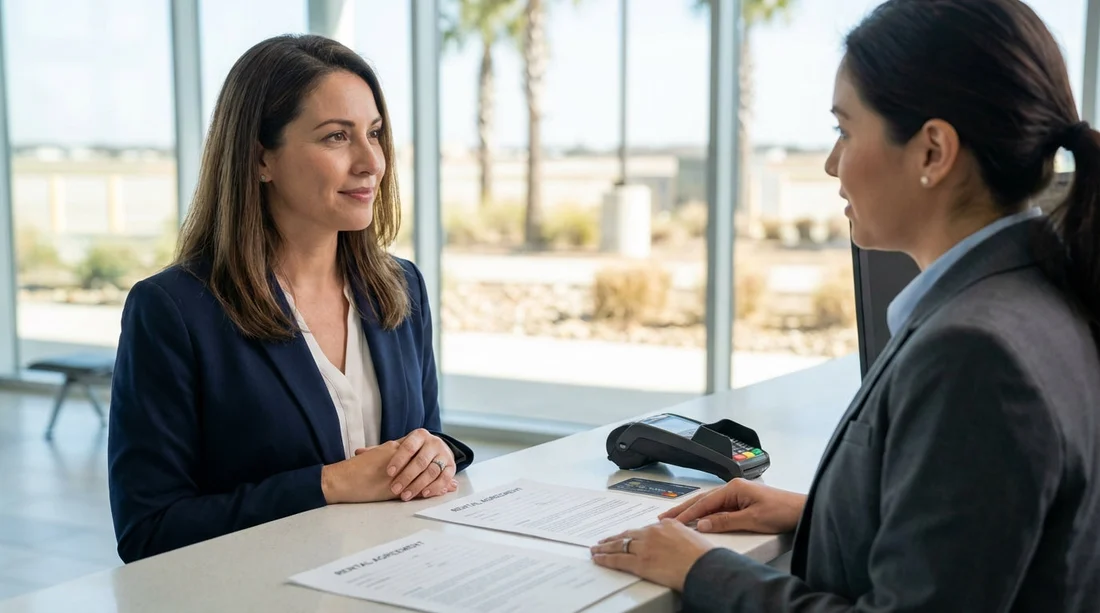
If you are comfortable with your alternative cover, the goal at the counter is clarity. Make sure you are declining the correct product. Ask for the exact names used on the agreement, because “LDW”, “CDW”, and “Damage Waiver” are sometimes used interchangeably.
Before you sign:
Read the rental agreement section on responsibility for loss and confirm what you would owe without LDW.
Check for mandatory cover you cannot decline, which can differ by location and supplier.
Confirm the deposit and hold amount when you decline waivers. If the hold is high, ensure your credit limit can handle it through the trip.
Inspect and document the car using time stamped photos of all panels, wheels, glass, and the interior. This reduces disputes and supports your claim if needed.
These steps matter whether you pick up in Houston, San Antonio, Dallas, or El Paso. If your route includes West Texas, you might also compare smaller airport collections such as car hire in El Paso ELP, because vehicle mix and driving distances may influence what you choose to insure.
Claims reality: what you must be prepared to do
Declining LDW often means more admin after an incident. Your alternative cover should match your ability to comply with the process. Check that you can provide:
An accident report or incident statement, and in some cases a police report.
Rental agreement and damage documentation, including photos, repair estimates, and final invoices.
Proof of payment if the rental company charges your card first.
Time limits for notifying the insurer, some are strict.
If your policy only reimburses after you pay, you need enough available funds to cover a potentially large charge temporarily.
When declining LDW may not be worth it
Even with good alternative cover, consider keeping LDW if any of these apply:
Your cover excludes loss of use or diminished value, and you want maximum certainty on total cost.
Your credit card benefit is unclear on exclusions, geography, or claim handling.
You would struggle with upfront charges in the event of a dispute or delayed reimbursement.
Ultimately, the right decision for Texas car hire comes down to whether your alternative cover mirrors the real world invoice items US rental companies can charge, not just the headline “damage and theft”.
FAQ
Q: If I decline LDW in Texas, what is the minimum my alternative cover should include?
A: It should cover damage and total loss of the rental car, theft and attempted theft, towing and storage, plus loss of use and admin fees where possible.
Q: Does my alternative cover need to pay diminished value?
A: Ideally yes, because diminished value is a common US rental claim add on. If it is excluded, you may still be billed even after repairs are paid.
Q: Are tyres and windscreen damage included when I refuse LDW?
A: Only if your separate policy includes them. Many policies exclude tyres, wheels, glass, and underbody damage, so check the exclusions list carefully.
Q: Is liability insurance the same thing as LDW on US car hire?
A: No. LDW relates to the rental vehicle. Liability covers injury or property damage to others, and you should confirm you have adequate liability cover separately.
Q: What paperwork will I need if I claim on alternative cover after an incident?
A: Usually the rental agreement, incident report, photos, repair estimate and final invoice, and proof of charges. Some insurers also require a police report.































































































