


Quick Summary:
- Move 20–30 metres away, then try locking with the fob.
- Use the hidden mechanical key, lock the driver’s door manually.
- Confirm all doors are shut, then check lock pins and handles.
- If it still fails, secure valuables and contact the rental provider.
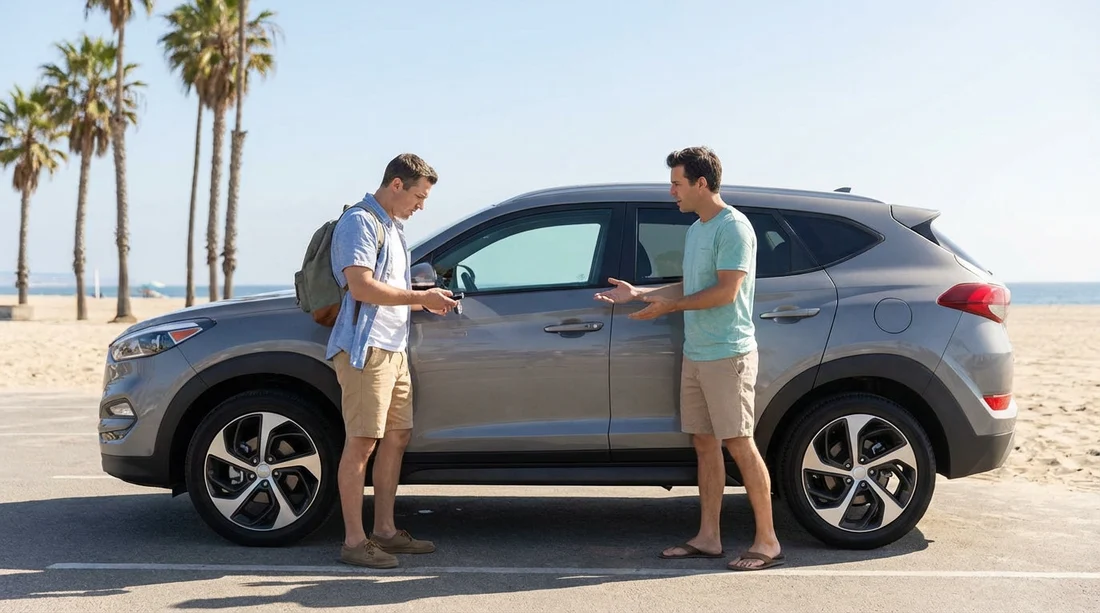
Beach car parks around Los Angeles are brilliant for quick stops, but they can be awkward places for keyless entry. Lots of cars, lots of electronics, and plenty of people walking past can combine to make a key fob feel unreliable. If your car hire won’t lock and you are stood beside the vehicle pressing the button repeatedly, pause and work through a calm, safe checklist.
This guide focuses on four outcomes: reduce signal interference, switch to the manual key when needed, verify the car is actually locked, and know what to do if the fob will not respond at all. The aim is to keep you and your belongings safe without guessing or forcing anything.
1) Make the situation safe before troubleshooting
Start with personal safety and theft prevention. Stand in a well lit area if possible, keep your phone accessible, and avoid placing bags on the ground while you troubleshoot. If you are travelling with others, ask one person to watch your belongings and surroundings while you test the locks.
If you have just parked, check that the car is in Park (automatic) or in gear with the handbrake applied (manual). A car that has not fully settled into Park may behave strangely with locking on some models, and it is not worth the risk on sloped beach access roads.
If you picked up your car at an airport location and you are still getting used to it, keep your rental documents handy. Many travellers arriving via Los Angeles airport car hire at LAX end up in beach car parks within hours, so it helps to know where the mechanical key is stored and what the alarm sounds like on your specific vehicle.
2) Understand why beach car parks can disrupt keyless entry
Key fobs use radio frequencies, and beach car parks are full of potential interference. Common culprits include large groups of vehicles, nearby security systems, portable radios, mobile phone hotspots, and even certain EV chargers. In busy areas, repeated signals from other cars can make it harder for your vehicle to pick up your fob’s command quickly.
Interference does not usually mean your fob is broken. It often means the car and fob are struggling to “hear” each other clearly. The fix is usually about changing your position, reducing competing signals, or using the physical key as a backup.
3) Quick interference checklist: change your position and retry
Before you assume anything has failed, take 30 seconds to adjust the conditions.
Step A, move away from the car. It sounds backwards, but stepping 20 to 30 metres away can help in a crowded lot because you are changing the angle and reducing the effect of nearby transmitters. Try locking once from that distance, then walk back and check.
Step B, try the driver’s door. Some cars have better receiver placement near the driver’s side. Stand near the driver’s door handle and try once, then pause. Rapid repeated presses can sometimes confuse the system or trigger a delayed response.
Step C, lift the fob away from your phone. Keep your key fob separate from your mobile phone, smart watch, or other electronics in the same pocket or bag. If you have a metal water bottle or insulated pouch, move the fob away from it as well.
Step D, check for passive keyless behaviour. If your car uses “touch to lock” on the door handle, try that method as well as the button on the fob. Some models prioritise one method when the battery is weak or when the car is confused about proximity.
4) Confirm the car is actually locked, do not rely on a beep
Beach noise and wind can make you miss the usual locking chirp, and some rentals have audible confirmations disabled. Always confirm physically.
Check 1, door handles. After attempting to lock, wait two seconds and pull each door handle once. Do not yank repeatedly, just a single normal pull. If any door opens, close it firmly and try locking again.
Check 2, lock pins and mirrors. Many cars show a lock pin position at the top of the door or fold the mirrors when locked. Use those cues, but still do the handle check because some cars can show a “locked” pin while a rear door is not fully latched.
Check 3, boot and tailgate. In beach car parks, a tailgate that is not shut completely is a common cause of locking failure. Close it again with a firm push. If you have a power tailgate, wait for it to finish its cycle before trying to lock.
Check 4, windows and sunroof. A slightly open window can invite opportunistic theft even if the doors are locked. Do a quick walk around, especially if you have been changing clothes or handling towels.
5) Use the hidden mechanical key if keyless locking fails
Most key fobs contain a mechanical key blade. It is commonly released with a small slider on the back or side of the fob. The physical key will usually unlock and lock the driver’s door even if the remote electronics are struggling.
How to lock with the mechanical key: remove the blade, insert it into the driver’s door lock cylinder, turn to lock, then test the driver’s handle. After that, check the other doors by pulling each handle once. On many vehicles, locking the driver’s door with the key will lock all doors. On some models it may only lock the driver’s door, so it is essential to test.
If you are using a vehicle type that is larger or newer, such as a people carrier, the location of the key cylinder can be less obvious. Some cars hide it behind a small cover on the handle that pops off. If your car hire is a minivan, it can be helpful to familiarise yourself with this early, especially if you are visiting beaches with busy lots. If you arranged transport similar to minivan hire in Los Angeles at LAX, take a moment to identify the mechanical lock point while you are in a calmer setting.
6) If the fob will not respond at all, try these battery and start tricks
A non responsive fob can be interference, but it can also be a weak fob battery or a fob that has gone to sleep after being jostled. You may still be able to lock the car manually, but you also want to ensure you can get back in and start it.
Try the fob proximity start method. Many cars allow you to start even with a weak fob battery by holding the fob against the start button or a marked spot on the steering column. This does not solve locking directly, but it confirms the fob is recognised by the car and reduces panic.
Reduce “distance confusion”. If the car thinks the key is still inside, it may refuse to lock. Check the cabin, cup holders, door pockets, and boot area. This can happen if you have a second key fob, or if another driver’s fob is still inside the vehicle.
Check your pockets and bags for accidental presses. A fob that is being pressed continuously can drain its battery and stop responding properly. Place the fob on your open palm and press lock once deliberately.
7) Common reasons the car refuses to lock, and how to fix them
If the locking attempt is consistent but always fails, look for a specific cause.
A door is not fully latched. Rear doors sometimes sit slightly ajar if a seatbelt is caught, a towel is in the seal, or sand has collected in the latch. Re open and shut each door firmly.
The tailgate sensor is blocked. Sand or a badly positioned beach umbrella can stop a power tailgate from closing fully. Clear the area and close again.
Key detected inside the car. Remove spare keys, or move a second fob away from the vehicle. If you have a backpack in the boot with the spare fob, the car can misread proximity.
Aftermarket accessories. If you have plugged in a phone charger, dashcam, or inverter, it is very unlikely to cause total failure, but if you suspect unusual behaviour, unplug and retry. In a rental, keep any changes simple and reversible.
8) What to do if you cannot secure the vehicle quickly
If you cannot get a reliable lock within a few minutes, prioritise preventing loss. Move valuables out of sight, or take them with you. Beach car parks are high risk for smash and grab theft, and visible items like phones, sunglasses, passports, and bags are common targets.
Consider relocating. If you can still drive the car, move to a quieter section of the car park or a different lot where there is less interference and more lighting. Even a shift of one row can make the fob work again.
If the problem persists, contact the rental assistance line provided with your paperwork. If you arranged your vehicle via a provider page such as car rental at Los Angeles LAX or a brand specific option like Budget car rental in Los Angeles LAX, your confirmation details should point you to the correct support route for that supplier. Explain that you are in a beach car park, that the remote will not lock, and that you have attempted manual locking. Ask whether they recommend a replacement fob, a vehicle swap, or a specific reset procedure for your model.
If you feel unsafe waiting at the vehicle, move to a staffed area nearby, such as a kiosk, cafe, or lifeguard station, and call from there. Do not leave the car unsecured with valuables inside while you search for help.
9) Preventing the problem next time
Once you have the car secured, a few habits can reduce repeat issues during your Los Angeles trip.
Learn the mechanical key method on day one. Practise removing the key blade and locating the driver’s lock cylinder when you are not rushed. Put the blade back securely afterwards.
Keep the fob separate. Avoid storing it next to your phone or in a tightly packed bag with metal items. A simple separate pocket can improve reliability.
Do a consistent lock check. One button press, then a handle pull check. It takes seconds and prevents assumptions.
Avoid leaving anything visible. Even when locked, beach theft is often about opportunity. Use the boot, cover items, or take them with you.
FAQ
Why does my keyless fob work everywhere except the beach car park? Busy beach lots can create radio interference from many vehicles, alarms, and nearby electronics. Moving position or using the mechanical key usually solves it.
How can I be sure my car hire is locked if I cannot hear the beep? Check each door handle with a single pull, confirm the tailgate is fully shut, and look for lock pins or mirror fold as secondary cues.
Will locking with the mechanical key set off the alarm? Usually no, but some models behave differently. Lock gently, then test the handle. If the alarm triggers later, use the fob or start procedure your vehicle supports.
What if the car refuses to lock because it thinks the key is inside? Search the cabin and boot for a second fob or a misplaced key. Move any spare fob at least several metres away, then try locking again.
When should I contact the rental provider for help? If the fob stays unresponsive, doors will not lock reliably, or the mechanical key does not secure all doors, contact support promptly and follow their guidance.































































































