


Quick Summary:
- Use white passenger-loading kerbs briefly, and obey posted time plates.
- Avoid red tow-away, bus zones, and cable-car route stops.
- Choose side streets off Jefferson and Beach for calmer kerbside loading.
- If unsure, use paid garages or designated loading bays nearby.
Fisherman’s Wharf is one of San Francisco’s busiest curb environments, with tour buses, delivery vehicles, cable-car movements nearby, and heavy pedestrian flows. If you are arriving in a car hire vehicle to collect family, friends, or luggage, the difference between a smooth two-minute stop and a ticket can be as simple as the kerb colour or a small time plate you missed.
This guide maps out safer, practical curbside options close to the Wharf, explains what common kerb colours generally mean in San Francisco, and highlights the most frequent traps: bus zones, cable-car related restrictions, and tow-away rules that can be enforced fast.
Note: kerb markings and signs can change block by block. Always follow posted signs over general rules, and if markings conflict, assume the stricter restriction.
Know the kerb colours and what they usually allow
Near Fisherman’s Wharf you will commonly see four kerb colours. Understanding them helps you decide whether you can stop at all, and for how long.
Red kerb (no stopping, tow-away risk): Treat red as “do not stop”, even for a quick hop out. In high-demand areas like Jefferson Street, a brief stop in red frequently results in enforcement or towing. If your passenger needs extra time, do not gamble with red.
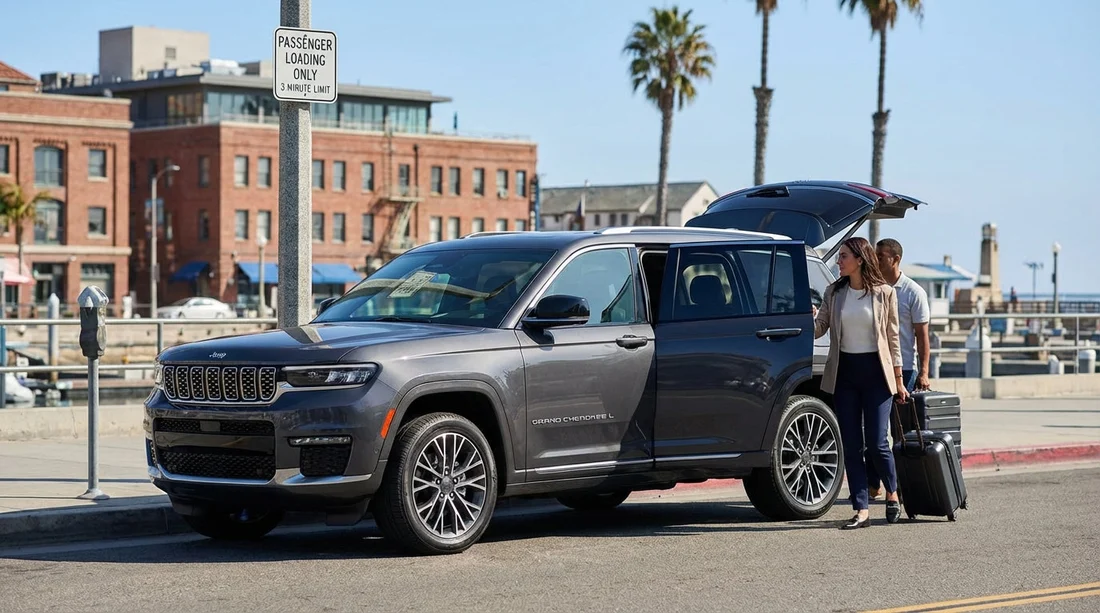
White kerb (passenger loading zone): White is typically intended for passenger pick-up and drop-off only, not deliveries. It is usually short-duration and often governed by time plates specifying hours and limits. Use it for a quick, stay-with-the-vehicle stop. If you leave the vehicle unattended, you are far more likely to be cited.
Green kerb (short time parking): Green usually allows very short parking for general use, commonly 10 to 30 minutes, again controlled by signs. These can be a good option if you need a little extra time to coordinate a meet-up, but they are not “wait indefinitely” zones.
Yellow kerb (commercial loading): Yellow is often reserved for commercial loading and can be restricted to certain vehicle types or hours. In tourist areas it is heavily used for deliveries. A private car hire vehicle should avoid yellow unless signage clearly allows general loading during specific times.
Regardless of kerb colour, time plates matter. A white kerb may only be active during peak periods, switching to general parking later. Conversely, a space that looks usable could become restricted during commute hours or special event windows.
Read time plates like a local, then decide if it is worth stopping
Time plates typically state the days, times, and maximum duration. The biggest mistake visitors make is reading only the limit and missing the hours. Another common error is stopping where a restriction applies only at certain times, then being surprised when enforcement is active because it is, for example, a weekday afternoon.
Before you pull in, do a slow pass to scan for: “No stopping”, “Tow-away”, “Bus zone”, “Taxi only”, “Commercial vehicles only”, and “Passenger loading only”. If you see conflicting instructions, follow the most restrictive and move on.
If you are collecting passengers with luggage, agree on a simple plan. Ask them to wait at a specific corner and text when they are at the kerb, so you are not circling and tempted to stop illegally. This matters more around the Wharf because traffic can make a legal space disappear in seconds.
Safer curbside pick-up and drop-off areas near Fisherman’s Wharf
Because kerbside rules can change, the safest approach is to aim for streets that are close enough to walk but less chaotic than the main tourist frontage. These are practical patterns that usually reduce risk.
1) Side streets just off Jefferson Street: Jefferson is the core Wharf corridor, and it is where you are most likely to encounter red kerbs, tour bus activity, and constant enforcement. Instead, look one block inland for calmer kerbside conditions, then have passengers walk a short distance. A 2 to 5 minute walk often avoids the most restrictive blocks.
2) Beach Street, but not right at the busiest attractions: Beach Street carries lots of visitor traffic and frequent stopping. If you must use Beach, aim for sections away from the densest queues and crosswalk clusters. Do not stop in painted bus or shuttle zones, which can be hard to spot when vehicles are already occupying them.
3) North Point Street as a “meet and load” buffer: North Point is commonly used as a through-route and can be more practical for quick passenger movements than the waterfront edge. Look for legal short-stay spaces or passenger loading areas and keep the stop brief.
4) Use paid garages when kerb space is unpredictable: If your group includes children, mobility needs, or multiple suitcases, a garage can be the lowest-stress option. You pay for certainty and time, and you reduce the temptation to idle in restricted zones.
When you are in a car hire vehicle, the key is to prioritise predictability over saving a minute. A single ticket, or worse, a tow, usually costs far more than a garage entry fee.
Specific “don’t stop here” traps around the Wharf
Enforcement hotspots near Fisherman’s Wharf tend to fall into a few categories.
Bus zones and coach staging: These may be marked with signs and road paint, and they can appear where you least expect, especially near major attractions. Stopping “just for a second” in a bus zone is one of the quickest routes to a citation because it disrupts operations and is highly visible.
Cable-car route conflicts: While the Wharf area is famous for cable cars, the most active turnarounds and tracks are areas where stopping can create dangerous conflicts. Even if you are not directly on the tracks, nearby kerb restrictions can be tighter to keep intersections clear. If you see cable-car signage or track-adjacent restrictions, choose a different block.
Tow-away corridors: Some red zones are clearly marked “Tow-away no stopping”. In the Wharf, tow trucks can operate quickly because clearing lanes is a priority. Do not rely on sitting in the driver’s seat as protection in a tow-away zone, enforcement can still proceed.
Crosswalk and corner clearance: San Francisco has strict corner visibility and safety rules. Even if the kerb is not painted red, stopping too close to a crosswalk, curb ramp, or corner can still be illegal. In tourist areas, pedestrian volumes make this a common enforcement focus.
How to execute a legal pick-up in under two minutes
If you can plan for a short, controlled stop, you can often use a legal passenger loading kerb effectively.
Step 1: Choose a target block, then identify a backup block. Circling in Wharf traffic increases the chance you will panic-park. Decide in advance where you will try first and where you will go second.
Step 2: Communicate a “kerb-ready” rule. Passengers should be ready to enter immediately, with bags zipped and phones away. In busy streets, a delayed passenger turns a legal stop into an overstayed one.
Step 3: Stay with the vehicle and keep wheels aligned. Do not double-park. Do not stop in travel lanes. Pull fully into the space, keep hazard awareness high, and leave promptly.
Step 4: If you cannot read the signs instantly, do not stop. Move on, loop the block, and try again. At the Wharf, the cost of guessing wrong is high.
Parking rules differ from passenger loading, do not mix them up
A common misunderstanding is treating “loading” as “parking for a bit”. Passenger loading zones are for immediate pick-up and drop-off, typically while the driver remains present. Short-term parking (often green kerb) may allow you to walk away briefly, but only within the posted time and any payment requirements.
If you are planning to meet someone inside a restaurant, tour office, or shop, you are usually better off using a garage or a clearly permitted short-term parking space rather than hoping a loading zone will cover you.
Car hire planning tips for Wharf visits in San Francisco
Fisherman’s Wharf is not a relaxing place to learn kerb rules for the first time. If you are visiting San Francisco on a tight schedule, build a few minutes for circling and signage checks, and consider travelling outside the busiest midday window when possible.
If your trip involves airport arrival, it can help to understand your pick-up logistics before you head into the city. Hola Car Rentals provides local landing pages that can be useful for planning: San Francisco SFO car rental and San Francisco SFO minivan rental are relevant if you are travelling with more people or luggage.
Some visitors also route through the South Bay before heading north, and knowing your broader car hire options can help coordinate passenger meet-ups and luggage transfers. See San Jose SJC car rental and car hire in San Jose for related planning context.
The big takeaway is that a calm plan beats a perfect kerb spot. Choose a less congested block, keep the stop brief, and treat any unclear kerb marking as a reason to move on.
FAQ
Where is the easiest legal place to pick up passengers near Fisherman’s Wharf? The easiest option is usually a signed passenger loading (often white kerb) on a side street one block off the busiest waterfront blocks, where traffic pressure is lower and you can stop briefly while staying with the vehicle.
Can I stop in a red kerb zone for a quick drop-off if I stay in the car? No. Red kerbs are generally no-stopping areas and can be tow-away zones. Staying in the driver’s seat does not make it legal, and enforcement near the Wharf can be quick.
What if the kerb is unpainted, does that mean it is legal? Not necessarily. An unpainted kerb can still be restricted by signs, time plates, or general corner and crosswalk clearance rules. Always prioritise posted signage and avoid stopping close to crosswalks.
Are bus zones enforced around Fisherman’s Wharf? Yes. Bus and shuttle zones are common near major attractions and are actively enforced because blocking them disrupts operations. If you see “Bus zone” signage or markings, keep moving and choose another block.
Is a garage better than kerbside loading for groups with luggage? Often, yes. A garage gives you predictable space and time to load safely, which can be worth it when travelling with multiple bags, children, or anyone who needs extra time to get in and out.






























































































