


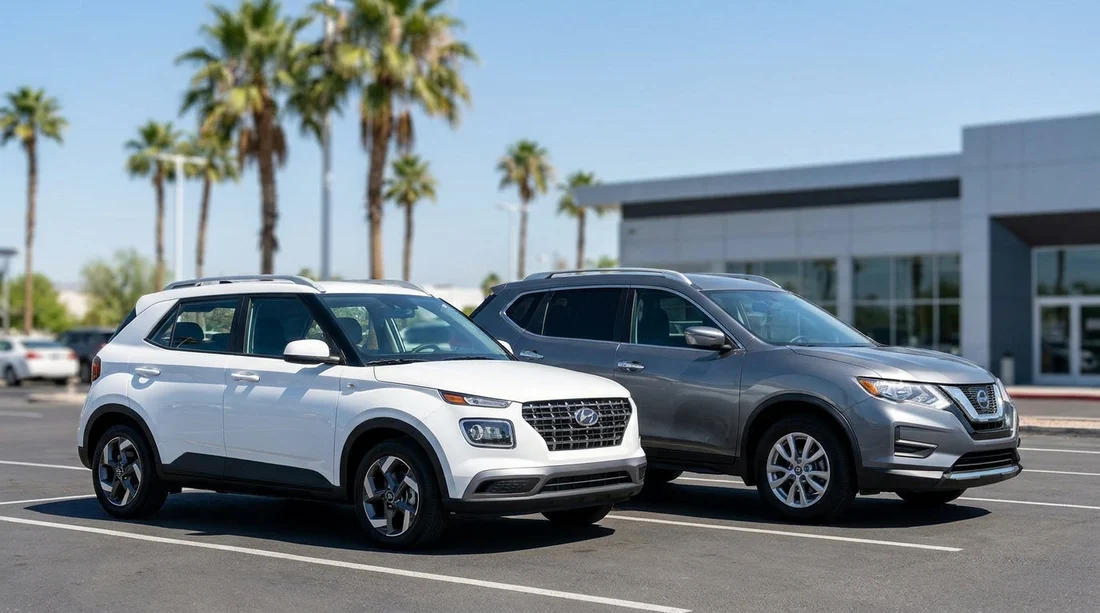
Quick Summary:
- Choose compact SUVs for easier parking and lighter luggage needs.
- Pick intermediate SUVs for larger boots and better rear-seat comfort.
- Both often list five seats, but intermediate suits adults better.
- Check luggage, child-seat space and fuel costs before booking car hire.
When you’re arranging car hire in the United States, SUV categories can feel confusing because the names sound similar, yet the real-world space differs. “Compact SUV” and “Intermediate SUV” are usually the two most popular choices for couples, small families, and road-trippers who want a higher driving position without the bulk of a full-size model. The practical difference comes down to overall footprint, how the cabin is shaped, and what you can realistically fit in the boot.
This guide breaks down what to expect from each class, especially for seating, luggage and day-to-day usability, so you can choose the right SUV type before you reserve. If you want to compare typical rental groupings and availability, the Hola Car Rentals car hire United States page is a useful starting point, and you can also browse options via car rental United States depending on how you prefer to search.
What “compact” and “intermediate” mean in rental SUV classes
Rental classes are based on broad size bands rather than one exact model. You are typically booking a category, not a specific vehicle. A compact SUV is a smaller crossover-style SUV, designed for city friendliness and decent practicality. An intermediate SUV is one step up, often with a longer wheelbase and slightly wider body, which translates into a roomier second row and a more usable boot.
Even if both categories are listed as five-seaters, the comfort level in seat two can be very different. And because luggage space is affected by the angle of the tailgate and the height of the load floor, two SUVs with similar exterior lengths can still pack differently. That is why focusing on what you need to carry works better than relying on the name alone.
Size and footprint: parking, turning, and urban driving
Compact SUVs are generally easier to live with in dense areas. If your itinerary includes city centres, hotel car parks, multi-storey garages, or tight curbside spaces, the smaller footprint matters. A compact SUV usually has a tighter turning circle and less overhang, which makes three-point turns and parallel parking less stressful.
Intermediate SUVs remain manageable, but you will notice the added length when squeezing into short bays or navigating narrow lanes. If you plan to spend most of your time driving interstates, the difference in manoeuvrability will matter less, and the intermediate class can feel more relaxed at speed thanks to a slightly longer wheelbase.
Seating expectations: five seats on paper, comfort in practice
Both compact and intermediate SUV rentals are commonly listed as seating up to five people. The key question is whether those five seats work for your group size and trip length. A compact SUV’s rear bench can feel narrow if you have three people across, or if your passengers are tall. The middle rear seat is often best treated as occasional use.
Intermediate SUVs usually provide more shoulder room in the second row and a bit more legroom behind the driver. That extra space is valuable on road trips, especially if two adults will sit in the back for hours, or if you’re fitting bulkier child seats. If you need to place two child seats side by side, intermediate is often easier, leaving more room to access seatbelt buckles and manage straps without contortions.
Luggage space: what fits, and why “boot litres” can mislead
Luggage capacity is where most travellers feel the difference immediately. In compact SUVs, the boot is often deep enough for daily use, but the overall volume can be limited by a sloping tailgate or a higher load floor. You might fit two medium suitcases plus a couple of soft bags, but stacking hard-shell luggage can quickly block rear visibility.
Intermediate SUVs typically offer a squarer cargo area and a bit more length behind the rear seats. In practice, this can be the difference between packing luggage upright with space to spare, or having to lay cases flat and build a tight puzzle every time you stop. If you’re travelling with prams, camping gear, larger cool boxes, or multiple wheeled cases, intermediate tends to reduce compromises.
Fuel use and running costs: small differences that compound
Compact SUVs often have a slight advantage on fuel use, particularly in stop-start traffic and shorter trips. Intermediate SUVs may use a bit more fuel, especially when loaded with passengers and luggage. The gap is not always dramatic, but over a long multi-state itinerary, it can affect your total spend.
When comparing options, remember that fuel economy depends heavily on engine choice, drivetrain and tyre size, which can vary within a class. If minimising fuel is a priority, a compact SUV is a sensible default. If your priority is space and comfort, intermediate can be worth the trade-off.
What to check before you confirm your car hire category
Because you’re choosing a class, not a specific model, it helps to validate your needs with a short checklist. First, confirm how many people will ride at the same time, and how long the longest drive day will be. Next, list luggage by type and size, not just bags. A pair of large hard cases can consume most of a compact SUV’s usable boot once you add a pram or cooler.
If your group is larger or your luggage is bulky, it can be worth comparing an SUV against a people carrier or van. The Hola Car Rentals van rental United States page is handy for checking what is typically available for higher-capacity travel. And if you like browsing by supplier, you can compare expectations and inclusions across providers such as Budget car hire United States and Alamo car hire United States.
Bottom line: which one should you pick?
Choose a compact SUV if you want the easiest driving and parking experience, and your luggage is limited or mostly soft. Choose an intermediate SUV if you value rear-seat comfort, have multiple hard-shell suitcases, or want extra flexibility for shopping and gear along the way. For most travellers, the right answer is the smallest class that comfortably fits your people and your hard items, with a bit of breathing room for the trip to stay enjoyable.
FAQ
Are compact and intermediate SUVs always five-seaters in car hire listings? Usually yes, but five seats does not guarantee equal comfort. Intermediate SUVs typically offer more usable space for adults in the rear and easier child-seat fitting.
How many suitcases fit in a compact SUV versus an intermediate SUV? It varies by model, but compact SUVs often suit two medium cases plus soft bags. Intermediate SUVs more often handle multiple cases with less stacking and better visibility.
Will I get the exact SUV model I saw online? Most rentals are for a category, not a specific vehicle. You can request preferences, but focus on the class features you need, especially boot size and rear-seat room.
Is an intermediate SUV harder to drive in cities? It can feel bigger in tight car parks and narrow streets, but it is still manageable. If city parking is a daily concern, compact is usually less stressful.
Should I choose a van instead of an intermediate SUV? If you have more than five travellers, very bulky luggage, or want maximum load space, a van can be more practical than stretching an SUV category beyond its comfort zone.






























































































