


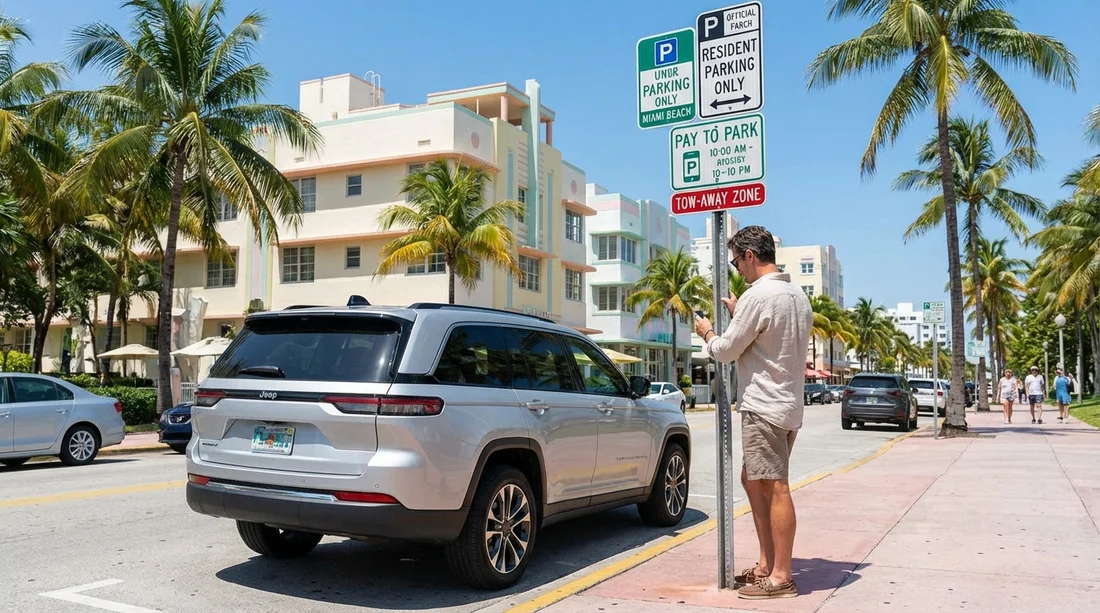
Quick Summary:
- Look for “Residential Permit Only” wording and zone letters on posts.
- Check time windows carefully, restrictions often apply overnight and weekends.
- Avoid any sign mentioning tow-away zones, booting, or immediate removal.
- Use pay-by-phone, public garages, and metered streets outside permit zones.
Miami Beach parking can feel like a different language, especially if you are visiting with car hire and relying on quick street stops. The tricky part is that a space can look open, but still be restricted by resident permits, specific time windows, or a tow zone rule that is easy to miss when you are focused on traffic and pedestrians. This guide breaks down the most common sign types you will see around Miami Beach, how to interpret them as a visitor, and where to park instead so you do not lose time, money, or your vehicle.
If you are collecting a vehicle at the airport or in the city, it helps to set expectations early. Miami Beach is a high-demand area with strict enforcement, and rules can vary by block. If you are organising car hire around your arrival point, these Hola pages are useful starting points for locations and vehicle options: Miami Airport car rental options, SUV hire in Miami Beach, Downtown Miami car hire, and Doral car rental.
Why Miami Beach resident-only parking catches visitors out
Miami Beach has dense residential neighbourhoods alongside hotels, restaurants, beaches, and nightlife. To protect residents, many streets use residential permit parking, often paired with short visitor windows. That means you might be allowed to park for two hours in the daytime, but prohibited overnight unless you have a permit. The most expensive mistakes happen when drivers assume a sign is optional, or read only the top line and miss a time range further down.
Enforcement is also quick. If a sign indicates towing for unauthorised vehicles, a tow truck can arrive fast, particularly in busy areas where spaces are valuable. With car hire, you also risk added admin time, fees, and the hassle of retrieving the vehicle from an impound lot.
How to read Miami Beach parking signs like a local
Before you leave the car, take 20 seconds to scan every sign on the pole closest to your space, plus any nearby pole that could apply to your section of curb. Miami Beach signs are often stacked, and the most important restriction is not always at eye level.
Use a simple order:
1) Is it resident-only? If yes, do not park unless you clearly qualify.
2) Are there time windows? A space can flip from legal to illegal at a certain hour.
3) Is there a tow warning? Treat that as zero tolerance.
4) Is it pay parking? If it is metered or pay-by-phone, confirm the zone, time limit, and hours of enforcement.
Resident permit parking, the key phrases to spot
The most common wording that should make visitors pause is anything like “Residential Permit Only” or “Permit Parking Only”, often accompanied by a zone letter or number. Miami Beach residential permits are tied to local addresses, and visitors in car hire almost never qualify unless you have a temporary permit arranged through a host and it matches the vehicle details.
What makes it confusing is that some residential areas allow limited public parking during certain hours. You might see combinations such as:
Residential permit only during specific hours, for example overnight, then open to anyone during daytime. Or the reverse, open overnight but restricted during business hours due to street cleaning or commuter pressure.
Permit holders excepted, which means the restriction applies to the public, while permitted vehicles are exempt.
Zone identifiers, such as a letter, number, or neighbourhood zone reference. If you do not have the corresponding permit, the space is not for you during the restricted period.
Practical rule: if the sign includes “permit” and you are not 100 percent sure you have the right permit for that exact zone and time, move on to a metered space or garage.
Time windows, the small print that triggers towing
Time windows are where many visitors slip up. A sign may allow parking, but only outside certain hours, or only for a limited duration. Watch for:
Days of week. A restriction might apply Monday to Friday, or include weekends, which is crucial in Miami Beach where weekends are peak enforcement periods.
Overnight hours. Residential permit rules often tighten in the evening. If you park for dinner and stay later than expected, you can cross into a restricted window without moving the car.
Maximum stay. Phrases like “2 HR PARKING” or “3 HR PARKING” can be strictly enforced. Even if payment is allowed, you might still have a cap.
Seasonal or event overlays. In busy tourist areas, temporary signs may appear for events or works. Always check for a bright temporary notice above or below the usual sign stack.
A good habit with car hire is setting a phone reminder 15 minutes before any posted limit ends. That buffer helps you avoid the problem of returning to the car exactly at the limit, only to find a ticket already issued.
Tow zones and “No Parking”, what to treat as absolute
Some signs are effectively absolute bans. These include “No Parking”, “Tow Away Zone”, “No Stopping”, and any indication that unauthorised vehicles will be towed. If towing is mentioned, assume there is no grace period.
Also be cautious with:
Loading zones. These can look like convenient short stops, but they are typically limited to active loading and may be restricted to certain vehicle types or times.
Bus stops and taxi stands. Even a brief stop can trigger enforcement, and towing can happen quickly in high-traffic areas.
Driveway curb cuts. Blocking any part of a driveway is a common tow reason, even if you think you left space.
Fire hydrants and corners. Avoid parking near hydrants or too close to intersections, where visibility rules apply even if you do not see a big sign.
Common Miami Beach sign combinations, decoded
What you will often see is not one clear instruction, but multiple panels that together define the rule. Here are typical combinations and how to interpret them:
Residential permit only, then “2 HR parking” below. Usually means the public can park for two hours during the allowed window, but permit holders may be exempt or allowed longer. If you cannot confirm the hours of enforcement, choose another spot.
Pay to park signs near residential areas. A pay sign does not automatically override permit restrictions. If both appear on the pole, the stricter rule applies at the relevant time. Read every panel.
Street cleaning plus permit rules. A block may be legal most days, but prohibited during street cleaning hours. These are high-ticket, high-tow risk periods because many drivers forget.
Handicap-related restrictions. Spaces marked for accessible permits are not visitor-friendly unless you have the correct permit displayed. Do not assume a short stop is acceptable.
Where to park instead, safer options for visitors
If you are in Miami Beach with car hire, the simplest low-drama options are paid facilities and clearly marked metered areas. They cost more than a lucky free space, but they dramatically reduce your towing risk.
Public parking garages and lots are usually the most predictable. They have posted rates, clear entry signage, and less ambiguity than residential streets. In busy periods, they can fill, so have a backup in mind.
Metered street parking can be fine if the sign clearly states the hours, rate, and maximum duration. Take a photo of the sign stack when you park. If there is a dispute, you will want a record of what was displayed.
Areas outside dense residential blocks tend to have fewer permit-only restrictions. If you are willing to walk an extra ten minutes, you can often find simpler signage and less aggressive enforcement.
Hotel valet or private garages can be worthwhile if you plan to stay in one place for several hours and want to avoid moving the car. Confirm in advance whether in-and-out is allowed, and what the closing hours are.
Practical checks before you leave the car
Use this quick routine every time you park in Miami Beach:
Check both sides of the street. Restrictions can differ, and signs can apply only to certain segments.
Confirm the direction arrows. Some signs apply only in the direction indicated. Parking just beyond the arrow can mean different rules.
Look for multiple poles. Your spot may fall between signs, and the closer one may not be the one that governs your exact section.
Set a timer. Time-window mistakes are the easiest to prevent with a reminder.
Do not assume darkness changes rules. Night-time is often when residential permit enforcement becomes stricter.
What to do if you think you have been towed
If you return and the vehicle is gone, first confirm it was not relocated for an emergency. Look for temporary notices nearby. In many cases, it is a tow. Note the exact location where you parked, the nearest intersection, and the sign you relied on. If you took a photo when you parked, that helps.
With car hire, contact the rental provider promptly to follow their process. There may be documentation requirements, and you will want to minimise downtime. Expect towing and storage fees to add up quickly, so acting fast matters.
How to plan your Miami Beach day to avoid parking stress
Parking is easier when it is part of your itinerary rather than an afterthought. If you are beach-hopping, plan one longer parking session in a garage and then walk or use short rideshare hops. If you are dining in the evening, aim to park before the tightest residential windows begin, or choose a facility where you can leave the vehicle legally overnight.
Finally, remember that Miami Beach is compact and walkable in many areas. The safest parking plan with car hire is often parking once, reading the signs carefully, and then enjoying the area without repeatedly searching for curb space.
FAQ
How can I tell if a Miami Beach space is resident-only? Look for wording such as “Residential Permit Only” or “Permit Parking Only”, often with a zone letter or number. If you do not have that permit, avoid parking during the posted restricted hours.
Do pay-to-park signs mean anyone can park there? Not always. A pay sign can sit alongside resident-permit restrictions, and the stricter rule applies at the relevant time. Always read every panel on the signpost before paying.
Why do time windows matter so much with car hire? A space can be legal when you arrive and illegal later, especially as daytime changes to evening. Set a reminder before the restriction starts or before the maximum stay ends.
What are the highest-risk places for towing in Miami Beach? Tow-away zones, permit-only areas during restricted hours, loading zones, blocking driveways, and areas near corners or hydrants. If towing is mentioned on a sign, treat it as zero tolerance.
What is the safest alternative to residential streets? Public parking garages, clearly marked paid lots, and metered streets with simple rules are the lowest-risk options. Paying a little more often prevents costly towing and wasted holiday time.






























































































