


Quick Summary:
- Check the rack will not block the rear number plate or lights.
- Confirm your rental agreement allows accessories that touch paint or glass.
- Do a fit test, tighten straps, then recheck after ten minutes.
- Photograph plate visibility, lights, rack contact points, and existing scratches.
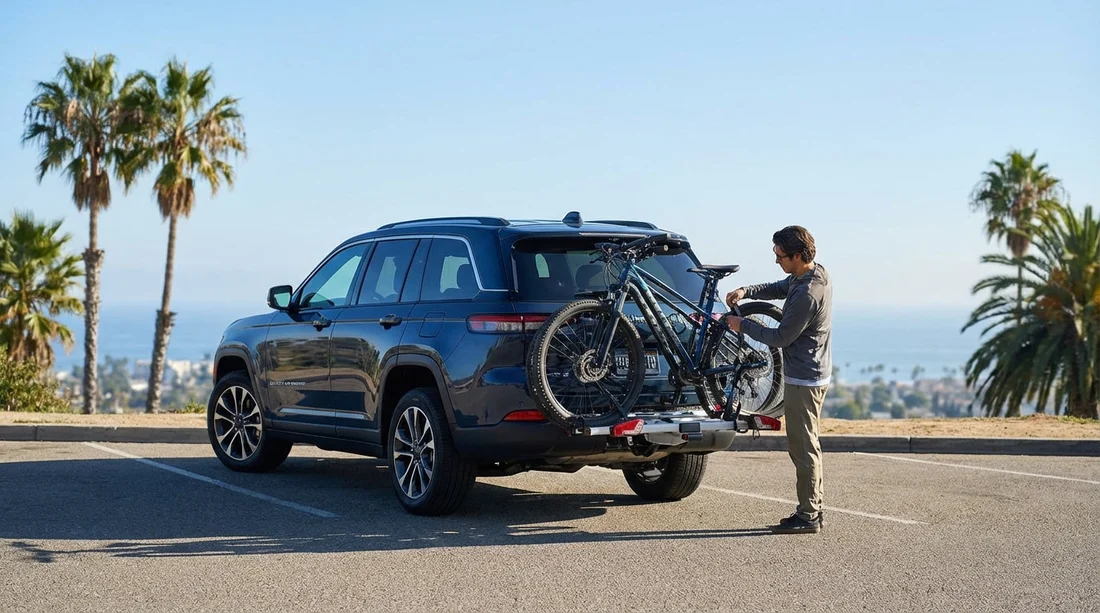
Planning to carry bikes on a trip with car hire in Los Angeles often leads to one practical question, can you use a rear mounted bike rack and will it cover the number plate. In California, the big issue is not whether you own the rack, it is whether the vehicle’s registration plate and required lights remain visible and legible, and whether the setup is safe. On top of that, rental agreements can restrict how you attach accessories, especially if straps or hooks can damage paintwork.
This guide covers the main legal visibility requirements you need to satisfy, simple checks to ensure the rack fits your hired car, and a clear photo checklist at pick up and after fitting so you can avoid disagreements when returning the vehicle.
Is a rear bike rack allowed on Los Angeles car hire?
In general, yes, you can use a rear bike rack with car hire in Los Angeles, provided two things are true. First, your rental provider’s terms allow it. Second, the rack and bikes do not obscure the rear number plate, tail lamps, brake lights, indicators, or the rear reflectors. The law focuses on visibility and identification, and the practical enforcement usually comes down to whether an officer can clearly see the plate and whether other drivers can clearly see your lights.
Because rental fleets vary, it helps to choose the right vehicle type for your bikes and luggage. If you are collecting near the airport, the vehicle options and policies can differ by supplier. You can compare choices and plan ahead via car hire at Los Angeles LAX and, for larger groups or more gear, consider whether a people carrier style vehicle provides easier loading through minivan hire in California at LAX.
Number plate and light visibility, what “cannot be covered” means in practice
California requires the rear plate to be displayed on the rear of the vehicle and to be clearly visible, so anything that blocks it creates risk. A rear rack can easily cover the plate once bikes are loaded, especially if the bikes have wide handlebars, panniers, or a hanging wheel position. Even partial obstruction can be a problem, because it can make letters or the registration month sticker hard to read.
Alongside the plate, consider all rear lighting. If the bikes or rack cover brake lights or indicators, you increase the chance of being stopped, and you also increase the chance of a rear end collision. Many hitch mounted racks sit below the lights, but high mounted strap racks can sit directly across the lamp clusters. Even if lights are not fully blocked, a wheel or frame can shadow them at night.
Also consider the rear view camera and parking sensors, which are common on newer rentals. Blocking a camera is not usually illegal, but it can lead to avoidable bumps when reversing. From a dispute perspective, any contact damage to bumpers or tailgates is often contentious, so plan for extra care when parking.
What if the rack covers the number plate?
If fitting your rack makes the plate hard to see, treat it as a problem to fix, not a minor issue. In the best case, you may receive a warning, in the worst case you could be ticketed. More importantly, plate obstruction can complicate tolls, parking enforcement, and automated cameras, and those charges can end up reaching the renter later.
Common ways people try to solve this include relocating the plate or adding an auxiliary plate. With car hire, relocating the actual plate is not appropriate. Rental plates must remain with the vehicle as issued, and you should not remove or alter them. Some cyclists use a rack that has a dedicated plate holder and integrated lights. That is often the cleanest solution from a safety standpoint, but with a rental you must still ensure the original plate is visible, unless local rules and the specific hardware clearly maintain compliance. If you cannot keep the original plate visible, the safer choice is to switch to a vehicle or rack style that keeps everything unobstructed.
Rental agreement and damage risk, what to watch for
Even if the road rules are satisfied, your rental agreement can still create risk. Strap mounted racks can press against paint, glass, trim, and spoilers. Hooks can slip, straps can rub through clear coat, and a trunk or tailgate can dent if the rack is overtightened. Hitch mounted racks avoid paint contact, but only work if the vehicle has a receiver. Many standard saloons and compact SUVs in rental fleets do not.
Before you fit anything, check whether the vehicle has a tow hitch receiver and whether it is rated for accessories. Do not assume an SUV has one. Also check the tailgate material, plastic trim, and any integrated spoiler. Some tailgates have limited strong anchoring points, which makes strap racks less secure.
If you are comparing suppliers or locations, it can help to review fleet details and typical vehicle mixes for your route. For broader options around the airport area, see car rental in California at LAX. If your trip includes Orange County, the fleets at other airports can differ, which can matter if you need a specific body style. For example, you can check car rental at Santa Ana SNA when planning multi stop itineraries.
Practical fit checks before you leave the car park
Whether you are collecting at LAX or elsewhere in Los Angeles, do the fit test while you still have time and space to adjust. Use this sequence, it is quick and reduces the chance of a later problem.
1) Confirm rack type matches the car. Strap racks work best on vehicles with a metal boot lid and clear top and side edges for hooks. They are problematic on many hatchbacks, tailgates with plastic trims, and cars with large spoilers. Hitch racks require a properly sized receiver. If you do not have a compatible mount, do not force it.
2) Check contact points and protect paint. Any pad that sits on the body should be clean. Dirt under a pad becomes sandpaper. Wipe the car surface and the rack pads. Ensure straps do not cross sharp edges that will cut them.
3) Tighten evenly, then shake test. After tightening, grasp the rack and shake it firmly in multiple directions. A small amount of movement is normal, but it should not shift across paint, and the hooks should not creep.
4) Load bikes with visibility in mind. Put the heaviest bike closest to the car. Angle handlebars to minimise coverage of tail lamps. Remove loose accessories like pumps or bottles. If you have two bikes, offset them so frames do not sit directly in front of the plate.
5) Step back and check visibility. Stand 5 to 10 metres behind the car. Can you read the entire plate easily. Are both tail lamps fully visible. Ask a travel companion to press the brake and indicators so you can confirm brightness and clarity.
6) Recheck after a short drive. Straps settle. Drive for ten minutes, then stop somewhere safe and retighten. Repeat at each fuel stop, and after any rough road sections.
What to photograph at pick up to avoid disputes
Photos are your best protection if you later face questions about damage, missing parts, or charges related to the bike rack setup. The aim is to document the car’s condition and also show that your rack did not obstruct the plate or lights at the start of the trip.
Take your standard rental condition photos first, then add rack specific shots.
Standard condition photos: take wide shots of all four sides, close ups of each corner bumper, wheels, and any existing scratches or scuffs. Photograph the roof and bonnet if you can, because strap racks sometimes lead to loading bikes on the roof temporarily, which can cause scratches.
Rack specific photos before mounting: photograph the rear bumper, boot or tailgate, and the areas where pads or hooks will touch. This makes it easier to show pre existing marks.
Rack mounted, no bikes: take a straight on rear photo showing the full number plate, and a second photo from each rear corner showing both lamp clusters. Include the rack contact points in the frame so it is clear how it is attached.
Rack mounted, bikes loaded: repeat the same rear and corner shots with bikes loaded. Then take a photo with the brake lights illuminated, and another with hazards on, so it is clear the lights are visible. If you are travelling at night, take one low light photo to show legibility and light visibility.
Inside the boot area: if you fold seats or carry extra gear around the rack supports, photograph the boot floor and seatbacks to show existing wear. Rental disputes often arise from interior scuffs when loading and unloading bikes.
Time and place evidence: use your phone’s timestamp and location metadata if available. Avoid using filters or edits. Store the images in a single album so you can find them quickly if needed.
Driving and parking tips in Los Angeles with bikes on the back
Los Angeles driving involves frequent stop start traffic, tight parking structures, and quick lane changes. A rear rack increases your vehicle length, and bikes can sit higher or wider than you expect. Leave extra following distance, brake earlier, and avoid sudden swerves that make the rack sway.
When parking, be cautious with parallel spaces and reversing sensors. If your rack blocks the camera, rely on mirrors and a spotter. Watch for low clearances in car parks, because bikes can contact walls or pillars when swinging into tight turns. At drive throughs and valet areas, confirm the attendant understands the extra rear overhang.
If you use toll roads outside the city, a blocked plate can affect billing. Even if you are paying tolls through the rental provider, plate reads can be part of the processing. Keeping it visible reduces administrative headaches later.
When to change plan, and safer alternatives
If you cannot keep the plate and lights fully visible with your current rack, it is better to change something early. Options include using a different rack style, carrying bikes inside a larger vehicle, or choosing a model with a hitch receiver that supports a rack without touching paint. Sometimes the simplest fix is removing a front wheel so the bike sits lower and narrower, reducing obstruction.
If your party has multiple bikes, consider whether a larger vehicle makes loading easier and reduces the temptation to over tighten a strap rack. This is where vehicle selection matters more than most people expect when arranging car hire in Los Angeles.
FAQ
Can I legally drive in Los Angeles if my rear bike rack covers part of the number plate? It is risky. The rear plate needs to be clearly visible and legible, so any obstruction can lead to a stop or a ticket, and can complicate tolls and parking enforcement.
Do I need a separate light board if I carry bikes on the back? If bikes or the rack reduce visibility of brake lights or indicators, you should not drive until visibility is restored. A rack with integrated lights can help, but you still need to ensure the vehicle’s required lights and plate remain compliant.
Will my rental company allow a strap mounted bike rack? Many do, but terms vary and damage risk is higher because straps and hooks contact paint and trim. Check the rental agreement, and document contact points before and after fitting.
What photos should I take at pick up if I plan to fit a bike rack? Photograph all existing exterior marks, then take clear rear and rear corner photos with the rack on, and again with bikes loaded. Include images showing the full number plate and illuminated brake and indicator lights.
What is the quickest way to check the rack is secure before driving? After tightening, perform a firm shake test, then drive for ten minutes and retighten. Recheck straps at each stop, because they can settle and loosen during the first hour.






























































































