


Quick Summary:
- Toll cameras read your rental’s plate and match it to hire dates.
- The toll agency bills the rental company, then your card later.
- Expect tolls plus an admin or convenience fee per toll day.
- Ask at pickup about toll programmes, devices, fees, and opt-out options.
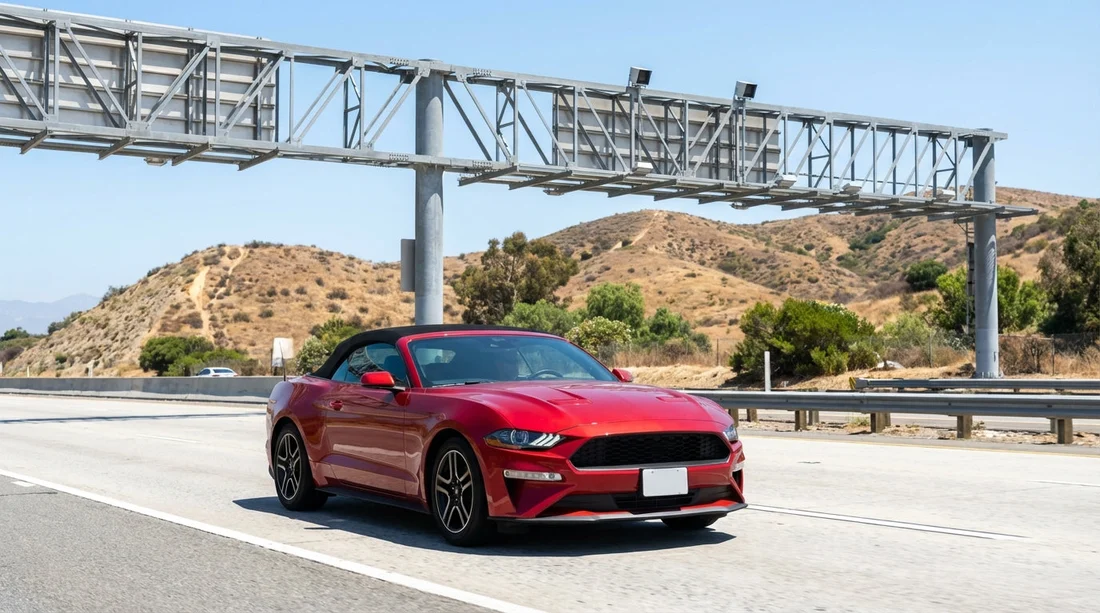
Toll-by-Plate is common across California’s bridges, express lanes, and toll roads. Instead of stopping at a booth, cameras and sensors capture the vehicle’s number plate as you drive through. The toll operator then looks up who is responsible for that plate at that time and bills accordingly. When you are driving a car hire vehicle, that “registered owner” is the rental company, so the bill reaches them first, then gets passed on to you under the rental agreement.
This guide explains what Toll-by-Plate means in practice, how the plate is linked to your rental contract, what delays are normal, and which administrative fees travellers should plan for when hiring a car in California.
What Toll-by-Plate means in California
Toll-by-Plate is a cashless tolling method. It relies on plate recognition rather than an in-car transponder. In California, you will see it on certain bridges and toll facilities, and you may also encounter open road tolling where there are no barriers at all.
With Toll-by-Plate, you typically do not need to do anything at the gantry. The system records your plate, calculates the correct toll for that facility, and creates a transaction. If the plate is attached to a personal account with the toll agency, it may be charged automatically. If not, the toll operator will bill the registered owner, which is usually the rental company for a car hire vehicle.
How the rental car’s plate gets linked to you
Rental companies manage fleets where each plate is tied to internal records and a timeline of who had the vehicle. When a Toll-by-Plate transaction arrives, the rental company identifies the rental agreement that covers the timestamp of the toll event. That is the key step that links the plate to you.
In most cases, the rental agreement authorises the rental company to pay or process tolls incurred during your hire period, charge toll amounts to the payment method on file, and add an administrative, convenience, or processing fee as disclosed.
This is why it matters to keep your rental agreement details accurate at pickup. If the wrong name, dates, or payment card are on file, toll billing can become messy, and disputes take longer.
If you are collecting a vehicle at a busy airport location, it can help to review your paperwork calmly before leaving the car park. For travellers arranging car hire around major gateways, Hola Car Rentals publishes local pages such as car hire at San Francisco SFO and car rental at Santa Ana SNA, where you can compare options and understand what to ask at the counter.
Billing timeline: why toll charges show up later
A frequent surprise with Toll-by-Plate is timing. You may return the vehicle, settle fuel and extras, then see a toll-related charge days or weeks later. That delay is normal because the process has multiple steps.
First, cameras capture the plate and the system validates the read. Next, the toll agency generates an invoice and sends it to the registered owner, which for a rental is the rental company or their toll services partner. Finally, the rental company posts charges to your agreement, which is when your card is charged for tolls and any applicable fees.
Because of this workflow, you should keep the payment card used for the rental active for a while after your trip, or you may end up with failed payments and follow-up charges.
What fees to expect with Toll-by-Plate on car hire
Travellers usually pay two components: the toll itself and a rental-related fee for handling the toll.
The toll amount is set by the toll operator and varies by facility, time of day, and sometimes number of occupants for express lanes. That part is not controlled by the rental company.
The administrative fee is where costs can vary across providers. Common models include a per toll day fee, a per transaction fee, or an opt-in programme fee with a daily rate.
Read the toll section of your agreement carefully, especially the definitions of “toll day” and “transaction”. Two short trips through toll points on the same day might trigger one admin fee or multiple, depending on the provider’s rules.
Also note that some toll roads and express lanes issue higher video toll rates compared with transponder rates. Even if you personally would have used a transponder at home, Toll-by-Plate may price differently, and the rental company will pass through what is billed.
Transponders, express lanes, and Toll-by-Plate
Some California facilities support both transponders and Toll-by-Plate. In a rental car, you might be offered an in-car toll device or a toll programme. Other times, the car may already have a device installed. The goal is to ensure the toll can be collected without violations.
If you plan to use express lanes, be especially careful. Express lanes can have occupancy rules and may require a switchable transponder setting to claim any eligible discount or free travel with multiple occupants. Toll-by-Plate cannot always convey occupancy, so it may default to a charged rate. Ask at pickup how the vehicle is configured for express lanes and whether you need to do anything different.
For families or groups, choosing the right vehicle can affect how you travel through California’s network. If you are comparing larger options for airport arrivals, you can review pages like minivan rental at Los Angeles LAX or minivan rental at Sacramento SMF, then confirm toll device details before driving away.
How to avoid unexpected charges and notices
You cannot avoid legitimate tolls if you use toll facilities, but you can avoid surprises, penalties, and duplicated payments.
Check the rental’s toll policy before you drive. Ask whether Toll-by-Plate is handled automatically, whether there is an opt-in programme, and what the administrative fee structure is.
Do not pay a Toll-by-Plate invoice you receive by post unless instructed. As a renter, you usually will not receive the original toll invoice, but if something reaches you later, double-check that it is not already being processed by the rental company. Paying twice is a common mistake.
Avoid mixing personal toll accounts with a rental plate. Some travellers try to add the rental plate to their own toll account. That can work in some cases, but it can also create duplicate charges if the rental company’s toll programme also captures the toll. Only do this if you understand the rules, and confirm the rental vehicle is not enrolled in a separate programme.
Save documentation. Keep your rental agreement, return receipt, and dates of hire. If you later need to query a toll charge, those dates help the rental company match the toll timestamp accurately.
FAQ
Q: Will I pay Toll-by-Plate automatically when I hire a car in California?
A: Usually yes. The toll operator bills the registered owner, the rental company matches it to your hire dates, then charges your card for tolls plus any disclosed admin fees.
Q: Why did a toll charge appear after I returned the vehicle?
A: Toll-by-Plate billing is delayed because invoices are created and sent later. The rental company often receives tolls after your return, then posts the charge to your agreement.
Q: What is the difference between the toll and the admin fee?
A: The toll is the road or bridge charge set by the toll operator. The admin fee is the rental company’s charge for processing, paying, and allocating tolls to the correct renter.
Q: Can I avoid fees by paying the toll myself online?
A: Not reliably. Many rentals are set up so the rental company is billed as the registered owner. Paying separately can lead to duplicate payments, so only do this if the rental company confirms the correct process.
Q: Do express lanes work the same way as Toll-by-Plate?
A: Not always. Some express lanes require a transponder setting for occupancy rules. With Toll-by-Plate, you may be charged the default rate if occupancy cannot be declared.




























































































