


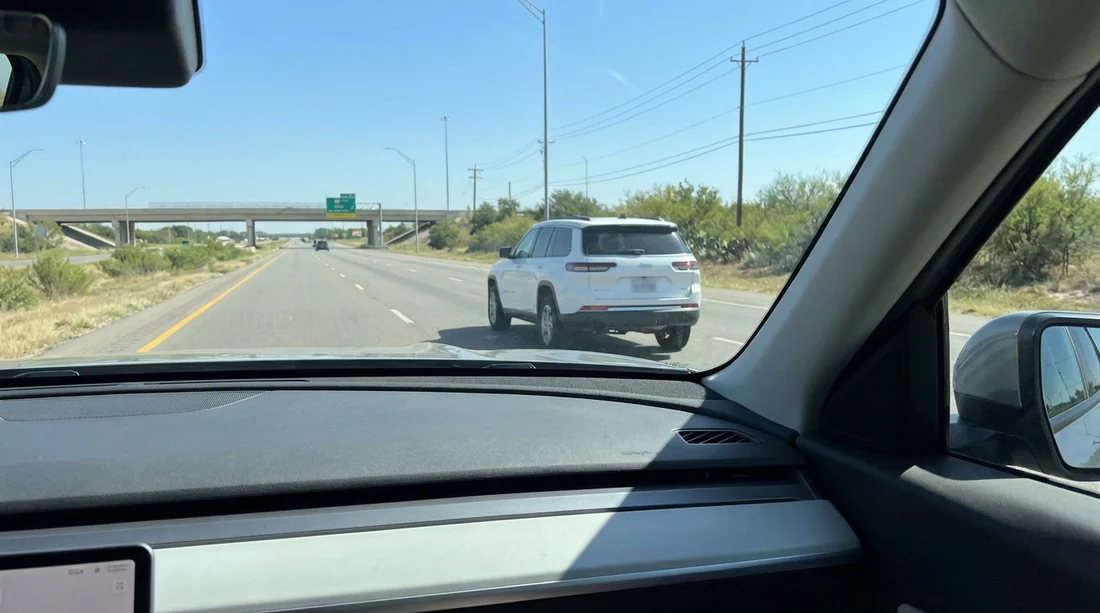
Quick Summary:
- Use frontage roads as parallel service lanes for exits, fuel, and re-entry.
- Watch for “Exit Only” and frontage road signs one mile early.
- If forced off, stay calm, follow “Frontage Rd” arrows, then rejoin.
- Avoid toll lanes by reading “Toll” labels before merging back.
Driving in Texas can feel different if you are used to motorways elsewhere. One of the biggest reasons is the frontage road, a parallel road that runs alongside a major highway and connects you to businesses, junctions, and neighbourhood streets. In a car hire vehicle, understanding frontage roads quickly reduces stress, especially around busy interstates in Dallas, Fort Worth, Houston, and El Paso.
A Texas frontage road, sometimes signed as “Frontage Rd”, “Service Rd”, “Feeder”, or simply “Access Rd”, is a surface road built next to the main highway lanes. It lets traffic enter and leave the highway without needing every driveway to connect directly to fast moving traffic. Many frontage roads are one way, some are two way, and most have frequent traffic lights and turn lanes.
The key benefit for visitors is that frontage roads give you a second chance. If you miss a ramp, you are often channelled onto the frontage road where you can loop back, take the next entrance ramp, or reach your destination via surface streets. The key risk is that the signage can be dense and the lane choices come quickly, particularly where toll lanes run alongside general purpose lanes.
How Texas frontage roads work in practice
Think of the highway as the express path and the frontage road as the local path. The highway handles longer distance travel at higher speeds. The frontage road handles local access to shops, hotels, petrol stations, and cross streets. Between them sit the on ramps and off ramps.
At many interchanges, you exit the highway onto a ramp that drops you onto the frontage road. From there, you can:
1) Continue straight along the frontage road to reach a cross street or business entrance.
2) Turn at a traffic light to cross under or over the highway to the other side.
3) Merge back onto the highway using an on ramp that begins from the frontage road.
In metro areas, frontage roads often run continuously for miles, acting almost like an extra navigation layer. This is why your sat nav may instruct “Take the exit toward Frontage Road” rather than naming a small local street.
How to spot frontage road signs early, and why early matters
Missed exits usually happen because drivers only start scanning when they see the immediate gore point, the triangular striped area where lanes split. In Texas, it helps to read signs in phases.
Phase 1, one mile to half a mile out: Look for big green overhead signs listing upcoming exits and the “Exit Only” panel. If your lane is becoming an exit only lane, decide now whether you are staying on the highway or exiting. Late lane changes are what create panic.
Phase 2, at the ramp split: Watch for smaller signs that say “Frontage Rd” or “Service Rd”. You may also see icons for fuel, food, and lodging. If your plan is to access a business, frontage road is often correct. If your plan is to keep travelling through the city, it may be better to stay on the main lanes unless your sat nav explicitly wants the frontage road.
Phase 3, after you are on the frontage road: You will see local style signs for cross streets, U turns, and on ramps. The most common confusion point is choosing the correct entrance ramp back to the highway because several ramps can exist close together, including tolled options.
If you are collecting a car hire at the airport and heading straight into a complex interchange, give yourself more time than you think. For example, routes out of Dallas Fort Worth area often involve quick sign sequences. If you are arranging a pickup through Dallas DFW car rental, plan to get oriented before joining the fastest lanes.
When you will be forced off the motorway in Texas
“Forced off” usually means your current lane becomes an exit only lane, or the road design funnels you onto the frontage road. This happens often at:
Exit only lane drops: You stayed in the right lane too long and the lane becomes the off ramp. In many Texas corridors, the rightmost lane regularly turns into an exit. If you are not taking that exit, move left earlier when it is safe.
Main lane splits: At certain interchanges, the highway splits into different routes, and one route peels off. The sign might show two arrows, one for through lanes, one for an exit route. If you miss the decision point, you may end up on a different road or on a frontage road connector.
Construction and temporary alignments: Texas roadworks can shift lanes and add temporary exits. If orange signs route you off the highway, follow them, get onto the frontage road, then rejoin when directed.
Managed lanes and tolled corridors: Some sections place tolled express lanes next to free lanes. If you accidentally drift into the wrong entry, the next legal exit might be later than expected. This is why reading lane labels and pavement markings early is critical.
If you do get forced off, treat it as normal. In many cases, frontage roads are designed to handle that flow, with a straightforward next ramp to rejoin.
How to use a frontage road to recover from a missed exit
Frontage roads are your recovery route. Use this step by step approach:
1) Commit to the ramp calmly. If you are at the split and it is unsafe to move left, take the exit. Texas drivers expect this, and you will usually have a chance to rejoin quickly.
2) Once on the frontage road, keep right and slow down. Speeds drop, traffic lights appear, and vehicles may be turning into driveways. Check mirrors and give yourself space.
3) Decide your goal: If you missed an exit to a specific cross street, continue along the frontage road to the next intersection and use the next U turn or cross street to get back. If you missed a highway to highway interchange, look for the next on ramp that returns you to the correct highway direction.
4) Use U turns correctly. Many Texas frontage roads provide signed U turn lanes under the overpass. These are not roundabouts. Follow the lane markings, yield as posted, and watch for pedestrians and cyclists near the corners.
5) Rejoin without rushing. Texas on ramps can be short or can merge quickly. Match speed, use your indicator, and merge when a clear gap opens.
This is particularly useful in large metro areas. If you are driving after pickup near Fort Worth, it can help to practise a calm “exit, frontage, rejoin” loop in your mind. Visitors collecting via car hire in Fort Worth DFW often find the first big interchange is the hardest, then it becomes familiar.
How to rejoin the highway without accidentally entering toll lanes
One of the easiest mistakes for visitors is taking the correct on ramp back to the highway but entering a tolled lane system rather than the free general purpose lanes. The fix is to treat toll indicators as a separate decision, not an afterthought.
Read the lane labels on signs. Look for the word “Toll”, “Express”, “Managed”, “TEXpress”, or a toll road name. If a sign lists two options, one marked toll and one not, assume the toll option has its own ramp or its own left side entry.
Watch pavement markings and lane separators. Tolled express lanes sometimes use double white lines, flexible posts, or barrier separation. Do not cross double white lines. If you are in a lane that is separated with posts, you are likely committed to that facility until the next authorised exit point.
Use the frontage road to choose the correct ramp. Frontage roads often have multiple ramps close together: one for free lanes, another for tolled lanes, and another for an interchange. If you are unsure, stay on the frontage road a little longer to confirm signage. The penalty for waiting is usually a few minutes, the penalty for a wrong ramp can be a longer detour and unexpected charges.
Check your sat nav settings. Many apps let you avoid toll roads. Turn that on before you start driving, especially around Houston and Dallas where tolled networks are common.
Know your toll payment approach in your car hire. Ask what the vehicle has installed, such as a toll tag, and how charges are handled. Even if you intend to avoid tolls, understanding the system reduces stress if you ever make an unavoidable turn.
If your trip starts at Houston airport, your first hour may include toll options depending on direction and time of day. Being set up early helps, especially if you arranged your vehicle through car hire at Houston IAH.
Frontage road lane tips that prevent missed exits
Stay out of the far right lane unless you are exiting soon. In Texas, the rightmost lane frequently becomes an exit only lane. If you are unsure, cruising one lane left gives you more options.
Look for “EXIT ONLY” panels. These are the clearest warning that your lane is about to peel off. If you need to stay on the main highway, change lanes earlier, not at the last moment.
Expect close spaced ramps. It is common to see an off ramp, then an on ramp, then another off ramp within a short distance, especially where the frontage road connects multiple cross streets.
Do not follow a frontage road if your goal is through travel unless directed. Frontage roads have lights and turning traffic. They are excellent for local access and recovery, but slower for crossing a city.
Use landmarks, not just exit numbers. If your sign says a street name, remember it. Frontage roads make it easier to reach that street even if you miss the exact exit number.
Common situations, with the safest response
You missed the exit to your hotel. Take the next exit, stay on the frontage road, and continue until you can turn around at a signed U turn or a signalised junction. Hotels often have access directly from the frontage road.
Your sat nav says “keep right” and you see both toll and non toll ramps. Slow your decision down by staying on the frontage road. Wait for a sign that explicitly references the free lanes, or avoid ramps labelled toll.
You are aiming for a large interchange and suddenly see “Exit Only”. If you have time and space, move left. If not, exit, then use the frontage road to rejoin at the next on ramp, or follow signs to the interchange from the frontage road.
You ended up on the frontage road but want the highway again. Look ahead for a sign that says “Entrance” or “On Ramp” with the highway shield, like I 35, I 10, or US 75. Do not jump into a ramp until you confirm the direction, such as North, South, East, or West.
If you are travelling with a larger vehicle, ramps and merges can feel tighter. Choosing the calmer frontage road option for regrouping can be especially helpful if you collected through van rental in Fort Worth DFW.
Frontage roads in Texas, a quick mental model
Use this simple mental model to stay oriented: highway for speed, frontage road for access. Exits take you down to the frontage road, and entrance ramps bring you back up to the highway. If you miss something, the frontage road is usually the designed recovery route, not a mistake.
Once you start expecting frontage roads, you will also start noticing how signs are arranged. Texas signage usually gives you several chances, first the big overhead notice, then the lane assignment, then the ramp split, then confirmation signs on the frontage road itself.
The most important habit is to decide earlier than you think. If you wait until the last few seconds, you will either cut across lanes unsafely or be forced onto a ramp. If you decide early, you can either exit intentionally to the frontage road or stay in through lanes confidently.
FAQ
What is the difference between a frontage road and an exit ramp in Texas? An exit ramp is the short connector that takes you off the highway. The frontage road is the parallel surface road you often reach after the ramp, used for local access and for rejoining later.
Are Texas frontage roads always one way? No. Many are one way, especially in busy urban corridors, but some are two way. Signs and lane markings will show the direction, so treat each frontage road as unique.
If I miss an exit, should I try to cut across at the last second? No. Continue safely, take the ramp if you are committed, then use the frontage road to loop back. Texas road design usually makes recovery straightforward without risky lane changes.
How can I avoid accidentally entering toll lanes when rejoining the highway? Look for “Toll” or “Express” labels on signs, avoid separated entries with posts or double white lines, and stay on the frontage road until you see a clearly signed free entrance ramp.
Will my sat nav understand frontage roads correctly? Usually yes, but it can give late prompts. Keep toll avoidance settings consistent with your plan, and rely on overhead signs for final lane choice, especially near complex interchanges.




























































































