


Quick Summary:
- Choose a crossover for city driving comfort and better fuel economy.
- Pick an SUV for extra passenger room, luggage space, and higher seating.
- Choose a 4x4 for low-range traction on rough, loose surfaces.
- Check AWD versus 4WD wording, because rental labels vary by fleet.
When you’re organising car hire in Texas, the labels can feel inconsistent. One listing says “SUV”, another says “crossover”, and a third says “4x4”, yet the photos look similar. In US rental categories, these terms describe a mix of body style, drivetrain, and capability, and the exact model can vary by fleet and location.
This guide breaks down what the labels usually mean in Texas, how they affect space and comfort, and when drivetrain matters for the roads you plan to drive. It also explains common US terminology like AWD and 4WD, so you can choose a vehicle category with fewer surprises at pick-up.
SUV, crossover and 4x4, what the labels usually mean
Crossover typically means a car-based SUV, built on a unibody platform similar to a saloon or hatchback. Crossovers prioritise on-road comfort, easy handling, and efficient cruising. In Texas, this category often includes compact and mid-size models that suit city driving and long interstate stretches.
SUV in rental language often means a larger, more upright vehicle with more interior volume. It can still be unibody, but it usually sits above crossovers in size or seating. In practice, “SUV” may also be used as a catch-all for crossovers, so you must look at the size class and seating description rather than the word alone.
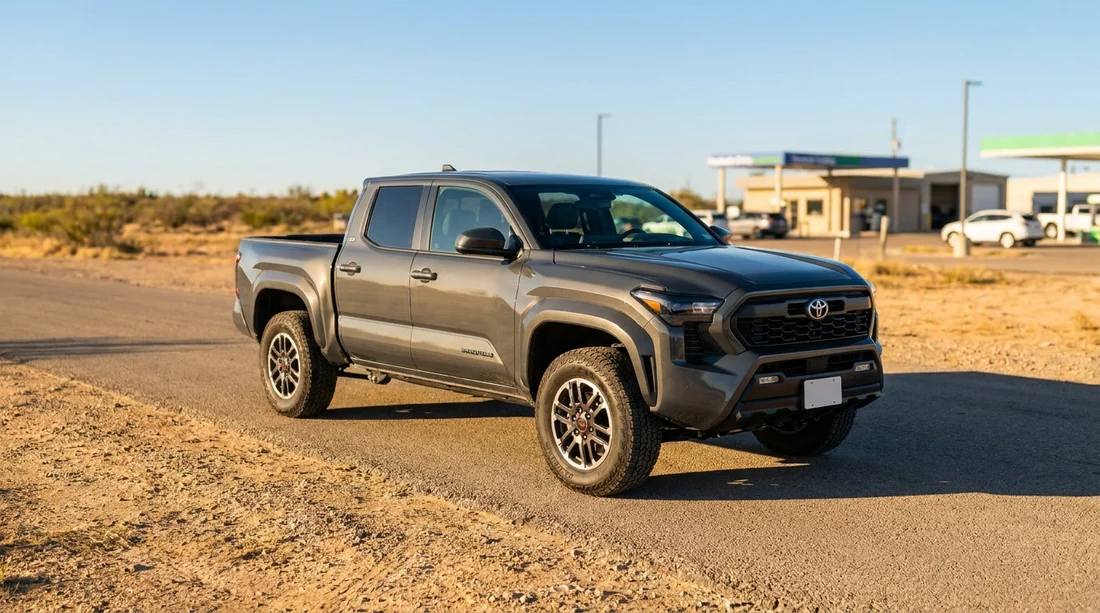
4x4 usually indicates a vehicle with four-wheel drive (4WD), often with a more rugged setup. In the US, “4x4” is frequently associated with low-range gearing and improved traction on loose or uneven surfaces. Some rentals label this as “4WD SUV” or “4x4 SUV”, and it can overlap with large SUVs or certain pickups.
Drivetrain basics: FWD, RWD, AWD and 4WD
Most crossovers are front-wheel drive (FWD) or all-wheel drive (AWD). FWD is common and perfectly fine for typical Texas road conditions. AWD automatically sends power to different wheels when it detects slip, which can help in heavy rain or on loose gravel, but it is mainly designed for on-road stability rather than serious off-road work.
Rear-wheel drive (RWD) is common on some larger SUVs and many pickups. It is stable at speed, but on slick surfaces it can feel less confidence-inspiring for drivers used to FWD. In Texas, RWD is usually fine for interstates and dry conditions.
Four-wheel drive (4WD), often marketed as 4x4, is the more off-road oriented system. It may offer a low-range mode for controlled crawling on steep, rocky, or deeply rutted tracks. Some systems are part-time 4WD (you select 4H or 4L), others are full-time, and rental listings do not always specify. If the trip involves rough ranch roads, deep sand, or remote trailheads, 4WD can be the deciding factor.
Space and seating: what you actually get
For car hire in Texas, space is often the real reason people move up from a compact car to a crossover or SUV. Think in terms of passengers, luggage, and the shape of your gear.
Crossover (compact or mid-size) tends to seat five with a boot that suits a couple of medium cases. It is usually the easiest to park in downtown Austin, San Antonio, or Dallas, while still giving a higher driving position and more rear legroom than many saloons.
Mid-size or full-size SUV can offer a larger boot, wider rear seats, and a calmer ride at motorway speeds. If you have bulky luggage, a pram, coolers, or multiple large suitcases, the extra cubic space matters. Note that a third row, if present, often reduces boot space unless folded.
7-seat SUV categories vary widely. Some are genuine family haulers, others have a third row best for children. If you need seven adults plus luggage, consider whether you need a larger class or a second vehicle.
Comfort on long Texas drives
Texas distances are real. Driving from Dallas to Houston, Austin to Big Bend country, or San Antonio out towards West Texas can mean long stints on I-35, I-10, or I-20. Crossovers usually deliver a car-like ride and predictable handling, which many travellers prefer for motorway cruising.
If your trip starts at Dallas Fort Worth International, browsing categories like car rental at Dallas DFW can help you compare size classes side by side without relying on labels alone.
Road conditions in Texas: when a 4x4 really helps
For most visitors, paved roads cover almost everything, including major national attractions and city-to-city routes. In those cases, AWD or even standard FWD is enough. Where 4x4 becomes useful is when traction and clearance are genuinely limiting factors.
Situations where choosing a 4x4 category is sensible include remote trailheads, unpaved ranch access roads after heavy rain, sandy tracks, or routes that can become rutted. A 4x4 is also reassuring in sudden downpours where standing water and slick surfaces appear quickly, although tyres and cautious speed matter more than drivetrain.
Keep in mind that “4x4” does not automatically mean the vehicle is set up for extreme off-roading. Rental agreements may restrict use on certain unpaved roads, and ground clearance varies by model. If access roads are rough, look for mentions of 4WD capability in the category details and confirm any restrictions before you set off.
How rental categories are used, and why photos can mislead
US rental companies sell by category, not by guaranteed model. A listing that says “SUV” might include several different vehicles that meet minimum specs for seats and luggage. Photos are often representative, so focus on stated capacity, number of doors, fuel type, and drivetrain where shown.
Also note that “crossover” is not always a separate category. Some fleets call compact crossovers “Compact SUV”. Others keep “Crossover” for smaller unibody models and reserve “SUV” for larger ones. If you are collecting near Dallas, a category-specific page like SUV rental at Dallas DFW can make it easier to compare what “SUV” means at that location.
Choosing the right option for common Texas trips
Dallas, Fort Worth, Austin, San Antonio city breaks: a crossover or compact SUV suits parking, comfort, and day trips. If your hotel has tight parking, the smaller footprint helps.
Hill Country and wineries: a crossover is usually ideal, with enough space for luggage and a comfortable ride on rolling two-lane highways.
Gulf Coast and beach towns: AWD can help on wet roads, but a 4x4 is only necessary if you expect to drive on soft sand, which is often restricted anyway. Check local rules.
West Texas road trips: consider comfort first, then range and luggage space. A mid-size SUV can feel less tiring over long distances, especially with multiple passengers.
If your route begins in Central Texas, you can compare fleet options through Hertz car rental at Austin AUS, which may show how similar vehicles are grouped under different category labels.
What to check before confirming your car hire
To make sure “SUV”, “crossover”, or “4x4” matches your needs, check the practical details that influence daily driving.
Seating and luggage: look for the stated number of passengers and the luggage icons, and think about real suitcase sizes, not just counts.
Drivetrain wording: “AWD” and “4WD” are not the same. If the listing does not specify, assume it is not 4WD unless clearly labelled.
Fuel policy and consumption: larger SUVs and 4x4s may cost more to fuel over long distances.
Ground clearance: rarely stated, but if you need clearance, a true 4x4 SUV category is more likely to deliver it than a standard crossover.
For travellers flying into South Texas, comparing categories via car rental at San Antonio SAT can help you line up vehicle size with neighbourhood parking and your planned day trips.
FAQ
Is a crossover the same as an SUV for car hire in Texas? Not always. A crossover is usually car-based and smaller, while “SUV” may indicate a larger class, but rental labels vary by fleet, so check size and seating.
Do I need a 4x4 to drive around Texas? Most trips only need FWD or AWD because highways and city roads are paved. Consider 4x4 mainly for rough, remote, or potentially muddy unpaved access roads.
What is the difference between AWD and 4WD in rental listings? AWD usually manages traction automatically for on-road stability. 4WD, often called 4x4, is more off-road focused and may include selectable modes and low-range gearing.
Will an SUV always have more luggage space than a crossover? Not always. Some compact SUVs are crossovers by design. Compare the luggage rating and whether a third row is fitted, as extra seats can reduce boot space.
How can I avoid getting an underpowered or cramped vehicle? Choose the category based on passenger count, luggage size, and expected speeds. Confirm transmission type, and prioritise mid-size classes for long interstate driving.





























































































