


Quick Summary:
- Allow 5 to 6 hours return, leaving Las Vegas by 7am.
- Refuel in North Las Vegas or Moapa Valley before entering.
- Atlatl Rock and Visitor Center car parks fill first by mid-morning.
- Prevent overheating, run AC moderately, check coolant and tyre pressure.
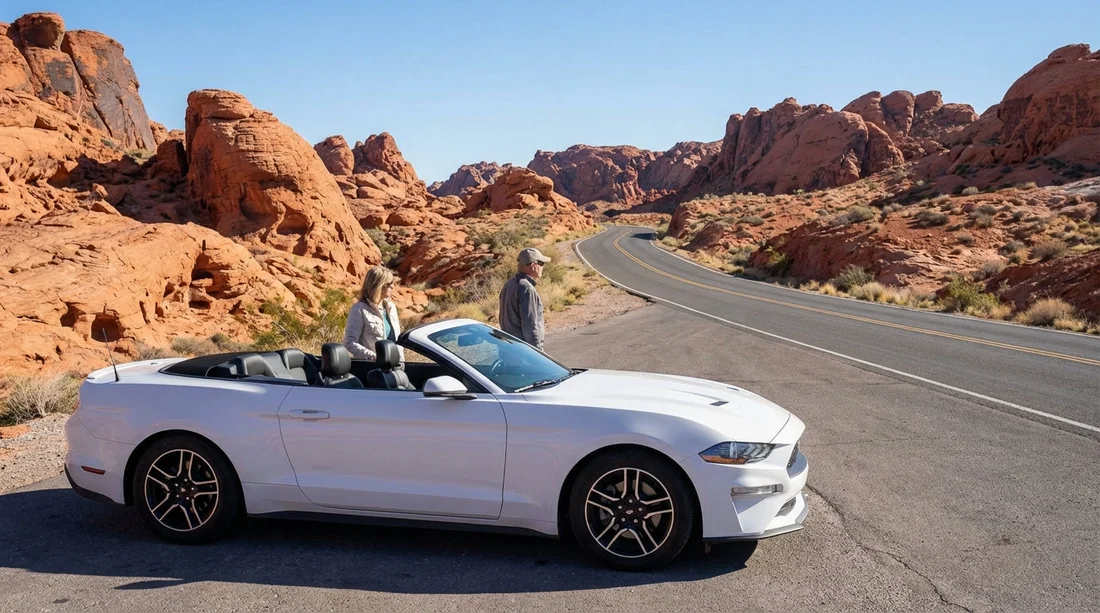
Yes, you can do Valley of Fire in half a day from Las Vegas, if you keep the plan tight and start early. From the Strip, you are roughly an hour to the park edge, then another 15 to 25 minutes to the most popular viewpoints depending on your entrance and stops. The key is choosing the fastest approach, refuelling before you leave civilisation, and knowing which car parks fill first so you do not waste your limited time circling.
If you are organising car hire in Las Vegas, pick up logistics matter too. Collecting from the airport can save time on an early departure, especially if you are staying off-Strip. Options are outlined on Las Vegas airport car hire, while city pick-ups are covered on car hire in Las Vegas.
Half-day timing: a realistic 6-hour template
This template assumes a summer-style early start. In cooler months you can shift it later, but car parks still fill, so mornings remain best.
06:45 to 07:00 Leave Las Vegas. Aim to be on I-15 north before commuter traffic thickens. If you are departing from the Strip, allow 10 to 20 minutes just to reach the motorway ramps.
07:45 Last fuel and supplies. Stop for fuel, water, and a quick snack (details below). This is also the moment to do a 60-second car check: lights, windscreen, tyre look-over.
08:15 Arrive at Valley of Fire entrance, pay entry, and set your first stop. You will save time by deciding your top two or three stops in advance, rather than trying to see everything.
08:30 to 10:45 Scenic loop with short walks. Prioritise viewpoints with minimal hiking if you want the half-day to feel relaxed.
11:00 Begin return. This is the decision point. If temperatures are rising, head back before midday heat peaks, or at least before your passengers get tired and you start rushing.
12:00 to 13:00 Back in Las Vegas, return to lunch plans, pool time, or a show nap.
Could you do it faster? Yes, but half-day trips go wrong when you underestimate parking delays, queueing at popular stops, and the extra time caused by heat. A well-planned half day is about being decisive, not frantic.
Fastest drive from Las Vegas: simplest route and two entrances
The most straightforward drive is I-15 north towards Mesquite. From central Las Vegas, follow I-15 N, then take the exit signed for Valley of Fire and head towards NV-169. This approach brings you past Lake Mead and into the park area efficiently.
You will see references to different entrances, and this matters for your first stop:
West entrance approach works well if you want to start near the Visitor Center and the most photographed rock formations quickly. It is typically the most direct for a “see the highlights” plan.
East approach can suit travellers coming from the Moapa Valley side, and it can be quieter at certain times, but it may place you farther from your first must-see stop depending on the order you want to drive.
For a half-day, choose the entrance that gets you to your first stop with the least backtracking. If your top priority is the Visitor Center area, aim to enter in a way that places it early in your loop, not as an afterthought.
Need a quick sense of which vehicle category to choose? Standard saloons handle this trip easily on paved roads, while a larger people-carrier can add comfort for families. For larger groups, see van hire in Las Vegas.
Where to refuel: the best stops to avoid paying more
Valley of Fire is not the place to hunt for a bargain pump. Plan fuel like you are going somewhere remote, even though it is close to Las Vegas.
Best refuel zone 1, North Las Vegas: If you are leaving from the Strip or downtown, topping up before you hit I-15 N can be convenient, with plenty of stations and predictable access. This is also ideal if you collected your car late the previous day and want a fresh tank before sunrise.
Best refuel zone 2, Moapa Valley area: If you prefer a last stop closer to the park, use services on your approach so you enter with a comfortable buffer. This reduces the temptation to keep the air conditioning off “to save fuel”, which is a false economy in desert heat.
Fuel rule of thumb: Start the park drive with at least half a tank. Your mileage will vary with air conditioning use, stops, and whether you idle for photos, but you do not want fuel anxiety competing with safe driving.
Payment tip: Some pumps authorise a higher temporary hold when you pay at the pump, especially for visitors. If you are managing a tight holiday budget, consider paying inside to control the amount.
Parking tips: what fills first, and how to beat the queues
Parking is the hidden time thief on a half-day run. The park’s most famous stops have small car parks, and they can feel full even on weekdays.
Car parks that fill first: The Visitor Center car park and Atlatl Rock area tend to become busy early because they are easy to reach and require minimal walking. Popular roadside pull-outs near iconic formations also clog quickly because drivers stop “just for a minute”.
Best strategy: Go to your priority stop first. If your number one is Atlatl Rock, do it immediately after entering, then continue deeper into the park. If you start with “we will see how we feel”, you often arrive when the bays are full.
Have a second-choice stop ready: If a lot is full, do not orbit. Move on to your backup viewpoint and return later if you still have time. A 10-minute delay can become 30 once the heat builds and drivers slow down.
Park smart: Stay within marked bays, avoid soft shoulders, and do not block turning space for larger vehicles. In hot weather, poor parking can mean more time with the engine running, which adds heat load to your car and stress to your plan.
Photo-stop discipline: Limit roadside hops. Pick two or three big stops where you get out, walk, hydrate, then continue. Constant in-and-out stops are what turn a half-day into a rushed full day.
A tight scenic loop: three stops that fit a half-day
If you want a simple route that still feels like you experienced Valley of Fire, build your half-day around three anchors.
Stop 1: Visitor Center area. Use it for maps, current conditions, and a quick orientation. It is also a sensible place to confirm which trails or pull-outs are closed due to heat or maintenance. Keep it short, your aim is efficiency.
Stop 2: Atlatl Rock. This is ideal for a quick visit because you can see rock art with minimal effort. Do it early to avoid the hottest period and the fullest car park.
Stop 3: One longer viewpoint or short trail. Choose one place where you slow down and let the landscape sink in. Your best half-day memories usually come from one unhurried moment, not ten frantic pull-outs.
On the drive, keep enough buffer so you can return without feeling pressured. If you plan to be back for a timed activity in Las Vegas, pad your return by at least 30 minutes.
Heat and breakdown prevention: simple checks that matter
Heat is the big variable that can spoil a half-day trip. Even if your car hire is new and well-maintained, extreme temperatures and long idling can expose weak points fast. The goal is to reduce strain on the engine, tyres, and occupants.
Before leaving Las Vegas: Check the fuel level, make sure the coolant temperature gauge behaves normally, and confirm the air conditioning works. Also check that your phone can connect for navigation, but do not rely on constant signal inside the park.
Tyres: Heat raises pressure. Do not deflate hot tyres “because they look bulged”. Instead, inspect for visible damage, and drive smoothly to avoid impacts on sharp edges. If your tyre-pressure warning light appears, follow the vehicle instructions and address it as soon as practical.
Air conditioning use: Run the AC steadily rather than switching it off and blasting later. Constant large swings can add stress, and you risk passengers overheating. Use recirculation once the cabin is cool.
Do not idle for ages: If you are stopping for photos, consider turning the engine off if safe and permitted, and get out briefly instead of sitting in a running vehicle. Long idling in extreme heat is a common cause of temperature creep.
Carry more water than you think: Bring water for the drive and for short walks. For a half-day, many travellers underestimate how quickly dehydration hits, especially if you are doing “just a quick viewpoint” repeatedly.
Parking in shade: Shade is limited. When you can, angle the car to reduce direct sun through the windscreen, and use a sunshade if your vehicle has one. A cooler cabin reduces temptation to idle with the AC running.
If you want to compare provider options for your Las Vegas trip planning, Hola Car Rentals also lists partners such as Hertz in Nevada and Avis car hire in Las Vegas.
What to pack for a half-day drive
Half-day does not mean low-prep. Pack as if you might be delayed by traffic, a closed road, or a full car park that forces you to reroute.
Essentials: Water, salty snacks, sun protection, and a light layer for strong air conditioning. Add a cable to charge phones and a basic paper note of your route in case your signal drops.
In-car comfort: Sunglasses reduce fatigue. A small cooler bag helps keep water drinkable. If travelling with kids, plan one “guaranteed” stop where they can stretch their legs early.
Leave valuables out of sight: Even in scenic areas, treat it like any tourist region. Keep bags in the boot, and keep the cabin uncluttered so you can lock up quickly.
Common half-day mistakes to avoid
Leaving Las Vegas too late: The difference between 7am and 9am is not just heat, it is parking. An early start often saves you more time than speeding ever could.
Trying to do every stop: Valley of Fire deserves a full day, but your half-day success comes from picking highlights. Choose three anchors and enjoy them properly.
Underestimating heat load: If anyone in your group is sensitive to heat, plan shorter walks and more shade breaks. A half-day plan should still feel comfortable.
Not planning fuel: Entering the area with a low tank makes people rush and skip hydration, which is the wrong trade-off.
FAQ
Can I really do Valley of Fire from Las Vegas in half a day? Yes, if you start early and limit yourself to a few key stops. Plan for roughly 5 to 6 hours return including short walks and parking.
What is the best time to leave Las Vegas to avoid crowded car parks? Aim to leave by 7am, earlier in peak seasons. The Visitor Center and Atlatl Rock areas are much easier before mid-morning.
Do I need a 4x4 for this trip with car hire? No for the standard highlight route on paved roads. A regular saloon or SUV is fine, just avoid rough, unpaved detours unless your agreement and conditions allow.
Where should I refuel before entering the park? Top up in North Las Vegas or in the Moapa Valley area on the approach. Try to start the park drive with at least half a tank.
How do I avoid overheating problems in desert heat? Keep the cooling system unstrained by avoiding long idling, running the AC steadily, and watching the temperature gauge. Carry plenty of water and take breaks before anyone feels unwell.





























































































