


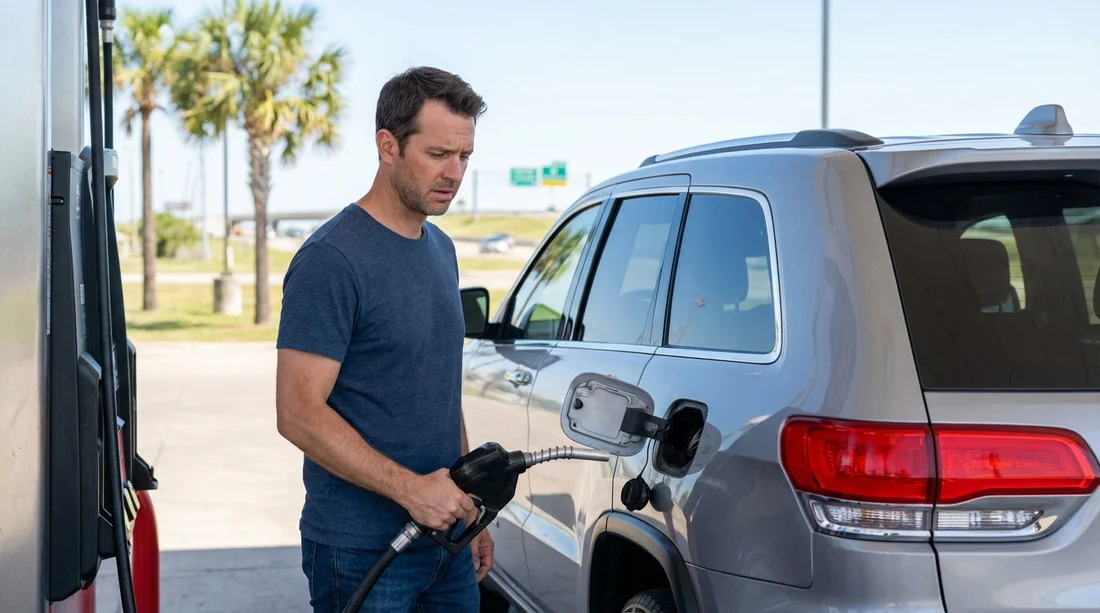
Quick Summary:
- Stop immediately, switch off, and do not start the engine.
- Move the car only if safe, then park away.
- Call roadside assistance and your rental provider before doing anything else.
- Expect charges for towing, fuel-system clean-out, and downtime days.
Misfuelling a car hire in Texas is stressful, but the first few minutes often make the biggest difference to the final bill. The key is simple: prevent the wrong fuel from circulating, document what happened, and let the correct people arrange recovery and cleaning. Many costly outcomes happen when someone tries to “fix it” by driving, restarting repeatedly, or topping up with the right fuel to dilute it.
This guide walks you through exactly what to do at the pump, how to move the vehicle safely (only when appropriate), who to call, and how misfuelling charges are typically assessed for a rental vehicle in Texas.
Step 1: Stop immediately, do not start the engine
If you realise you have put the wrong fuel in, stop fuelling straight away. If the engine is off, keep it off. If the engine is on, turn it off as soon as it is safe to do so. Do not restart, even “just to move a bit”, unless you have already confirmed with roadside assistance that moving is necessary and safe.
Why this matters: once the engine runs, the fuel pump can pull the wrong fuel through lines, filters, injectors, and on some vehicles, into high-pressure components. That can turn a drain-and-flush into a larger repair and longer downtime, both of which can increase charges.
Also avoid turning the ignition to an “on” position if your vehicle primes the fuel system. Modern cars can run a pump briefly when you press the start button without the engine firing, so keep keys away from the start control until help arrives.
Step 2: Make the forecourt safe and notify station staff
Put the vehicle in Park, apply the parking brake, and switch on hazard lights. If you are at a busy station, tell the cashier or attendant that you have misfuelled and the vehicle will need to remain stationary while you arrange recovery. This can help avoid a dispute if the car blocks a pump for a short time.
If there is any spillage, do not attempt to clean it with paper towels. Inform staff, as fuel spills require specific procedures. Keeping the situation safe and calm can also reduce the risk of being asked to move the car when it is not wise.
Step 3: Confirm what went in, and how much
Before you do anything else, get clarity on:
1) The fuel you intended to use, and the fuel you actually used (for example, petrol into a diesel vehicle, or diesel into a petrol vehicle). 2) Roughly how much went in. 3) Whether the vehicle was running at the time.
Take a photo of the pump label and grade, and keep the receipt. If you can, take a quick photo of the vehicle’s fuel door label too. These details help roadside assistance choose the right response and help the rental provider assess what needs doing.
Step 4: Decide whether the car should be moved
In most cases, the best option is to leave the vehicle exactly where it is and arrange assistance. Moving a misfuelled vehicle is only advisable when you can do so without running the engine, or when you have been instructed to move for safety.
Safe ways a vehicle may be moved include:
Rolling a short distance in Neutral with the engine off (only if safe and permitted), or being pushed by staff (rare, and only on their instruction), or being relocated by a tow operator.
If you feel pressured to move the car off a pump, explain that the vehicle has been misfuelled and you are arranging roadside recovery. If you must move it for immediate safety, move it the minimum distance possible, avoid restarting repeatedly, and stop as soon as you are clear of traffic flow.
Step 5: Call roadside assistance first, then notify the rental provider
Your rental agreement will usually specify who to call, and when. If the vehicle has misfuelled, call the roadside assistance number provided with your car hire documentation. Then contact the rental provider or the assistance line they direct you to, and inform them of the misfuelling.
Be ready to share your location, vehicle details, and what fuel went in. If you are travelling via major hubs, it is worth keeping the relevant Texas rental details saved. For example, if your trip began near car hire at Dallas DFW Airport or you picked up around car hire in Fort Worth near DFW, the provider may have preferred recovery routes and approved service partners in those areas.
Do not arrange a random local mechanic or mobile drain service without permission if your agreement requires authorisation. Unauthorised work can create arguments about reimbursement and liability, and can increase your out-of-pocket costs.
Step 6: Do not try DIY fixes that increase damage risk
These actions commonly lead to bigger bills on a car hire:
Do not dilute by topping up with the correct fuel. It does not reliably prevent damage, and it can increase the quantity that must be drained and disposed of.
Do not keep starting the engine “to test it”. Each start attempt can move more incorrect fuel through the system.
Do not use fuel additives. They are not a solution for incorrect fuel type and can complicate diagnosis.
Do not disconnect fuel lines yourself. Besides safety risks, it can trigger further faults and potential damage claims.
Step 7: Document everything for charge disputes
Charges after misfuelling can be legitimate, but you should still protect yourself with clear records. Keep:
Photos of the pump and receipt, a screenshot of your phone call time to roadside assistance, notes of who you spoke to, and any written authorisation. If the car is towed, ask for the tow ticket or reference number.
If you are in Texas on a family trip and have a larger vehicle, note that access and towing can differ by vehicle type. Routes around high-traffic airports and downtowns may also affect wait times. If your rental is a people carrier from minivan rental in San Antonio or a larger vehicle such as SUV hire in Austin, mention this on the call so the dispatcher sends the right equipment.
What usually happens next: drain, flush, tow, and testing
Once roadside assistance is arranged, the provider typically chooses one of these pathways:
On-site drain and flush. A mobile technician drains the tank and lines, replaces or clears filters if required, adds the correct fuel, and tests for warnings. This is more likely if the engine was not started and the misfuel was caught early.
Tow to workshop. If there is uncertainty, the engine has run, or the vehicle needs specialist equipment, the car is towed to an approved workshop for draining, cleaning, and diagnostics.
Vehicle swap. Depending on availability and location, the provider may recover the car and offer a replacement vehicle, while the misfuelled vehicle is repaired off the road.
The important thing is that you follow the authorised process. If you are on a tight schedule, explain that, but avoid pushing for shortcuts that might later be characterised as unauthorised or negligent.
How misfuelling charges on a Texas car hire are typically assessed
Misfuelling is usually treated as an at-fault incident, which means you may be responsible for associated costs. While exact terms vary by provider and coverage, charges commonly fall into three buckets: recovery, cleaning and repairs, and loss of use.
1) Recovery and towing fees
If the vehicle cannot be made safe on-site, towing is often required. Towing fees are typically based on distance, time, and vehicle type, and can rise if recovery is outside normal hours or in a location that requires special access. Even if the car only needs to be moved from the forecourt to a workshop, there may still be a call-out fee.
If you must leave the vehicle temporarily, ask where it will be taken and how you will be updated. Clear communication can reduce delays that later become downtime charges.
2) Fuel-system drain, clean-out, and parts
The core charge is usually the labour and materials needed to remove incorrect fuel and restore safe operation. That may include:
Draining the tank, flushing fuel lines, replacing filters, cleaning the fuel rail, and running diagnostic checks. If the engine was started and driven, some vehicles may need more extensive work. The more incorrect fuel circulates, the greater the chance that components require replacement.
Disposal fees can apply as well, because mixed fuel must be handled and disposed of properly.
3) Administrative fees and downtime (loss of use)
Many rental agreements allow the provider to charge for the time the vehicle is unavailable for rental while it is being cleaned, repaired, inspected, or transported. This is often called downtime or loss of use. It may be assessed per day, and in some cases it is linked to the vehicle’s typical rental rate. Some providers also add administrative fees for handling the incident and coordinating repairs.
To limit downtime costs, your best strategy is to reduce delays: call immediately, follow the authorised process, provide accurate details, and avoid actions that trigger further diagnosis or rework.
Does insurance, excess reduction, or roadside cover help?
Misfuelling is frequently excluded from standard cover or treated differently from collision damage, but the answer depends on the protection you selected and the rental terms. Roadside assistance may help coordinate recovery, but it does not always remove your responsibility for cleaning and repairs.
If you have separate travel insurance, it may or may not cover misfuelling of a rental vehicle. Avoid making assumptions at the forecourt. The practical approach is to act quickly to prevent damage first, then ask the provider what your coverage includes once the car is safe.
How to prevent misfuelling on your next Texas trip
Prevention is simpler than recovery, especially when you are tired from flights, driving in unfamiliar areas, or swapping vehicles. A few habits help:
Check the fuel door label every time, even if you “know” the car. Read the pump label carefully and do not rely on nozzle colour, as conventions can vary. If you are sharing driving duties, tell the next driver what fuel it takes. And if you have picked up a specific supplier vehicle, such as through Payless car rental in Texas, keep the rental documentation in an easy-to-reach place so numbers and instructions are available quickly.
If you are unsure at the pump, stop and check the dashboard, fuel door, or rental paperwork. The 20 seconds it takes can save hours of disruption and substantial charges.
FAQ
Q: I put the wrong fuel in but did not start the engine, what should I do? A: Leave the engine off, make the area safe, tell station staff, then call roadside assistance and your rental provider. Early action usually limits damage and cost.
Q: Can I just top up with the correct fuel to fix it? A: Usually not. Dilution is unreliable and may increase the amount that must be drained and disposed of, which can raise clean-out charges.
Q: Will I be charged for towing and cleaning even if it was an honest mistake? A: Typically yes. Misfuelling is generally treated as driver responsibility, so towing, drain-and-flush labour, parts, disposal, and admin fees may apply.
Q: What is “downtime” or “loss of use” on a car hire misfuelling bill? A: It is the cost for days the vehicle cannot be rented while it is recovered, cleaned, repaired, transported, or inspected, often charged per day.
Q: If I drove a short distance after misfuelling, is it automatically serious? A: Not always, but risk rises quickly once the wrong fuel circulates. Stop as soon as you realise, do not restart, and let authorised roadside support decide the next steps.

























































































