


Quick Summary:
- Move to a safe, well-lit spot and check for glass injuries.
- Photograph damage, surroundings, and any stolen items before cleaning.
- File a police report online or by phone, save the incident number.
- Notify the rental company promptly, then document return-day condition thoroughly.
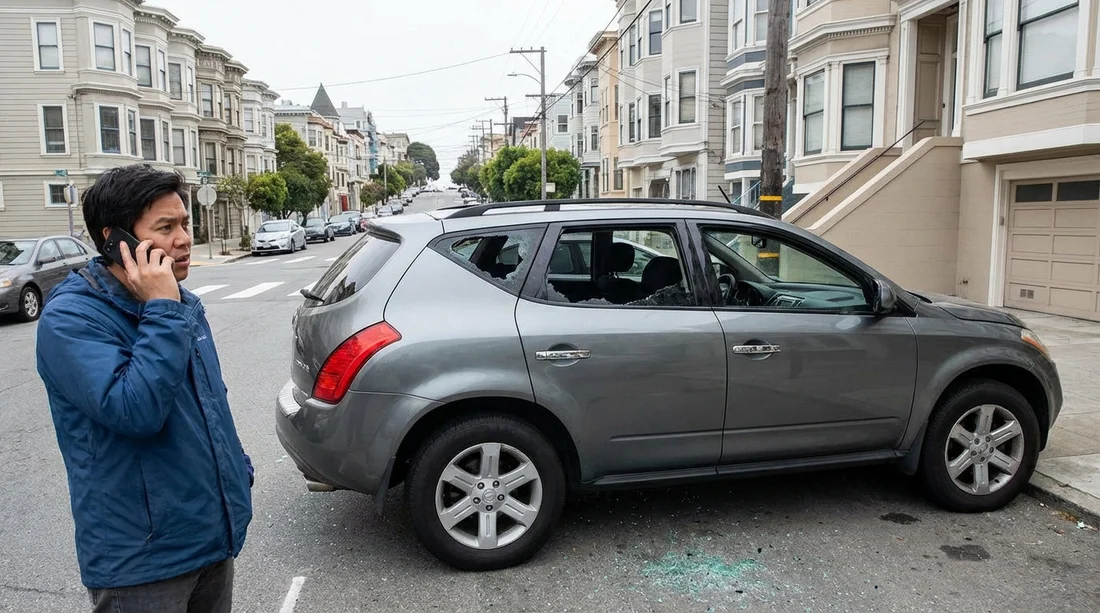
A smash-and-grab in San Francisco can feel overwhelming, especially when you are dealing with a car hire agreement, insurance paperwork, and travel plans. The good news is that you can protect yourself by following a clear sequence: keep everyone safe, preserve evidence, file the right reports, inform the right parties, and create a clean paper trail for any claim.
This guide is written as a practical checklist. You can use it whether the break-in happened at a tourist spot, a hotel car park, a residential street, or near the airport. It focuses on what to do in the first 30 minutes, the first 24 hours, and at return time, because those are the moments that most affect outcomes for reports and claims.
First 5 minutes: safety and scene control
1) Check for injuries and immediate danger. Broken glass can cause cuts, and thieves may still be nearby. Step away from the vehicle and look for hazards such as traffic, aggressive individuals, or unstable glass in door frames.
2) Move to a safer position if needed. If you are in a risky area, relocate to a well-lit, populated place nearby. If the car is drivable and you can safely move it without touching key evidence, relocate to a safer location. If moving the car would destroy important evidence, prioritise personal safety, then document immediately after.
3) Do not start cleaning yet. It is tempting to remove glass, but hold off until you have photos. Cleaning too early can complicate later questions about what happened and when.
4) If passports, essential medicines, or devices were stolen, act fast. Separately from the car hire claim, begin replacing critical items. In many cases, your travel insurer will want a police report number, so treat reporting as urgent even if the damage seems minor.
Evidence that makes reports and claims easier
Evidence is what turns a stressful story into a straightforward claim. Aim to capture a complete set in under ten minutes.
Photographs to take (minimum set):
Exterior wide shots: Take photos from all four corners showing number plate, make and model, and context of where the vehicle was parked.
Close-ups of damage: Broken windows, smashed locks, pried door frames, boot damage, and any scratches. Include at least one photo with a recognisable reference point, such as the door handle or the window frame.
Interior shots: Dashboard, seats, boot, and any rummaged compartments. If the glovebox is open or damaged, photograph it clearly.
Evidence of theft: Photograph empty spaces where items were stored, including luggage areas. If you have receipts or photos of the stolen items, keep them for later.
Street and location identifiers: Nearby signs, meter numbers, car park signs, hotel signage, and landmarks. Capture the closest cross street if you can.
Time and date proof: Use your phone camera metadata, and consider a short video showing the surroundings. If you paid for parking, screenshot the parking session or take a photo of the ticket.
Write a brief timeline while it is fresh: Note when you last saw the car intact, when you discovered the break-in, who was with you, and whether anything unusual was seen nearby. This helps later if you are asked for a statement.
Reporting options in San Francisco: police reports that support claims
For most smash-and-grab incidents, a police report or incident number is the key document that insurers and rental firms want. Even when police cannot attend, a filed report still provides an official reference.
When to call emergency services: If there is immediate danger, an injured person, a suspect present, a weapon involved, or the vehicle was stolen. In these cases, treat it as an emergency.
When an online or non-emergency report is usually appropriate: If the incident is a property crime with no injuries and the suspect is gone. In many cases, you will be directed to online reporting and given a report number.
What to include in the report: Vehicle details, location, approximate time window, stolen items list, and any serial numbers you have. Mention whether the vehicle is a rental and include the rental plate and VIN if available in your paperwork or on the vehicle documentation.
Save proof of reporting: Keep the report number, confirmation email, and any PDF copy. Take screenshots if needed. Add them to a single folder alongside your photos.
Notify the rental company quickly, and document the call
After you have basic safety and evidence covered, inform the rental company using the number provided in your rental agreement or on the key tag. Many agreements require prompt notification. Even if you are unsure whether anything was stolen, reporting the damage early reduces disputes later.
What to say on the call: State that it is a smash-and-grab break-in, confirm the vehicle is secure or needs towing, and ask what steps they require for repairs, glass replacement, or a vehicle swap. Ask where to email photos and whether they need the police report number immediately.
What to record for your own notes: Date and time, agent name, reference number, and specific instructions given. If you are told to return to a particular location, write down the address and operating hours.
If the car is not secure: A smashed window can make the vehicle unsafe to drive or park. Ask about roadside assistance and whether you should wait with the vehicle. If you must leave it, confirm how to secure it and where it can be stored.
If you arranged your San Francisco airport pickup through a specific provider page, keep that booking confirmation handy. For general context on local airport rentals, you may have used pages like San Francisco SFO car rental, Hertz car rental at San Francisco SFO, or Avis car rental at San Francisco SFO. If you hired a larger vehicle, keep the equivalent confirmation from van rental at San Francisco SFO. Your confirmation typically shows the renter name, dates, and sometimes protection options, which helps when support teams locate your agreement quickly.
Build your claims pack: documents that matter for car hire
Think of a claims pack as one folder with everything someone else needs to assess the incident without chasing you for details. This reduces back-and-forth and speeds resolution.
Include:
Rental agreement and receipts: The signed agreement, check-out paperwork, and any add-ons selected.
Pre-existing damage record: The check-out inspection sheet and any photos you took at collection. If you did not take any, start now and keep everything you have.
Police report proof: Report number and confirmation, plus a copy if available.
Photo and video evidence: Label key images, for example “rear-left-window”, “boot-area”, “street-sign”.
Itemised stolen property list: Item description, estimated value, purchase date if known, and serial numbers for electronics. Do not inflate values, keep it realistic and consistent with receipts.
Witness details: Names and contact information if someone saw the incident or saw suspicious activity.
Communication log: Notes of calls, emails, and any instructions from police, the rental company, or insurers.
Insurance, excess, and payment cards: avoid common mistakes
Car hire break-ins often trigger questions about excess, personal property, and who pays for glass and locks. The exact outcome depends on the protection you selected and any separate cover you hold, but you can avoid common errors.
Do not admit fault or speculate. Stick to facts: where the vehicle was, what you observed, and what is missing. Avoid guessing how entry was gained if you did not see it.
Do not delay reporting. Late reporting can create suspicion, particularly if you continue driving for days before telling anyone.
Understand that personal items are usually separate. Many rental protections focus on vehicle damage, while stolen personal belongings may fall under travel insurance or homeowner or tenant cover. A police report number often supports all of them.
Ask about replacement keys and locks. If keys were stolen, the rental company may treat that differently from a window smash. Document carefully and ask for written guidance.
Keep payment card details ready. Some processes require the card used for the rental. If a temporary charge is applied while damage is assessed, ask for an itemised breakdown and the timeline for review.
Return-day evidence: protect yourself at drop-off
Return day is where misunderstandings can occur, especially if the vehicle has been repaired, swapped, or returned after hours. Your goal is to leave a clear record of the condition and the handover.
1) Photograph the car at return, even if it was repaired. Take the same four-corner set plus close-ups of any repaired areas. Include the fuel gauge, odometer, and any warning lights on the dash.
2) Get written acknowledgement where possible. If staff inspect the car, ask for a signed or digital condition report noting the break-in and any actions taken. If they cannot provide it immediately, ask when it will be emailed and keep the reference number.
3) After-hours return needs extra proof. If dropping keys in a box, take photos showing the car parked in the return area, the bay signage, and the keys being placed into the drop box. Capture a timestamped photo or video.
4) Keep all receipts for interim costs. If you paid for temporary window covering, taxis, or parking while sorting the incident, save receipts and link them to your timeline. Only claim what is legitimate and documentable.
San Francisco-specific prevention, so it does not happen again
Break-ins are often opportunistic. Small changes can reduce risk during the rest of your trip.
Keep the cabin visibly empty. Do not leave bags, jackets, or charging cables on seats. Even empty luggage can attract attention.
Use the boot correctly. If you must store items, place them in the boot before arriving, not after parking. Avoid opening the boot at your destination, as it signals valuables.
Choose parking thoughtfully. Prefer attended garages, bright areas, and places with steady footfall. If you are unsure, ask hotel staff for the safest parking option.
Take collection photos at the start of every rental. A simple walkaround photo set at pickup makes later conversations easier if damage occurs.
FAQ
Do I need a police report for a San Francisco car hire break-in? Yes, it is strongly recommended. Most rental firms and insurers ask for a police report number or proof you reported the incident, even if an officer does not attend.
What photos should I take after a smash-and-grab? Take wide shots of all sides, close-ups of every damaged area, interior and boot photos, and location identifiers like street signs or car park signage. Do this before cleaning glass.
Should I keep driving the rental car with a broken window? Only if it is safe and the rental company confirms what to do. A broken window can make the vehicle unsafe, unsecure, and vulnerable to weather damage, so get guidance promptly.
What if my belongings were stolen from the hire car? List every missing item with estimated value and any serial numbers, then include it in the police report. Vehicle damage is handled through the rental process, while personal items are often claimed through travel or home cover.
How can I protect myself at drop-off after a break-in? Photograph the vehicle at return, get written acknowledgement of the condition if possible, and if returning after hours, record the car in the return bay and the key drop with clear timestamps.

























































































