


Quick Summary:
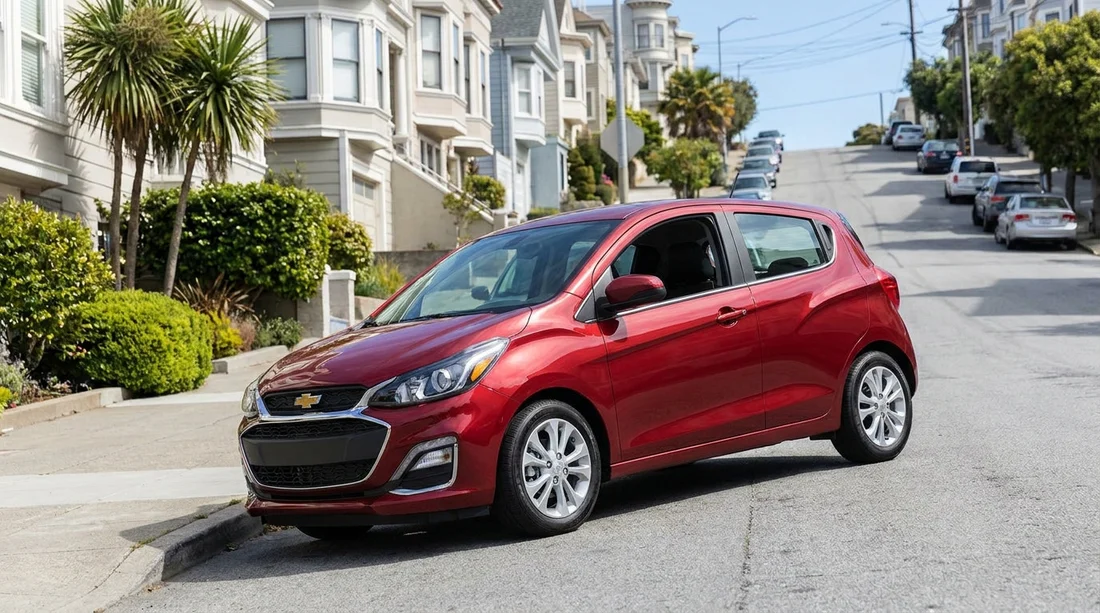
- Pick a compact automatic for steep streets and easier parallel parking.
- Choose midsize if you have two large cases and want agility.
- Consider a small SUV for confidence on hills, with a larger footprint.
- Avoid oversized vehicles in central areas, garages are narrow and expensive.
San Francisco is one of those cities where the “right” rental car class quickly becomes practical rather than aspirational. Hills are steep enough to expose weak hill-start technique, neighbourhood streets can be narrow, and popular areas have tight kerbside spaces and low-clearance garages. The best choice for car hire is usually the smallest class that still fits your passengers, luggage, and comfort level on inclines.
Below is a clear way to balance manoeuvrability, luggage space, and confidence on steep streets, so you can pick a category that fits the reality of driving and parking in San Francisco.
What makes San Francisco different for car hire?
Three things matter more here than in flatter US cities: gradient, parking geometry, and stop-start traffic. On steep blocks you will meet frequent stop signs, so you often stop on an incline, then pull away with cars close behind. In busier zones you will also parallel park on a slope, which feels different from a level street because the car can roll and the kerb is closer than you think.
Many hotels and public garages have narrow ramps, tight turns, and limited height. That makes overall vehicle size, turning circle, and visibility more important than raw power. Modern engines in most classes are capable, but the ease of controlling the car at low speed is what reduces stress.
If you are collecting near the airport, browsing the options on San Francisco SFO car rental can help you compare typical categories, while keeping your main focus on dimensions and drivability rather than luxury badges.
Compact and economy: usually the best match for hills and tight parking
For most travellers, compact or economy is the sweet spot in San Francisco. You gain three advantages that directly answer the “steep hills and tight parking” problem: easier parallel parking, a smaller turning circle for narrow streets, and less anxiety in garages with tight ramps.
Hill performance is often better than people expect. Most economy and compact cars have enough torque for city speeds, especially with an automatic gearbox. The real win is precision, a lighter car is generally simpler to place near the kerb and less intimidating on a steep downhill when you are feathering the brakes.
Choose compact or economy if you have one or two people with carry-ons, or two people with one medium and one large case. If you are four adults with full-size luggage, you may feel the squeeze, not in the front seats, but in boot depth and rear legroom.
Tip for confidence: prioritise an automatic, and if your chosen model includes hill-hold assist, it can reduce rollback when you move off from a stop sign.
Midsize and intermediate: a better luggage compromise with manageable size
If you need more boot space but still want a vehicle you can park without a prolonged debate, midsize or intermediate is a strong choice. It is generally easier to live with than a large sedan while still handling two large suitcases, or a family’s mixed luggage, more comfortably than compact.
In San Francisco, the key trade-off is that midsize can feel wide in older garages, but it remains feasible for kerbside parking if you are patient and willing to walk a block or two from the busiest streets.
If you are comparing pick-up points and timings, the options shown on National car rental at San Francisco SFO can be a useful reference for what “midsize” and “intermediate” typically mean in the US market.
Small SUV and crossover: confidence and visibility, with a parking penalty
A small SUV or crossover can feel reassuring in San Francisco because you sit higher, have better forward visibility on crests, and often get driver-assist features that make low-speed manoeuvres simpler. Many travellers also prefer the more upright seating when negotiating steep streets and frequent stops.
The downsides are real, though. A small SUV is wider and taller, which can make some garages uncomfortable, and it can be harder to judge the rear corners when parallel parking in a tight space. You may also pay more for parking if a garage charges by size category.
Choose a small SUV if you value confidence over maximum manoeuvrability, or if you have bulky luggage, such as camera gear or a folded pushchair, that fits better in a hatch-style boot. If your accommodation has guaranteed parking with generous bays, the SUV penalty matters less.
If you are arriving via San Jose for a wider Bay Area itinerary, it can help to compare SUV categories on SUV hire at San Jose SJC to understand typical crossover sizing before you drive into San Francisco’s tightest neighbourhoods.
Full-size, premium, and large SUV: usually poor value for city parking
Large sedans and large SUVs rarely suit central San Francisco. They will climb hills, but you trade away the two things you need most: easy parking and stress-free turning in constrained spaces. You also increase the chances of scrapes in garages with narrow spirals.
Unless you have a specific need, such as five adults plus luggage and guaranteed off-street parking, it is hard to justify the extra size. Even then, a well-chosen midsize with smart packing can be a calmer solution for most itineraries.
Transmission, tyres, and features that matter more than badge
When travellers worry about San Francisco hills, they often think they need a bigger engine. In practice, the features that reduce effort are more important than displacement.
Automatic transmission: This is the simplest way to feel comfortable on steep stop-start streets. It reduces workload and makes hill starts more predictable for visitors.
Hill-hold assist: Many newer cars briefly hold the brakes when you move your foot from brake to accelerator, which helps prevent rollback. Not every model has it, but if you notice it during pick-up, it is genuinely useful in San Francisco.
Rear camera and sensors: For tight parallel parking, these features can matter more than vehicle class. A compact with a camera can be easier than a larger car without one.
Good visibility and tight turning circle: These are the quiet heroes on steep, narrow streets, especially if you are exploring areas like North Beach or the hills around Twin Peaks.
Matching car class to your luggage and neighbourhood plans
Try this simple matching approach before confirming your car hire category:
Staying central with street parking: prioritise compact or economy. You will thank yourself when you circle for a space and need to slot in quickly.
Hotel with a tight garage: compact still wins. Midsize can work if the garage is modern and has wider bays.
Family luggage or longer road trip out of the city: midsize or small SUV. You gain boot space and comfort on highways, but still keep reasonable city manoeuvrability.
Special gear (surfboard, large stroller, lots of suitcases): a small SUV can be practical, just plan for paid garages rather than relying on kerbside spaces.
If cost is a major deciding factor, comparing typical inclusions and class pricing via budget car hire at San Jose SJC can help you sense where compact and midsize often sit, then you can prioritise the class that reduces parking stress in San Francisco.
FAQ
Q: Is a compact car powerful enough for San Francisco’s steep hills?
A: Yes, most modern compact automatics handle city hills well. The bigger benefit is easier control and parking in tight spaces.
Q: Should I choose an SUV for confidence on steep streets?
A: A small SUV can feel more confident due to higher seating and visibility, but it is harder to park and can be tight in older garages.
Q: What car class is best if I have two large suitcases?
A: Midsize or intermediate usually fits two large cases more comfortably while staying manageable for city driving and kerbside parking.
Q: Are manual cars a good idea in San Francisco?
A: Most visitors find automatic easier for stop-start hill driving. A manual can be fine if you are very confident with hill starts.
Q: How can I reduce parking stress with car hire in San Francisco?
A: Choose the smallest class that fits your luggage, prioritise a rear camera if possible, and use paid garages in the busiest neighbourhoods.





























































































