


Quick Summary:
- Choose US-101 for the most direct route and frequent signposting.
- Choose I-280 for calmer lanes and generally simpler merging.
- In heavy fog, prioritise slower speeds and clearer lane markings.
- First-time visitors often find I-280 to US-101 merges less stressful.
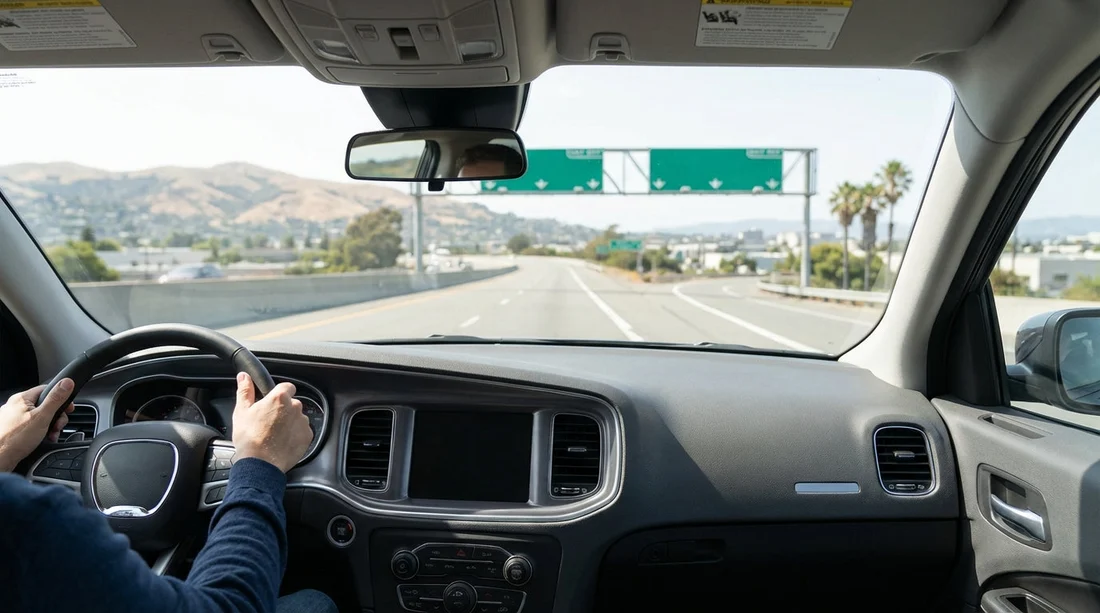
Picking a route after collecting your car hire at San Francisco International Airport (SFO) can set the tone for the whole trip. The two main choices to reach downtown San Francisco are US-101 (Bayshore Freeway) and I-280 (Junipero Serra Freeway). Both will get you to the city reliably, but they feel very different behind the wheel, especially if you are new to driving in the Bay Area.
This guide focuses on what first-time visitors care about most, typical traffic patterns, lane complexity and merging, visibility when fog rolls in, and which interchanges are easiest to navigate. You will also see practical cues for deciding in the moment, because conditions can change quickly between the airport and the city.
If you are arranging a car hire that collects at the airport, these Hola Car Rentals pages can help you compare options and pick-up details: San Francisco Airport car rental and SFO car rental deals. If you prefer a known brand at SFO, you can also review Hertz car rental at SFO.
At-a-glance difference between US-101 and I-280
US-101 is the busier, more commercial corridor. It tends to have more lanes, more exits, and more decision points as you approach the city. It is often the “default” suggested by map apps because it is direct and connects cleanly into downtown routes like I-80 and surface streets leading to SoMa, the Financial District, and the Embarcadero.
I-280 is the more scenic, generally calmer freeway that runs slightly west of US-101. Many drivers find it less mentally demanding, with fewer tight interchanges until you rejoin US-101 closer to the city or exit onto routes like CA-1 (19th Avenue) or local arterials. If you are sensitive to frequent lane changes, I-280 can feel like a relief.
Neither route is always “faster”. Your best choice depends on time of day, where your accommodation is, and how comfortable you are with multi-lane freeway driving in dense traffic.
Traffic patterns: when each route tends to win
From SFO to downtown, traffic peaks on weekdays are usually the biggest factor. Morning commuter flow often heads northbound into San Francisco, while afternoon flow can be heavy in both directions due to airport traffic, events, and cross-peninsula travel.
US-101 typical traffic feel: US-101 is the main spine for airport, biotech, and tech corridor traffic. It can clog quickly when there is a minor incident, and the stop-start effect can extend for miles. The upside is that you have more alternative exits if you are comfortable switching to local roads, and navigation apps have a lot of historical data for this corridor.
I-280 typical traffic feel: I-280 can be smoother because it is less “exit-dense” and often has a steadier flow. However, if there is a crash or roadwork, you may have fewer easy escape routes, so delays can feel more absolute until you reach a usable exit.
Practical rule: If your map app shows a small difference, such as five minutes, choose the route that matches your comfort level. For first-time visitors in a car hire, a calm 30-minute drive is often better than a stressful 25-minute one.
Lane complexity and merging: what is easiest for visitors
This is where the two routes diverge the most. Many visitors judge “difficulty” not by speed, but by how often they must change lanes while reading unfamiliar signs.
US-101 challenges: As you head north, you will see more lane splits and busier interchange areas. Approaching the city, you are likely to encounter more frequent on-ramps, short merge lanes, and drivers who change lanes late. If you are aiming for a specific downtown exit, you may need to position early and stay patient as traffic compresses.
I-280 advantages: I-280 tends to involve longer stretches of steady driving with fewer urgent decisions. The merges can feel more gradual, and there is often more breathing space between clusters of exits. For visitors who prefer to set a lane and hold it, I-280 is usually the more forgiving choice.
Interchange tip: Give yourself a “no last-second exits” rule. If you miss an exit in San Francisco, it is rarely a disaster, it usually costs a few minutes. For car hire drivers unfamiliar with local patterns, avoiding abrupt lane changes is a safer trade.
Fog and visibility: which route feels clearer
Fog is a real factor around the Peninsula and the city, and it can appear even when the airport is clear. Visibility affects not just what you can see ahead, but how confidently you can read lane markings and signage.
US-101 in fog: Because US-101 often has more overhead signs, it can be easier to confirm you are on the right path. The downside is that denser traffic can create a “white wall” effect, headlights and spray can reduce contrast, and the pace of stop-start driving can tempt people to follow too closely.
I-280 in fog: I-280 can feel calmer because traffic is sometimes lighter, but fog can be thicker in some elevated or open stretches. The key advantage is reduced lane pressure, fewer rapid merges, and more consistent speeds, which helps when your visibility drops.
Fog driving basics for visitors: Keep extra following distance, avoid high beams, and use low beams so other drivers can see you. If your car hire includes driver-assist features, treat them as support, not a substitute for visibility and safe spacing.
Easiest interchanges and downtown approaches
“Downtown” can mean different endpoints, Union Square, SoMa, the Financial District, Fisherman’s Wharf, or a hotel near the Moscone Center. The easiest interchange is the one that gets you close to your destination with the fewest complicated moves.
If your destination is SoMa or the Financial District: US-101 often connects more directly into the web of routes feeding SoMa. It can reduce the number of transitions, but you need to be ready for heavy merging and short decision windows as you approach the city.
If your destination is western neighbourhoods or you want a calmer approach: I-280 can set you up for a more relaxed drive, then you can transition toward your target area. This is helpful for first-time visitors who prefer to arrive composed, then navigate surface streets with full attention.
Watch your signs, not just the map: In the final miles, signs can appear quickly and GPS instructions can lag in dense interchanges. Glance early for the next two manoeuvres so you are not surprised by a sudden “keep left” prompt.
Decision guide: choose your route based on your priorities
Choose US-101 if: you want the most direct, commonly used route, you are comfortable in busy multi-lane traffic, and you are staying in areas that benefit from US-101’s downtown connections. US-101 can also be a good choice if you prefer frequent signage and the reassurance of many exits.
Choose I-280 if: you want fewer stressful merges, a steadier drive, and a route that often feels more spacious. It is a strong pick if you are arriving after a long flight and want an easier “settling in” drive in your car hire.
If you are unsure: start with I-280 for the calmer experience, then transition when you are closer and more oriented. Many visitors find that once they have driven in San Francisco for a day, US-101 feels less intimidating.
Practical tips for an easier SFO pick-up and first drive
Your route choice matters, but so does the first ten minutes after leaving the rental facility. Airport roads, one-way systems, and rapid lane splits can be a lot when you are tired.
Set up before moving: Pair your phone, set the destination, adjust mirrors, and check how to turn headlights and wipers on. Fog and drizzle can arrive unexpectedly, and you do not want to learn controls while merging.
Plan a “stabilisation” segment: Expect the first few miles to feel busy. Once you are established on US-101 or I-280, the drive becomes more predictable. Keep right if you are not passing, and let faster traffic go.
Know your bridge and toll expectations: Some visitors head to other parts of the Bay next. If your plan includes San Jose after San Francisco, you may later compare car hire there too, see San Jose Airport car rental. Even if that is not today’s route, it is useful context for a multi-stop itinerary.
Common mistakes first-time visitors make, and how to avoid them
Leaving lane changes too late: In heavy traffic, late merges spike stress and increase risk. Look far ahead and move early when safe.
Following the car ahead rather than reading signs: Local drivers may be taking a different exit. Use overhead signs to confirm route and direction.
Overreacting to reroutes: Map apps can change routes frequently. If a reroute requires three lane changes in a quarter mile, ignore it and continue safely. You will be recalculated.
Underestimating fog: If visibility drops, slow down smoothly and increase spacing. The goal is predictability, not speed.
FAQ
Which route is usually simpler for first-time visitors driving a car hire? I-280 is often simpler because it usually involves fewer high-pressure merges and less exit density. If you prefer a calmer, steadier drive, start with I-280.
Is US-101 always faster from SFO to downtown San Francisco? No. US-101 can be faster when traffic is flowing, but it can also bog down quickly. When timings are close, choose based on comfort rather than chasing a small time saving.
Does fog make one route safer than the other? Fog affects both routes. US-101 may offer more frequent signage, while I-280 can feel less stressful due to steadier traffic. In either case, use low beams, slow down, and keep extra distance.
What if I miss my exit on the way into downtown? Keep going safely and take the next exit. Downtown street grids and navigation rerouting usually make recovery straightforward, and avoiding abrupt lane changes is safer than forcing an exit.
Should I rely fully on GPS instructions? Use GPS, but also read overhead signs and anticipate lane changes early. In complex interchanges, signs are often clearer than last-second audio prompts.





























































































