


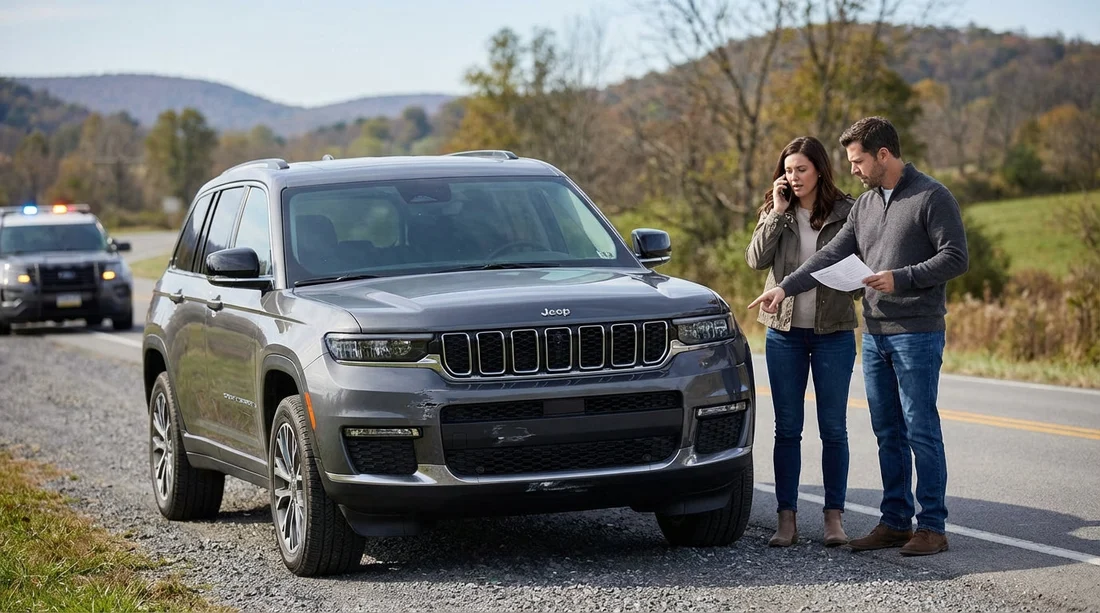
Quick Summary:
- Pull over safely, switch hazards on, and check everyone for injuries.
- Move the car only if safe, otherwise stay inside and call police.
- Photograph damage, the scene, and road signs before arranging recovery.
- Notify your car hire provider promptly, follow their accident report process.
Deer collisions are a real risk across Pennsylvania, especially at dawn, dusk, and on wooded rural roads. In a hire car, the priority is safety first, then clear documentation, then the correct reporting steps so the incident is handled smoothly. The exact process can vary by provider and cover level, but the action plan below will keep you on the right track and help protect you from avoidable delays or disputes.
If you collected your vehicle via Philadelphia Airport car rental arrangements or started in the city and headed out to the Poconos or the Alleghenies, it is worth knowing that deer strikes often look minor at first, then reveal radiator, sensor, or cooling damage later. Treat any impact as a genuine accident, even if the car still drives.
Step 1, stay calm and secure the scene
As soon as you realise you have hit a deer, take your foot off the accelerator and steer steadily. Avoid sudden swerves, which can cause a more serious crash with oncoming traffic, trees, or barriers. Once you are fully stopped, do the following in order.
Turn on hazard lights immediately. If you have passengers, ask them to stay seated with seatbelts fastened until you assess traffic conditions.
Check for injuries. If anyone is injured, call emergency services right away. In Pennsylvania, it is better to treat uncertainty as injury. Adrenaline can mask symptoms.
Assess immediate dangers such as leaking fuel, smoke, or a risk of fire. If you smell fuel or see heavy smoke, move people a safe distance away from the vehicle and traffic lanes. Do not stand directly behind or in front of the car on a fast road.
Use safe visibility measures if you have them. If your hire car has a warning triangle, place it only when it is safe to do so, well back from the vehicle and away from blind bends. Do not put yourself at risk trying to retrieve items from the boot if traffic is close.
Step 2, decide whether to move the vehicle
One of the biggest judgement calls after a deer strike is whether to move the car. The safest choice depends on the road and the condition of the vehicle.
Move the car off the roadway if it is driveable and you can do so without creating another hazard. A hard shoulder, lay-by, or nearby car park is ideal. Even moving a short distance to improve visibility and reduce the chance of a secondary collision can help.
Do not move the car if steering, braking, or visibility is compromised. Common deer strike issues include a crumpled bonnet obstructing view, coolant loss leading to overheating, or broken headlamps on dark roads. If you cannot safely control the car, keep it stationary, stay belted inside with hazards on, and call for help.
Be cautious about driving with hidden damage. A deer impact can push plastic and metal into the radiator or fans. If the temperature gauge rises, if you see warning lights, or if you hear grinding from the front end, shut the engine off. Continuing to drive can turn a towable problem into major engine damage, which can complicate the claim.
Step 3, call the right help, police and roadside support
In Pennsylvania, you may need a police report depending on damage, injuries, and whether the vehicle is blocking traffic. Even when not strictly required, a police report can strengthen your documentation for a car hire damage claim.
Call police immediately if there are injuries, significant damage, or the car is disabled in a travel lane. If the deer is still on the roadway and creating a hazard, that is also a strong reason to notify authorities.
Ask whether an officer will attend and request the incident number or report number. Write it down, along with the time you called and the name or badge number if provided. This is useful later when your provider asks for supporting documents.
Arrange recovery through the hire provider or their instructed roadside partner. Most car hire agreements specify what to do after an accident and who to contact for towing. Using an unauthorised tow can lead to disputes over charges, storage fees, or where the vehicle is taken.
If you hired through a provider accessed via car rental in Philadelphia, your confirmation documents will normally list an emergency number and the correct procedure for after-hours incidents. Follow that process, even if you also call police.
Step 4, do not approach the deer
It can be tempting to check the animal, but it is unsafe. An injured deer may thrash or kick, and it can also be unpredictable in traffic. Additionally, handling wildlife may involve legal restrictions or health risks.
Stay away from the animal and keep passengers away too. If the deer is still alive, do not attempt to move it. Inform police or relevant authorities so trained personnel can handle the situation.
Watch for other deer. Deer often travel in groups. If you hit one, there may be more nearby. When you eventually move off, drive cautiously for the next mile or two.
Step 5, photograph everything for your claim file
Good photos are one of the most effective ways to protect yourself in a hire car incident. Take pictures before the car is towed, and before you move it if it is safe to do so. If you must move immediately to avoid danger, take photos once you are safely off the road.
Capture the following, ideally with wide and close shots.
Vehicle position and surroundings, showing lane markings, shoulder, intersections, and any barriers. Include road name signs, mile markers, or nearby landmarks.
Damage to the car from several angles. Front bumper, grille, bonnet, wings, headlamps, windscreen, underbody if visible, and any leaks on the road surface.
Interior indicators such as warning lights on the dashboard. If airbags deployed, document that clearly.
Conditions such as wet roads, fog, darkness, or poor lighting. These details can matter when explaining why the collision occurred and why you made certain decisions.
Recovery details such as the tow truck company name and the destination yard, if you are given that information. Photograph any paperwork you sign.
Step 6, record key facts while they are fresh
After a stressful event, small details get forgotten. Make a quick note on your phone as soon as it is safe.
Include date and time, exact location, direction of travel, approximate speed, weather, whether the deer ran into the roadway or was already there, and what actions you took. If there were any witnesses who stopped, ask for their name and contact number. Do not argue about fault, simply collect facts.
Step 7, notify your car hire provider promptly
For car hire damage procedures, timing matters. Many agreements require prompt notification, even if you think the damage is minor.
When you call, be ready with your reservation details, vehicle details, location, and whether the car is driveable. Ask the agent to confirm the next steps, including towing authorisation, where to take the vehicle, and whether they need you to complete an accident report form.
If your hire was booked through a UK-facing portal such as car hire in Philadelphia, keep an eye on any additional guidance provided in your booking documents about reporting timeframes and the evidence they require. The essentials are the same, but document submission steps can differ.
Step 8, understand reports, citations, and what you should request
After a deer collision, you are unlikely to receive a citation simply for striking wildlife. What matters for your claim is the documentation trail.
Request the police incident number if police attend, and ask how to obtain a copy of the report. Some departments provide online request options, but do not rely on memory, note the instructions.
Ask your hire provider whether they require a police report for animal strikes. Some providers ask for one when damage exceeds a threshold or when towing is needed.
Keep copies of everything, including any towing receipts, storage notices, and the accident report form you submit. Take photos of paper documents in case they are lost during travel.
Step 9, minimise additional damage and extra charges
Even if you are not mechanically inclined, you can still make smart choices that limit follow-on damage and unexpected costs.
Do not continue driving if the car is overheating. A deer strike that cracks the radiator can cause rapid coolant loss. Driving for even a short time can lead to engine failure.
Avoid driving at night with broken lights. In addition to being dangerous and potentially unlawful, it increases the chance of another crash.
Remove personal belongings once it is safe and you are permitted to do so. If the car is towed to a yard, access may be limited later.
Ask about replacement vehicles. If you still need to travel, the provider may arrange a swap once the incident is logged and the original vehicle is recovered. If you were travelling with more people or luggage, note the vehicle class you need. For instance, if you booked via minivan rental in Philadelphia and you are moved to a smaller vehicle, confirm baggage capacity and passenger count before accepting.
Step 10, how claims typically work for deer strikes in a hire car
A deer collision is usually treated as an accident. Your out-of-pocket cost depends on your rental agreement, any optional protection products, and any cover you have separately.
Expect a damage assessment. The provider will inspect the vehicle and may charge for repairs, loss of use, administrative fees, and towing. These terms are commonly set out in the rental agreement. Ask for an itemised breakdown if charges are raised.
Provide your evidence promptly. Send photos, the incident number, and your written notes as soon as possible. Clear documentation can reduce back-and-forth and speed up any reimbursement process you are entitled to.
Be precise and consistent. If you later submit information to an insurer or card provider, keep the narrative consistent with what you told police and the hire company. Inconsistencies are a common cause of delays.
Follow up in writing. After phone calls, ask for confirmation by email of what you were told, especially if the car was towed, deemed not driveable, or if you were instructed to leave the keys somewhere specific.
If your hire was with a major brand accessed through Hola Car Rentals such as Enterprise car rental in Philadelphia, procedures are usually well defined. Still, the safest approach is to document everything, stick to the authorised recovery process, and keep copies of all correspondence.
Prevention tips for Pennsylvania deer country
Once you are back on the road, a few habits can lower the chance of a repeat incident.
Scan the roadside in wooded areas and near fields, especially at dusk and dawn. Eye shine can be a clue in headlights.
Reduce speed on signed deer crossings. Lower speed gives you more stopping distance and less impact energy.
Use high beams when safe on dark rural roads, and dip them for oncoming traffic.
If you see one deer, expect more. Do not accelerate immediately after one crosses.
Avoid swerving into other lanes. Braking firmly in a straight line is often safer than a last-second swerve.
FAQ
Do I need to call the police after hitting a deer in Pennsylvania? If there are injuries, the car is not driveable, or it is creating a hazard, call police. Even for minor damage, an incident number can help with car hire claims.
Should I move the hire car after a deer strike? Move it only if it is safe and the car is fully controllable. If steering, braking, lights, or cooling are affected, stay put in a safe position and arrange authorised assistance.
What photos are most important for a hire car damage claim? Take wide shots of the scene, close-ups of all damage, dashboard warning lights, road signs or mile markers, and any towing paperwork. Time-stamped phone photos are ideal.
Will I be charged for the damage if I had protection? It depends on what protection you selected and the rental terms. Report promptly, follow the provider process, and submit evidence, as failure to do so can affect how cover applies.
Can I arrange my own tow truck? Only do so if your hire provider authorises it or instructs you to. Unauthorised towing and storage can create extra costs and complications when the claim is reviewed.





























































































