


Quick Summary:
- Read the lowest clearance sign before entry, then choose an alternative.
- Confirm your SUV’s exact height, including roof rails, before parking.
- Approach ramps slowly, centre the vehicle, and avoid sudden dips.
- If you scrape, stop immediately, reverse carefully, and document damage.
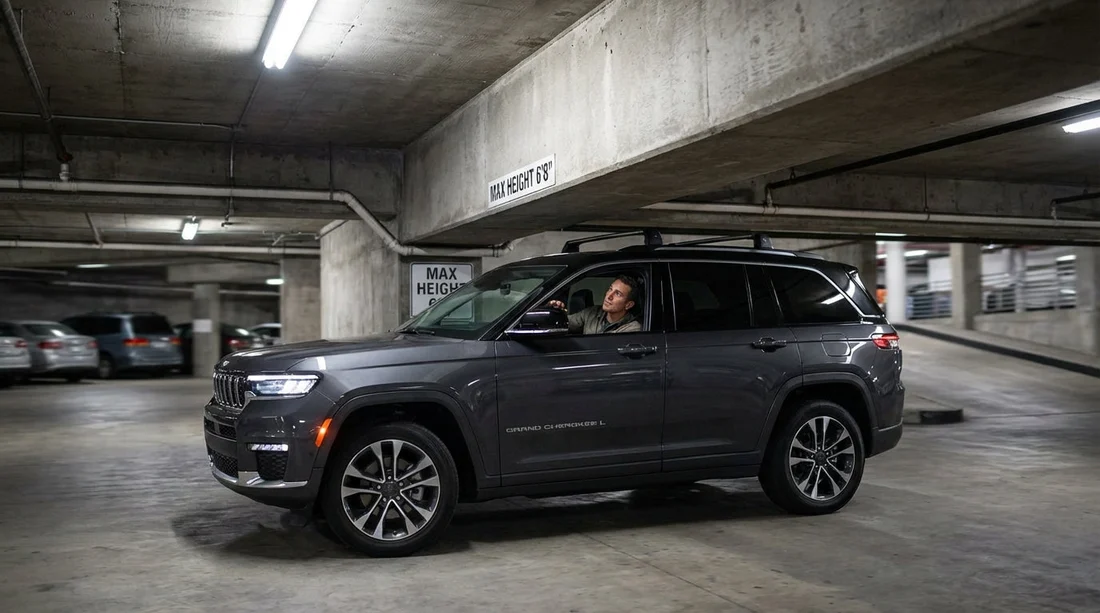
Low-ceiling car parks in Los Angeles can be unforgiving, especially around hotels, downtown structures, beach parking, and older mixed-use buildings. The most common costly mistake with an SUV or larger vehicle is trusting the entrance without confirming the true clearance, or assuming “standard” heights apply to your specific model. With car hire, any roof scrape can turn into a painful bill, because damage above the windscreen line can involve glass, paint, sensors, roof racks, and sometimes even structural panels.
This guide focuses on practical steps you can take before you commit to a garage, how to check the height of your rented vehicle, how to read clearance signs in a way that reduces surprises, and what to do if you get stuck or hear a scrape.
Why low garages cause expensive roof damage with car hire
Parking structures rarely have one consistent height. The entrance might be posted at 6'8" (or similar), but inside you can find lower beams at ramps, sprinkler pipes, hanging signs, ventilation ducts, ticket machines, and speed bumps that change the vehicle’s pitch. Garages may also mark clearances to the bottom of a beam at the centre of the lane, not at the edges where you might drift when turning.
For car hire drivers, roof damage is a common “surprise” because it is easy to focus on traffic and pedestrians, then miss a sign posted at the side. Even at low speed, roof impacts can crack a windscreen, tear a roof moulding, or rip off a shark-fin antenna. Many SUVs also have roof rails that are the first point of contact. That can sound minor, but rails can bend the roof skin and create costly repair work.
If you are collecting your vehicle around LAX, you will likely be deciding quickly between hotel garages, paid structures, and street parking. If you want to plan ahead, it helps to review typical rental locations and vehicle options associated with Los Angeles pickup points such as car hire at Los Angeles Airport (LAX) and broader choices listed under car rental in Los Angeles (LAX).
How to read clearance signs correctly in Los Angeles garages
Clearance signs are only useful if you interpret them conservatively. In LA you will see signs in feet and inches, sometimes with a second metric line. Use these steps before you turn in.
1) Look for the lowest posted number, not the most visible. Some entrances show a large sign for “Level 1” but the lowest clearance is at the ramp to Level 2, or at a dedicated exit lane. If you only see one sign, assume there could be a lower point inside and proceed only if you have generous margin.
2) Treat “at centre” as a warning. If a sign says “6'10" at centre”, it can be lower near the sides or near columns. Your safest path is to stay centred, drive slowly, and avoid turning sharply under low beams.
3) Watch for temporary reductions. LA garages sometimes install hanging equipment, temporary scaffolds, or protective padding after prior impacts. Those changes can reduce clearance below the printed sign. If you see any padding, chains, or dangling strips, assume it is there because someone hit that spot.
4) Understand ramp geometry. A vehicle may clear a flat beam but strike on the transition from an incline to a flat section. That is common at steep downtown structures where the SUV’s rear rises as the front crests the ramp.
5) Assume your roof is higher than you think. Antennas, roof boxes, and rails matter. Even if the “body” clears, an accessory might not. With car hire you may not have added accessories yourself, so inspect before entering a low structure.
How to check your rented SUV’s height, quickly and accurately
Do not guess based on the class name like “Intermediate SUV”. Exact height varies widely. Use a simple, repeatable process.
Check the driver-side door jamb. Many vehicles list tyre sizes, load, and occasionally height information. Even when height is not listed, the tyre size can hint at overall height changes if the vehicle is fitted with a different wheel and tyre package.
Use the infotainment or manual where available. Some vehicles include dimensions in the digital manual. If your phone has no signal in a concrete garage, check this before you leave the rental facility.
Measure with a known reference. If you have a tape measure, measure from the ground to the highest fixed point. If you do not, use a known reference such as a parking bollard height or a person’s height plus a small margin, but be conservative. It is better to overestimate vehicle height than underestimate it.
Include roof rails and antennas. Roof rails can add meaningful height. A shark-fin antenna adds less, but it can still be the first thing to scrape and can tear off, causing further damage.
Account for load and suspension. A heavily loaded SUV can sit lower, which sounds helpful, but it also changes angles on ramps. More importantly, you need a reliable upper bound. Assume the vehicle is at its maximum height when unloaded and on level ground.
If you are choosing between vehicle types, it can be useful to compare standard car categories at LAX, including options surfaced through car rental in California (LAX), or consider whether a van is appropriate for your trip via van hire in California (LAX), because vans can be taller than many SUVs.
A practical clearance margin that reduces risk
Even when you know your vehicle’s published height, leave a buffer. Garages are not perfect, and your route through the entrance may not be perfectly level.
Use a minimum buffer of 3 to 4 inches (8 to 10 cm). That helps cover minor sign inaccuracies, tyre inflation differences, and ramp transitions. If the clearance is close, do not enter. A tight fit is not a skill challenge, it is a liability.
Add more buffer for steep ramps. If the entrance slopes immediately or the garage looks older and uneven, increase your margin. The first scrape often happens at the “breakover” point where the car changes pitch.
Be extra cautious in mixed-use buildings. Small retail or apartment garages in Los Angeles can have low pipes and beams that are not well marked. If the entrance feels tight or the lighting is poor, choose a different option.
Approach technique: how to drive into low garages without scraping
If the numbers work on paper and you still choose to enter, technique matters.
Go slower than you think you need. Low speed gives you time to stop if you see an unexpected beam. It also limits damage if you misjudge. Keep your foot ready to brake, not accelerate.
Stay centred and square. Enter straight, centred in the lane, and avoid turning under the lowest part of the entrance. Turning can shift the high point of the vehicle under a lower edge.
Avoid tailgating. Leave room so you can stop before the lowest beam if you spot it late. If someone behind pressures you, let them pass or bail out before committing.
Do not follow tall vehicles blindly. A pickup might clear due to a different roofline. Conversely, a low sports car may enter and tell you nothing about your clearance.
Consider passengers as spotters. A passenger can watch the roofline and listen. If you have to rely on a spotter, that is already a sign the clearance is too close for comfort, but it is still safer than guessing alone.
If you hear a scrape: what to do immediately
The moment you hear scraping, stop. Continuing forward can turn a small scuff into a torn roof rail, shattered glass, or damaged sprinklers and pipes.
1) Stop and secure the scene. Put the vehicle in park, switch on hazard lights, and check mirrors. Do not reverse yet if another car is close behind.
2) Assess whether reversing is safe. If you can reverse the exact path you entered, slowly and straight, that is often the safest exit. If a beam is already resting on the roof, reversing might worsen damage. In that case, get help from garage staff or security to manage traffic and guide you out.
3) Do not try to “air down” tyres or bounce the vehicle. Lowering tyre pressure, accelerating, or rocking the vehicle can cause more damage and may create safety issues. Keep the situation controlled and calm.
4) Take clear photos before moving, if safe. Photograph the posted clearance sign, the point of contact, and the vehicle roof from several angles. If you must move immediately for safety, take photos right after you exit.
5) Report the incident promptly. Follow your rental agreement instructions and report damage as required. Documenting what happened, including signage and location, helps ensure the situation is handled fairly.
If you are stuck under a low beam
Being stuck is different from a brief scrape. If the vehicle cannot move without grinding, treat it like a recovery situation.
Do not force the vehicle. Forcing it can collapse trim into the roof, break glass, or damage garage infrastructure, which can escalate costs.
Ask for onsite assistance. Many Los Angeles garages have attendants or building security. Request that they stop other cars entering your lane and help guide a careful reverse.
Call roadside assistance if needed. If you cannot safely reverse or visibility is poor, waiting for assistance can prevent further damage and reduce risk to other drivers and pedestrians.
Prioritise safety over embarrassment. Low-clearance incidents are common, and acting decisively reduces outcomes that lead to larger repair fees.
Prevention checklist before choosing a garage in Los Angeles
Use this quick checklist each time you approach a new structure.
Confirm your vehicle height including rails and antenna, not just the model name.
Read the lowest clearance sign and assume the interior may be lower.
Apply a buffer of at least 3 to 4 inches, more for steep ramps.
Pick an alternative early such as open-air lots when clearances look tight.
Drive slowly and centred and avoid turning under low beams.
Car hire is meant to make the city easier, not add stress at every parking entrance. A minute spent confirming clearance can prevent a roof damage incident that disrupts your trip and adds cost. If you are comparing suppliers for LAX pickup, provider pages such as Enterprise car rental in California (LAX) can help you understand typical vehicle categories available at the airport, which is useful when you know you will be using low garages around your accommodation.
FAQ
What clearance is “safe” for an SUV in Los Angeles garages? Aim for at least 3 to 4 inches of extra space above your measured vehicle height. If the sign leaves less margin, choose a different car park.
Where can I find the exact height of my rental vehicle? Start with the vehicle documentation or digital manual, then visually confirm roof rails and antennas. If you cannot verify, treat the vehicle as taller and avoid low structures.
If I scrape the roof, should I keep driving to get through? No. Stop immediately and assess. Continuing forward often makes the damage worse and can damage garage fixtures, increasing liability.
What should I photograph after a low-clearance incident? Take photos of the clearance sign, the contact point, the roof damage, and the surrounding area. If possible, capture the lane alignment to show how the vehicle approached.
Are hotel garages in Los Angeles usually safe for SUVs? Some are, many are not. Hotel garages can have tight ramps and low beams, especially in older buildings. Always check posted clearance at the entrance and proceed only with a clear buffer.





























































































