


Quick Summary:
- Leave Los Angeles by 6am to beat traffic and heat.
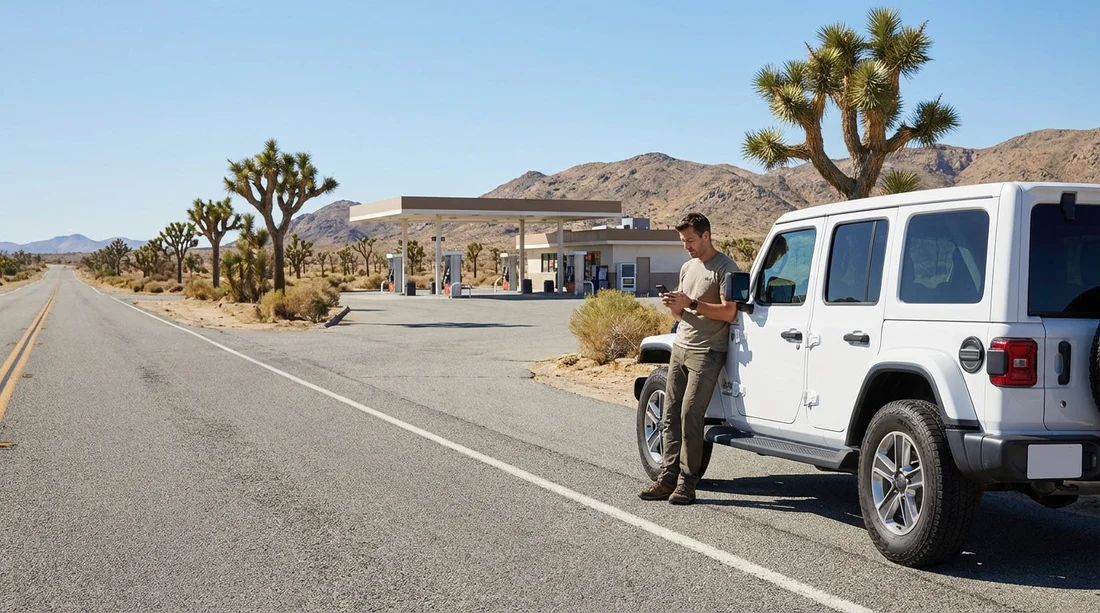
- Refuel in Palm Springs or Yucca Valley, stations inside are limited.
- Use a park pass or card payment at entrances, queues vary.
- Expect patchy phone signal, download offline maps and share plans.
Yes, Joshua Tree National Park is doable in a single day from Los Angeles, as long as you treat it like an early-start, daylight-only mission. With car hire, you control your timing, can stop for fuel where it is cheapest and most reliable, and you can carry the extra water and snacks that make the desert feel easy rather than stressful. The main challenge is not distance, it is the combination of LA traffic, long straight roads that encourage you to underestimate fatigue, and very weak mobile coverage once you are in the park.
This checklist focuses on the practical details people wish they had before they left. When to go, how park entry works, where to refuel, and how to plan for no signal. It also helps you decide whether to start from Los Angeles proper or to collect a vehicle closer to the route.
If you are arranging car hire around flights, Los Angeles LAX car hire collection is a straightforward option for early departures. If you are travelling with more people or lots of hiking kit, van hire at LAX can make the day more comfortable. For travellers staying in Orange County, car hire at Santa Ana SNA often puts you closer to the desert route than central Los Angeles. If you prefer a specific supplier, you can compare options like National car rental at LAX when you plan your timings.
Is Joshua Tree doable in a day from Los Angeles?
For most travellers, a day trip is realistic if you are happy with 4.5 to 6.5 hours of driving total, plus stops. From central Los Angeles to Joshua Tree town is typically around 2.5 to 3.5 hours each way, depending on traffic. From LAX can be similar, sometimes longer at peak times. If you start from Santa Ana or Irvine, you may shave time compared with driving out from the west side of LA.
A sensible day plan includes 4 to 6 hours inside the park. That is enough for a couple of short walks, classic viewpoints, and a picnic. It is not enough for long hikes, climbing sessions, or trying to see every region.
When to leave Los Angeles, and what time to aim back
For a one-day run, the safest approach is to leave very early and return before late-night fatigue sets in. If you can, aim to be rolling by 6am. This avoids the worst of the outbound traffic and gets you into the park earlier, when temperatures are kinder and parking at popular spots is easier.
As a rough schedule that works year-round:
06:00 depart Los Angeles (earlier if you are starting from the west side).
08:30 to 09:30 arrive near Yucca Valley, Joshua Tree town, or Twentynine Palms, refuel, buy snacks, use proper toilets.
09:00 to 15:00 explore the park with short walks and scenic stops.
15:00 to 16:00 start heading back, especially in winter when daylight is shorter.
18:00 to 20:00 arrive back in Los Angeles, depending on traffic and stops.
In summer, heat is the limiting factor. In winter, daylight is the limiting factor. In both cases, leaving earlier gives you options if you hit queues at the entrance, roadworks, or a slow-moving section of motorway.
Route options and which entrance makes sense
There are three common approaches for a day trip by car hire. Your route affects where you refuel and what you see first.
West Entrance (Joshua Tree Village): This is the most popular entry for first-timers. It sets you up for Hidden Valley, Barker Dam, and the classic boulder landscapes quickly. It can queue on weekends and holidays.
North Entrance (Twentynine Palms): Often quieter for entering, and good if you want to head straight towards the central and northern sites. Twentynine Palms also has services for last-minute supplies.
South Entrance (Cottonwood): Best if you want to start in the lower Colorado Desert section, especially in winter when that area can be warmer and more comfortable. It can be a smarter exit if you are heading back via the Coachella Valley.
For a first day trip, many people enter at the West Entrance and exit at the South Entrance (or the reverse), turning the park drive into part of the experience rather than backtracking.
How park entry works, fees, and what to prepare
Joshua Tree National Park charges an entrance fee per vehicle. You can pay at the entrance station using card. At very quiet times, you may use a self-pay option, but do not assume cash will be useful. Bring a payment card, and have it accessible before you reach the booth so you do not block traffic.
If you have an America the Beautiful annual pass, bring the physical card and matching ID. Rangers will usually check both. If you do not have a pass, paying per vehicle makes sense for a one-off visit.
Queues are the wildcard. On weekends, long weekends, spring break, and the peak spring season, queues can add 20 to 60 minutes. This is another reason to leave Los Angeles early. If you arrive mid-morning on a Saturday, the wait can feel like it eats your whole plan.
Once you are in, driving speeds are lower than motorways, and wildlife can appear at dusk. Plan to be out of the park before full dark if you are not comfortable with night driving on unlit desert roads.
Fuel stops: where to fill up, and why it matters
The park is remote enough that you should treat fuel as a planning item, not an afterthought. There are no fuel stations inside Joshua Tree National Park, and service stations just outside can be widely spaced. Your goal is to avoid a low-fuel warning anywhere near the park entrances.
Best practice for a day trip: start the morning with at least half a tank, and top up again before entering the park, even if you think you have enough. Desert driving with the air conditioning on can increase fuel use.
Reliable refuelling areas on the LA to Joshua Tree corridor:
Palm Springs and Cathedral City: good choice if you are approaching via the I-10. Lots of stations, food options, and clean restrooms.
Indio: convenient on I-10, often good for grabbing supplies, especially if you plan to enter or exit near Cottonwood.
Yucca Valley and Joshua Tree town: practical for topping up right before the West Entrance, but prices can be higher and peak hours busier.
Twentynine Palms: useful if you prefer the North Entrance or want a quieter refuel option.
When you collect your car hire, confirm what fuel policy applies and check whether the vehicle takes regular unleaded or another fuel type. It is also worth checking tyre condition and the spare tyre situation before leaving the city, because roadside help can be slower in the desert.
Phone signal and navigation: assume you will lose coverage
Mobile coverage inside Joshua Tree is patchy to non-existent in many areas. Some high points and a few corridors may get a bar or two, but you cannot rely on it for maps, messaging, or calling for help. The simplest solution is to plan as if you will have no signal from the moment you pass the entrance station.
Before you leave Los Angeles, do this:
Download offline maps for the entire route and for the park area. Save key locations as favourites, including your chosen entrance, your planned exit, and your last fuel stop. Screenshot your day plan with estimated times, so you can reference it without data.
Tell someone your route and your expected return time. If you are travelling in a group, agree on a meeting point if you get separated, because messaging may not work. Keep your phone in low-power mode and bring a charging cable. A car charger is essential for long motorway driving, but do not assume you can charge once you are away from the vehicle on a walk.
Inside the park, use the official road signs and a paper map if you have one. Visitor centres can have information boards, and rangers can advise on current closures or conditions. If you have never driven desert roads, remember that help can take time to reach you. Staying on paved roads and marked trails reduces risk.
What to pack for a one-day visit (comfort and safety)
Joshua Tree looks like a casual drive-through park, but the environment is still the desert. Even on short walks, you want to be prepared. For a day trip, pack the basics and keep them in the car.
Water: bring more than you think. A practical minimum is several litres per person for the day, more in warm months. If you are doing any longer walk, carry water on your person, not just in the boot.
Food: snacks plus a simple lunch. There are limited services once you are inside.
Sun and wind: suncream, hat, sunglasses, and a light layer. Desert afternoons can be windy and cooler than expected outside summer.
Footwear: trainers or hiking shoes for rocky paths.
Car basics: charging cable, small torch, and a first-aid kit. Check that the car hire has a working air conditioner, especially between late spring and early autumn.
Suggested short-stop itinerary for first-timers
If you want a simple, low-stress day that still feels iconic, build your plan around short drives and short walks. For example, enter at the West Entrance, then focus on a cluster of well-known stops.
Hidden Valley area: classic rock formations and short trails with big scenery payoff.
Keys View (if open): a viewpoint drive with wide Coachella Valley views. Check for closures, sometimes access changes due to conditions.
Skull Rock: a quick photo stop that works well when time is limited.
Cholla Cactus Garden (time and light permitting): best in softer light, and it is a memorable contrast to the boulder landscapes.
Do not try to do everything. The park is large, and driving between regions can take longer than you expect. Pick a small number of highlights, then allow time for unplanned stops when something catches your eye.
Common mistakes that make the day feel hard
Leaving after 8am: it compresses your day, increases the chance of entrance queues, and often means driving home tired.
Entering on a low tank: it creates unnecessary stress and can force a detour away from your preferred entrance.
Relying on mobile data: it is the fastest way to get lost, especially when you detour to a viewpoint.
Underestimating temperature swings: midday heat and evening chill can both catch people out.
Over-planning hikes: a day trip is better suited to short walks and scenic drives unless you are very experienced.
FAQ
Can I realistically do Joshua Tree as a day trip with car hire from Los Angeles?
Yes, if you leave early and keep your plan simple. Expect several hours of driving, plus 4 to 6 hours in the park for short walks and viewpoints.
Do I need to buy park tickets in advance?
Not usually. You can typically pay the per-vehicle entrance fee at the gate by card, but queues can be long on peak weekends.
Where should I refuel before entering Joshua Tree National Park?
Palm Springs, Indio, Yucca Valley, Joshua Tree town, and Twentynine Palms are all practical options. Avoid relying on fuel near the park itself.
Will my phone work inside Joshua Tree?
Coverage is unreliable and often absent. Download offline maps before you go, and do not depend on messaging or live navigation once inside.
What is the safest time to drive back to Los Angeles?
Aim to leave the park mid-afternoon, especially in winter. Driving back before late evening reduces fatigue and avoids some night driving on unlit roads.





























































































