


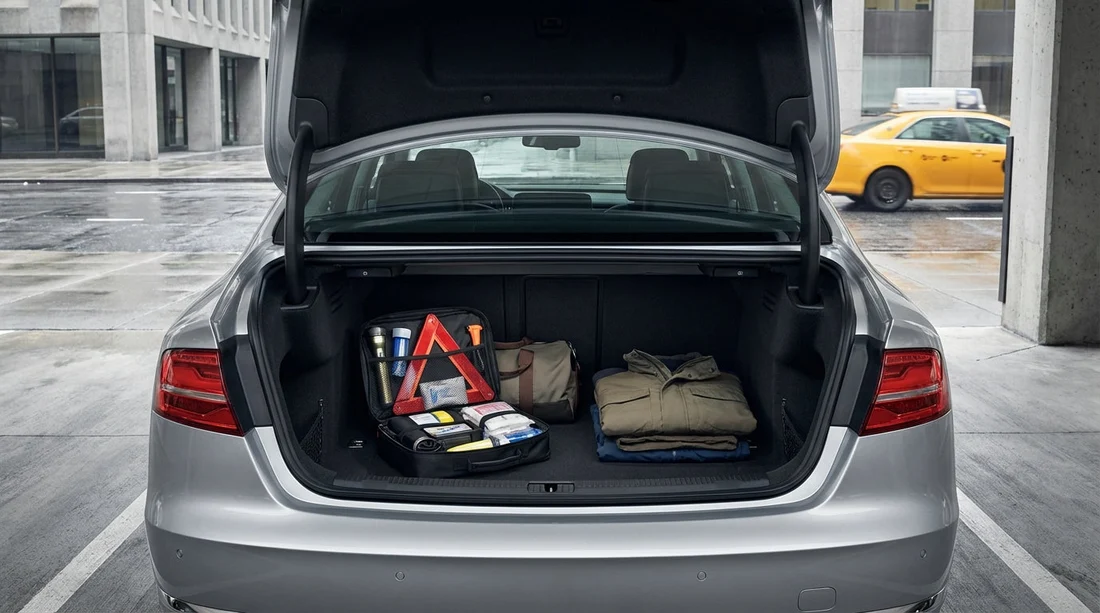
Quick Summary:
- Expect a spare tyre or inflator kit, but verify it is usable.
- Ask staff to confirm tools, jack, and wheel lock key are present.
- Request warning triangle, torch, and reflective vest, if available.
- Before leaving, test hazards, wipers, washer fluid, and tyre pressures.
When you pick up a car hire in New York, you might assume there is an “emergency kit” in the boot. In practice, contents vary widely by vehicle type, supplier policy, and even the branch location. Some cars have only the legally required equipment for that state, others include a compact breakdown pack, and many include nothing beyond the manufacturer’s standard tools.
This guide explains what is typically included (and what often is not), then lists practical requests to make at the counter or in the car park before you drive away. It is written for New York pick-ups, including busy airport locations where it is easy to miss small but important items.
If you are collecting at an airport, the handover pace can be quick. Pages like car hire New York JFK and car hire airport Newark EWR are useful starting points when comparing options, but the on-the-day kit check still matters, regardless of where you arranged your rental.
What “emergency kit” means for a car hire
In rental-car language, “emergency kit” can mean anything from a spare wheel setup to a small pouch with basic safety items. Do not expect a fully stocked roadside kit like you might assemble for your own car. A rental is usually prepared to meet minimum operational standards, not to cover every scenario you can imagine.
It helps to think in three categories:
1) Vehicle equipment supplied by the manufacturer. This includes the jack, wheel brace, tow hook, or a tyre inflator and sealant canister on cars without a spare.
2) Branch-issued items. Some locations provide warning triangles, high-visibility vests, or a basic first-aid kit, but many do not, or only offer them on request.
3) Driver-supplied essentials. Phone charger, torch, warm layer, water, and anything you need for children or medical conditions are usually up to you.
What you will often find in the boot, and what is commonly missing
Below is what is typical for New York rentals, with the caveat that the exact loadout depends on the make, model, and fleet policy.
Spare tyre or tyre inflator kit: Many vehicles no longer carry a full-size spare. You may find a temporary “space saver” spare, or more commonly an inflator kit with sealant. The inflator is only useful if it powers on and the sealant is in date, so check both. If you are hiring an SUV, you may be more likely to have a spare wheel, but it is not guaranteed. If you are choosing a larger vehicle for luggage and winter driving, SUV rental New York JFK options can be relevant, but still verify what is actually in that specific car.
Jack and tools: If there is a spare, there should be a jack and wheel tool. If wheel nuts use a locking key, the key must also be present. Missing wheel lock keys are a common, frustrating issue because you only discover it when you have a puncture.
Owner’s manual and roadside instructions: Many rentals have a quick-start guide in the glove box. Some do not include a full manual. If the car has a tyre inflator kit, look for the instructions, because correct use matters.
Warning triangle and reflective vest: Not consistently provided in US rentals, and not something you should assume is in the boot. It may be available at the branch, so it is worth asking politely at pick-up.
First-aid kit: Often not included. If it is included, it may be basic and not sealed. If having a first-aid kit is important to you, consider bringing your own compact kit.
Torch, jumper leads, and blankets: Uncommon in standard car hire packages. In winter, a blanket and a torch are sensible items to pack yourself, especially if you plan to drive outside Manhattan.
New York realities, why checks matter more here
New York driving can combine congested city streets, bridge and tunnel approaches, and longer highway stretches if you head to upstate towns, the Hudson Valley, or across state lines. The risks are not dramatic, they are practical: a puncture in a poorly lit area, a dead phone battery after navigation use, or poor visibility in heavy rain or snow.
Airport pick-ups can also mean you begin your journey on highways immediately. If you collect from Newark, for example, you may be on fast-moving roads quickly, so confirming wipers, lights, and tyres before you merge into traffic is time well spent. Information pages such as car rental Newark EWR help you plan logistics, but the vehicle condition check is what reduces stress later.
What to request at pick-up before leaving the car park
Branches vary in what they can provide, but these requests are reasonable, quick to check, and can prevent a long delay later.
1) Confirm which puncture solution the car has. Ask whether the car has a spare wheel or an inflator kit. Then physically look in the boot. If it is an inflator kit, check the sealant expiry date and that the power connector matches the car’s 12V socket. If it is a spare, confirm the tyre looks inflated and the tools are present.
2) Ask for the wheel lock key if applicable. Some wheels use locking nuts. Ask staff where the key is stored and confirm it is actually in the car. Without it, a spare wheel is effectively unusable.
3) Request a warning triangle and reflective vest, if available. Even if not required, these are helpful if you need to stop on the shoulder. Some branches keep a limited supply. If they do not have them, consider buying inexpensive versions locally, especially for longer trips.
4) Ask what the breakdown process is and save the number. Most rentals provide roadside assistance instructions in the paperwork or on a sticker. Before leaving the lot, locate the number and save it to your phone. Confirm whether you should call the rental company first, the emergency number in the vehicle, or 911 only for urgent situations.
5) Ask for an ice scraper in winter. If you are travelling between late autumn and early spring, request an ice scraper and small brush. Not every branch provides them, but when they do, it can transform a frosty morning. If none are available, plan to buy one nearby.
6) For family or group travel, request the right vehicle configuration. An “emergency kit” is not only about breakdowns. Safe travel is also about visibility and access to luggage and supplies. If you are travelling with several people, ensure you have space to store coats, water, and small bags within reach. If you need more room, minivan rental New York JFK can be a better fit than squeezing gear into a smaller boot.
Five-minute inspection checklist for your New York car hire
Do this in the car park while you still have easy access to staff. It is faster than returning later.
Tyres and wheels: Walk around and look for visibly low tyres, sidewall damage, or nails. Check that the spare or inflator kit is present as discussed. If the car has a tyre-pressure display, verify readings once the car is on.
Lights and hazards: Test indicators, hazard lights, brake lights, and headlights. If a bulb is out, report it immediately. At night or in bad weather, this is a safety issue, not a cosmetic one.
Wipers and washer fluid: Turn on wipers and test the washer spray. In slushy winter conditions around New York, washer fluid can run out quickly, and it is essential for visibility.
Mirrors, camera, and sensors: Confirm mirrors adjust properly. If the car has a reversing camera, check that it works. This helps when parking in tight city spaces.
Fuel type and level: Confirm whether the car takes regular petrol and what level it is at. Misfuelling is a major headache. The fuel door often states the correct grade.
Paperwork, registration, and insurance card: Ensure required documents are in the vehicle, usually in the glove box. If something is missing, get it sorted before you leave.
Charging and connectivity: Identify USB ports or 12V sockets and check your charging cable reaches comfortably. A dead phone during a detour is one of the most common “emergencies” travellers face.
What to bring yourself, even if the car seems well equipped
Even with a thorough check, there are a few low-cost items that make New York driving more comfortable and resilient.
Phone charger and mount: Navigation drains batteries quickly. A simple mount can reduce distraction, and a cable avoids relying on wireless charging that may not work through thick cases.
Torch: Useful for checking tyres at night and finding items in the boot. Your phone light is fine, but a small torch is better in cold weather.
Warm layer and gloves: If you break down in winter, staying warm while waiting matters more than you think, even for short delays.
Water and snacks: Traffic delays happen. Keep a small bottle of water accessible rather than buried under luggage.
A small first-aid kit: If you prefer certainty, bring your own compact kit that you understand and maintain.
How to handle a breakdown or flat tyre in New York
If something goes wrong, prioritise safety and clear communication.
Move to a safe place if possible: If the car is drivable, exit the traffic flow and stop somewhere safe. Use hazard lights.
Stay aware of your surroundings: On highways, it can be safer to stay in the car with seatbelt fastened while you call for help, depending on the situation. Follow local guidance and your judgement.
Use the correct contact first: Unless it is an immediate danger, the rental’s roadside number is typically the best starting point. They can authorise towing and advise next steps. Call 911 for emergencies involving injuries or immediate risk.
Do not attempt risky repairs: Changing a wheel on a narrow shoulder can be dangerous. If you are not confident or conditions are unsafe, wait for assistance.
Document the issue: Take photos of the tyre, warning lights, or dashboard messages. This can help explain the problem quickly.
Setting expectations, what you can reasonably ask for
A good rule is to request items that either make the supplied puncture solution usable (tools, lock key, instructions) or improve visibility and signalling (wipers, washer fluid, triangle, vest). Staff can usually help you verify what is in the vehicle, but they may not be able to add non-standard items if they are not part of branch inventory.
If your plans involve longer distances, night driving, or winter routes, mention that at the desk and ask whether they can provide an ice scraper or suggest a vehicle better suited to your trip. You are not trying to build a full emergency kit from the branch, you are trying to avoid preventable problems before leaving the car park.
FAQ
Do car hire vehicles in New York usually come with a first-aid kit? Often they do not. Some cars may have a basic kit, but it is inconsistent, so bring your own if it matters to you.
Will my rental have a spare tyre or just an inflator kit? Either is possible. Many newer cars have an inflator and sealant instead of a spare, so check the boot at pick-up and confirm the kit is complete.
Can I ask the rental desk for a warning triangle or reflective vest? You can ask, and some branches may provide them, but they are not guaranteed. If the branch cannot supply them, consider buying inexpensive versions locally for longer trips.
What should I check before leaving the car park at JFK or Newark? Verify the puncture solution, tools and wheel lock key, test lights, wipers and washer fluid, confirm tyre condition, then save the roadside assistance number.
If I get a flat tyre in New York, should I change it myself? Only if it is safe and you are confident. On busy roads or narrow shoulders, using the rental’s roadside assistance is often the safer option.





























































































